
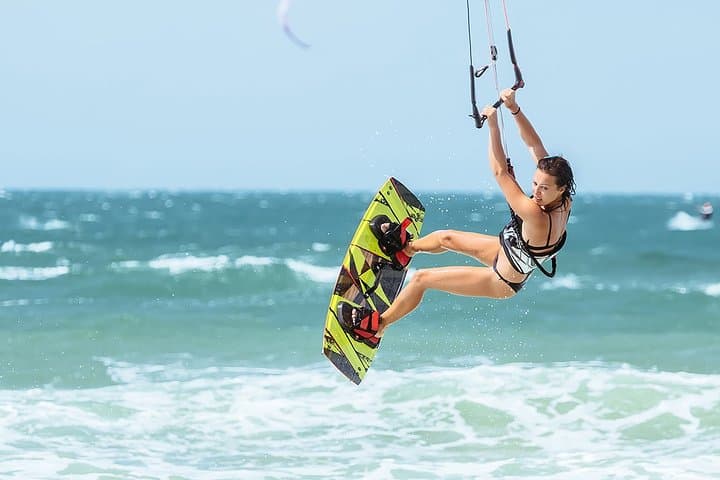
What the day feels like
There’s a moment on Maafushi when the lagoon yawns open and everything else narrows to the arc of a kite or the edge of a board. You stand on sand warmed by sun, watching crews rig color-bright kites against a sky that feels close enough to touch. The wind is purposeful here—none of the teasing breezes of other islands—pushing and patient, daring you to step into the water and let it take you.
This is not a resort’s private playground. Maafushi is a local island in Kaafu Atoll where guesthouses, cafes, and public beaches coexist with a working community. The island’s public beach becomes a practical classroom: instructors walk you through safety, inflate kites in the shallows, and guide first-body-dragging attempts in waist-deep water. For seasoned riders, the lagoon opens into a plate glass of blue where long reaches and steady gusts let you carve and pop with room to spare. Sessions here are short—45 to 90 minutes—deliberate bursts of learning or play that leave you sun-salty and more confident than you arrived.
Geology and culture shape the sport. The Maldives is an archipelago of coral-built atolls; Maafushi sits on a reef rim that moderates swell and creates shallow, wind-swept lagoons. That reef is the reason wind sports work so well here—protection from large ocean swell produces predictable, rideable water that’s forgiving for learners. Culturally, Maafushi exemplifies the shift that opened the Maldives to local-island tourism after 2009 regulations changed: small guesthouses and community-run businesses now welcome independent travelers alongside traditional resorts, making hands-on experiences like kite and windsurf lessons accessible and authentic.
Wind patterns are the practical story you need to know. The southwest monsoon (roughly May through October) brings the most consistent breezes and is prime time for kitesurfing and windsurfing; winds tend to peak mid-monsoon (July–September) when true learners benefit from steady direction and stronger pull. During the drier northeast monsoon (December–April) winds can be lighter and more variable—better for snorkeling and calm-water exploration, less ideal for sustained riding.
Lessons are designed to meet intent. Options range from “Lesson + Tryout” for first-timers—where instructors cover safety, kite handling, and shallow-water progressions—to “Tryout only” sessions for experienced riders who want a guided session without basic instruction. Bookings here are flexible: sessions run between 8 a.m. and 6 p.m. with instant confirmation and 45–90 minute windows that pair well with half-day island plans. Pricing starts around $80 for a session, and operators typically supply equipment, harnesses, and flotation aids.
Safety and local etiquette matter. The reef is alive and fragile; avoid riding over shallow coral and choose reef-safe sunscreen. Maafushi is a working island—outside the designated bikini beaches, dress modestly when off the sand and avoid infringing on local spaces. Instructors are thorough about right-of-way, self-rescue techniques, and quick-release systems; give their briefings your full attention. For beginners, a calm lagoon lesson followed by supervised open-water tries is the safest learning curve.
Practical tips for planning: transfers from Velana International Airport (Malé) are straightforward—public ferries take about 90 minutes and are inexpensive, while speedboat transfers are 20–30 minutes and cost more. Pack a light shorty or rashguard for sun and board chafing, and a hat for between sessions; a plastic bag and dry sack will keep wet gear separate on the boat ride. Expect basic shops and eateries on Maafushi that cater to travelers—fresh fish, coconut-forward snacks, and simple rice-and-fish plates are reliable post-session refuel.
The island’s inherent charm is how accessible it makes an otherwise technical sport. Instead of driving a long coastal road to reach a launch site, the water and coaches are right there. That accessibility—plus a lively mix of local cafés and guesthouses—means you can stitch an island day around a lesson: morning ride, midday lunch, a swim at the reef edge, and a sunset beer at a beachside spot while boards and lines dry.
If you’re chasing the learning curve, plan your trip for the southwest monsoon months. For mixed itineraries that include snorkeling and calm swims as priorities, the drier months are friendlier. Either way, respect the reef, book with a licensed operator who supplies modern quick-release-equipped gear, and arrive with realistic expectations: 45–90 minutes can feel short when you’re hooked, so consider back-to-back sessions or a lesson-plus-tryout package to maximize progress.
Maafushi strips the theatrics out of Maldivian watersports and replaces them with something more useful: steady wind, shallow water, community-run hospitality, and a straightforward path into kite and windsurfing. The wind will still dare you; the island will help you answer.
Practical snapshot - Duration: 45–90 minutes per session - Best wind: southwest monsoon (May–Oct) - Cost: from about USD 80 per session - Times: flexible bookings 8 a.m.–6 p.m., daily
Why go: It’s where the Maldives’ protective reef and steady monsoon winds pair with small-island hospitality, making demanding water sports feel approachable and immediate for beginners and a reliable training ground for experienced riders.
Trail wisdom
Small choices, better day.
Use Reef-Safe Sunscreen
Choose mineral-based sunscreen and reapply before heading into the water to protect coral and your skin.
Hydrate Before and After
Bring a reusable bottle—sessions are intense and the equatorial sun dehydrates quickly.
Wear a Rashguard or Shorty
Prevents chafing from the harness and offers UV protection during long sessions.
Respect Local Beach Rules
Stick to designated bikini beaches and change modestly when off the sand to honor community norms.
Local knowledge
Read the place, not just the route.
Watch for native species including Green sea turtles, Reef fish such as parrotfish and wrasse.
Keep an eye out for wildlife during the transition between areas and habitats. Respect distance guidelines.
The surrounding reef is fragile—use reef-safe sunscreen, avoid standing on coral, and follow guides’ instructions to minimize ecological impact.
Follow the guide's instructions on size limits, ethical handling, and leave-no-trace practices.
Early-morning lagoon flats near the reef edge for calm practice runs. A small local beach cafe where fishermen bring in fresh catches—great for post-session meals
Locally recommended viewpoints and quiet spots known best to local operators.
Maafushi is one of the local islands that opened to guesthouse tourism after regulatory changes in 2009, fueling a community-based tourism model distinct from resort islands.
Maritime roots and regional tradition shape the waterways and working coasts.
Seasonal guide
Four versions of the same landscape.
Spring
Best forWarmer water · Early-season kitesurfing basics
ChallengesVariable winds · Occasional showers
Spring (Mar–May) transitions toward the southwest monsoon—expect inconsistent winds but warm, pleasant water for practicing basics.
Summer
Best forConsistent trade winds · Advanced kiting and long runs
ChallengesStronger gusts at peak monsoon · higher boat traffic
Summer (May–Oct) brings the strongest, most reliable winds—prime time for sustained kitesurfing and windsurfing sessions.
Fall
Best forCalmer rides in early fall · Good visibility for reef snorkeling
ChallengesWind variability as seasons shift · shorter daylight hours later in season
Fall smooths the transition out of monsoon; early months can offer fun wind windows paired with excellent snorkeling visibility.
Winter
Best forCalm water activities · Snorkeling and diving
ChallengesLighter, patchy winds · May be less ideal for learning power-dependent moves
Winter (Dec–Feb) is drier with lighter winds—great for reef exploration but not as consistent for advanced wind sports.
Operator details
What the booking data adds.
Included
- ✓Lesson (optional)
- ✓Equipment rental
Good to know
- ✓Infants and small children can ride in a pram or stroller
- ✓Public transportation options are available nearby
- ✓Travelers should have at least a moderate level of physical fitness
Pack with intention
What to bring.
Good to know
Common questions.
Yes—operators offer a “Lesson + Tryout” option that covers basics like kite handling and shallow-water body-drag progressions before you attempt standing up.
Plan the edges
The details that make the day easier.
Maafushi was among the first local islands to develop guesthouse tourism after the Maldives liberalized tourism regulations in 2009, expanding options beyond resort islands.
After a lesson, head to a beachfront café for grilled tuna and coconut rice or a cold non-alcoholic Maldivian drink; evening walks through the island reveal community markets and simple guesthouse-run eateries that showcase local flavors.
- Closest airport
- Velana International (MLE). Transfer: speedboat ~20–30 mins, public ferry ~90 mins from Malé. Cell service: generally good on Maafushi. Permits: none required for recreational kitesurfing; book with licensed operators for equipment and safety briefings.
The reef ecosystems here are delicate—use reef-safe sunscreen, avoid touching coral, and follow guide directions to minimize damage to marine habitats.
Explore by topic
Follow the threads.
Keep exploring
Make the story part of the trip.
Set out from Bass Harbor for a private, customizable day on Blue Hill Bay — lighthouses, puffins, seals, and the chance to feel Acadia from the water. Small groups, local captains, unforgettable views.
In four hours you can move from shaded canyon ferns to wind-scoured coastal ridgelines, guided by someone who knows where the light—and the hidden views—live. This private half-day hike on the Monterey Peninsula or Big Sur is compact, curated, and perfect for travelers who want depth without a multiday commitment.
 Related story
Beneath a sky of shifting light, Skaftafell’s ice reads like a map of time. This three-hour guided glacier hike mixes technical instruction with geology and culture: compact, safe, and unforgettable.