
What the day feels like
There’s a particular hush that settles over the Columbia River Gorge an hour or so after noon — a damp, green silence punctured only by falling water and the occasional click of a camera. The tour bus draws up to a narrow turnout off the Historic Columbia River Highway and the first thing you’ll notice is movement: a white ribbon of water threading down basalt, a spray that cools your face and dares you to get closer.
This half-day excursion visits Oregon’s most iconic falls — Multnomah Falls chief among them — but it’s the way the gorge stages its surprises that makes the afternoon feel like a short, sharp adventure. Trails crisscross mossy slopes. Historic stonework from the early 20th-century highway blends with mid-century viewpoints. The river, wide and slow below, pushes sediment and light east toward the Cascade peaks as gulls wheel overhead.
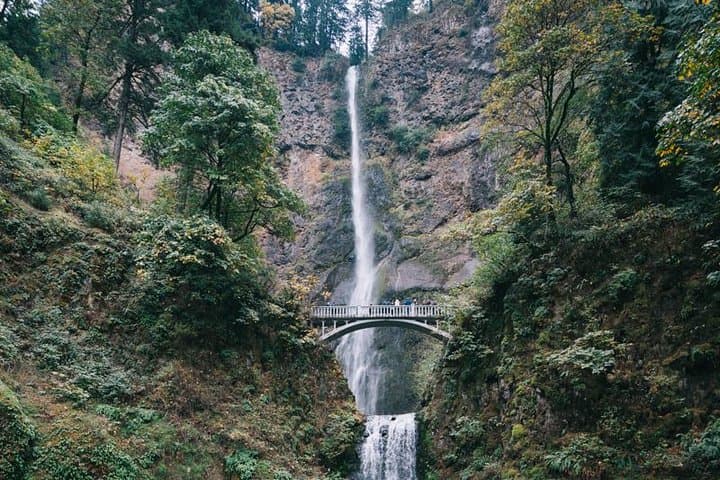
Multnomah Falls drops in two major tiers for a combined height of roughly 620 feet, a figure that explains why, even from the parking area, the air tastes like mist. The paved walk to Benson Bridge — where visitors can stand right in the spray line — is short and accessible. For the ones who want a burn, the steeper trail to the upper viewpoint climbs roughly 2.4 miles round-trip with about 700 feet of elevation gain and rewards you with a vantage that puts the falls in relief against the gorge walls.
Geology here reads like a ledger of ancient eruptions and ice-age floods. Basalt flows stacked and cracked over hundreds of thousands of years created the columnar cliffs that guide water toward the Columbia River. When the Missoula Floods gouged the landscape at the end of the last ice age, they left a deeper trough for the river and exposed the layered basalt faces you’ll pass on the route. The result is a topology that funnels dozens of creeks into dramatic, vertical exits: Latourell Falls drops over a sheer basalt shelf; Bridal Veil spills through a verdant, fern-covered alcove; and each small stream has its own personality, from roar to whisper.
Culturally, the gorge has been a travel corridor for millennia. Indigenous peoples moved seasonally through the river valley; later, the gorge became a crucial passage for Euro-American settlers and, eventually, an engineered scenic route. The Historic Columbia River Highway — parts of which you’ll drive along or beside on this tour — was one of the first scenic highways in the nation, carefully routed to frame the landscape with deliberate viewpoints.
If you prefer to arrive with a plan, this guided afternoon hits highlights without feeling rushed. You’ll stop at viewpoint platforms like Crown Point’s Vista House for sweeping panoramas, photograph Latourell Falls’ gold-bronze basalt columns, and stand at the foot of Bridal Veil for a close, leafy encounter. Guides often weave in local lore and logistics — where to find the best composition for your shot, which viewpoints get the light in late afternoon, and practical tips about bathrooms and accessibility.
Practical matters matter here: parking at Multnomah Falls fills early, and the lot is controlled; expect lines on weekends and holidays. The gorge’s weather can flip from warm sun to drizzle in minutes, so layered clothing and quick-cover rain shells are sensible. Most visitors combine the short, paved strolls with a stretch of the upper trails; choose by time and appetite for climbing. The tour itself runs roughly 3.5 hours, a compact loop that leaves time for good photographs without the planning headache of navigating the parking crunch.
For photographers and day-trippers alike, timing is simple advice — come in spring for full flows, arrive on weekday afternoons to avoid the biggest crowds, or book a guided tour to skip some of the parking stress and glean local context. If you’re based in Portland, the drive is under an hour, which makes this an ideal half-day escape with big scenic payoff.
Book this particular guided route (the Afternoon Half-Day Multnomah Falls and Columbia River Gorge Waterfalls Tour from Portland) to let a local driver-guide handle the logistics so you can focus on the view and the trail (https://app.advcollective.com/local-experts/afternoon-multnomah-falls-columbia-river-gorge-waterfalls-tour-from-portland). That link connects to local expertise and helps with timing, accessibility questions, and any last-minute updates on trail conditions. Guides often adapt the sequence of stops depending on light and crowd flow, which matters when your whole itinerary is a tight afternoon.
When you step back on the bus after a full circuit, the setting sun often gilds the river and softens the basalt. You’ll leave with a handful of photos, a few new facts about the gorge’s formation and history, and a better sense of how rapid, local ecosystems can be when water does the organizing. Whether you’re a first-time visitor or a repeat seeker of waterfalls, the Columbia River Gorge in an afternoon still manages to feel like discovery.
Practical snapshot: plan for 3–4 hours, bring layers and waterproof footwear, and expect variable crowding depending on season. If you want a quieter experience, target shoulder-season weekdays and consider booking a guided tour to avoid parking headaches and get the most from your time (https://app.advcollective.com/local-experts/afternoon-multnomah-falls-columbia-river-gorge-waterfalls-tour-from-portland).
Trail wisdom
Small choices, better day.
Arrive after noon
Parking and crowds ease slightly in the afternoon on weekdays—plan your arrival accordingly.
Layer for sudden weather
Bring a lightweight rain shell and a warm midlayer; the gorge’s microclimates flip quickly.
Protect your electronics
Use a dry bag or zip-top for cameras and phones near viewpoints where spray is heavy.
Stretch for the upper trail
If you plan to climb to Multnomah’s upper viewpoint, expect a 2.4-mile round-trip with ~700 ft gain.
Local knowledge
Read the place, not just the route.
Watch for native species including River otter, American dipper (bird often seen near streams).
Keep an eye out for wildlife during the transition between areas and habitats. Respect distance guidelines.
The gorge is part of the Columbia River Gorge National Scenic Area—stay on trails, pack out trash, and avoid disturbing riparian vegetation.
Follow the guide's instructions on size limits, ethical handling, and leave-no-trace practices.
Eagle Creek viewpoints off the main highway for quieter cascades. Small pullouts with basalt formations near Latourell Falls
Locally recommended viewpoints and quiet spots known best to local operators.
The Historic Columbia River Highway, completed in the early 20th century, was built to frame scenic vistas and is itself a registered historic roadway.
Maritime roots and regional tradition shape the waterways and working coasts.
Seasonal guide
Four versions of the same landscape.
Spring
Best forPeak waterfall flows · Wildflowers and mossy greens
ChallengesCooler temperatures · Potential muddy trails
Spring delivers the fullest falls and lush green slopes; expect heavier flows and damp ground.
Summer
Best forLong daylight · Accessible upper trails
ChallengesLower flows late summer · Higher visitor numbers
Summer offers warm afternoons and clearer skies but smaller waterfall volumes and bigger crowds.
Fall
Best forAutumn color · Crisp light for photos
ChallengesEarly sunsets · Chance of rain increases
Fall brings color on the slopes and softer light; pack a layer for cooling temps as day fades.
Winter
Best forFrosted basalt vistas · Smaller crowds
ChallengesIcy trails and closures · Limited access to some viewpoints
Winter scenes can be dramatic with ice and mist; use traction and check for closures.
Operator details
What the booking data adds.
Included
- ✓Transport by Mercedes-Benz Sprinter Van
- ✓Knowledgeable and Experienced Local Guide
- ✓Bottled water
- ✓Pick-up & Drop-off At Downtown Portland, Oregon Hotels
- ✓Permit and parking fees for Multnomah Falls included during the permit season
Not included
- —Gratuities
Good to know
- ✓Infants and small children can ride in a pram or stroller
- ✓Service animals allowed
- ✓Public transportation options are available nearby
- ✓Suitable for all physical fitness levels
- ✓All southbound lanes of Interstate 5 through the Rose Quarter in Portland will close completely 24/7 starting at 10 p.m. on Friday, September 11, 2026, for up to five weeks. Due to the traffic delays this may cause, the tour could last up to one hour longer.
- ✓Child Safety Seat Law Child passengers must be restrained in child safety seats until they weigh forty pounds or reach the upper weight limit for the car seat in use. Infants must ride rear-facing until they reach two years of age unless the child turned age one prior to May 26, 2017.
- ✓Booster Seat Law Children over forty pounds or who have reached the upper weight limit for their forward-facing car seat must use a child seat with harness or a booster to 4'9" tall or age eight and the adult belt fits correctly.
- ✓Operates in all weather conditions, please dress appropriately
- ✓This tour is operated in a Sprinter van. This is not a boat tour.
- ✓This tour does operate in rainy weather.
- ✓America’s Hub World Tour’s works in collaboration with Oregon Tour Experts. All pickups are made via Oregon Tour Expert’s transportation and tour guiding company.
- ✓All guests will be required to sign an acknowledgement of the Safety Briefing that will be given at the start of the tour.
Pack with intention
What to bring.
Good to know
Common questions.
The guided tour runs about 3.5 hours (210 minutes) and visits several gorge viewpoints and waterfalls.
Plan the edges
The details that make the day easier.
Multnomah Falls plunges 620 feet and is the tallest waterfall in Oregon.
After the hike, stop at the historic Multnomah Falls Lodge for a snack or coffee; for a longer meal or local beer, continue west to Portland’s Pearl District or east to Hood River for riverside eateries and cider houses.
- Closest airport
- Portland International Airport (PDX)
- Typical drive
- ~30–45 minutes from downtown Portland to Multnomah Falls
- Cell service
- patchy in some viewpoints
- Permits
- none required but parking is limited and sometimes controlled
The Columbia River Gorge is a protected National Scenic Area—stay on trails, pack out waste, and avoid trampling fragile riparian vegetation to preserve the watershed.
Explore by topic
Follow the threads.
Keep exploring
Make the story part of the trip.
Set out from Bass Harbor for a private, customizable day on Blue Hill Bay — lighthouses, puffins, seals, and the chance to feel Acadia from the water. Small groups, local captains, unforgettable views.
In four hours you can move from shaded canyon ferns to wind-scoured coastal ridgelines, guided by someone who knows where the light—and the hidden views—live. This private half-day hike on the Monterey Peninsula or Big Sur is compact, curated, and perfect for travelers who want depth without a multiday commitment.
 Related story
Beneath a sky of shifting light, Skaftafell’s ice reads like a map of time. This three-hour guided glacier hike mixes technical instruction with geology and culture: compact, safe, and unforgettable.