
What the day feels like
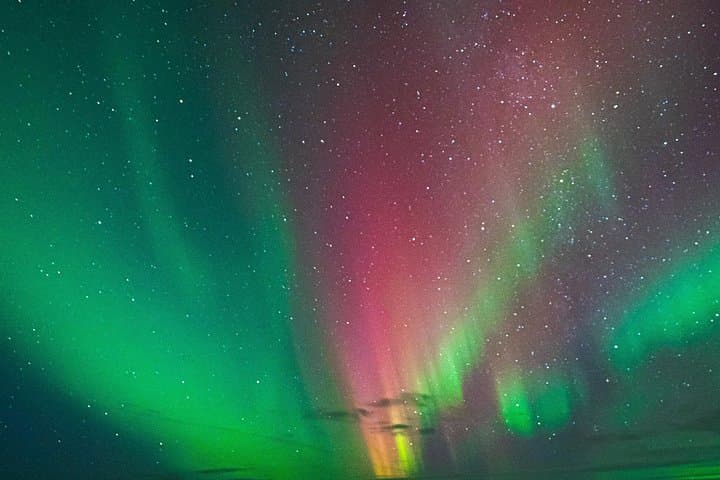
The engine hums, heated seats sigh off the cold, and outside the van the world is a black velvet sheet pricked with distant farmhouse lights. Your guide checks the aurora forecast, then the road conditions, then the sky. A stray bank of cloud drifts and the driver eases onto a gravel turnout; everyone spills out, breath visible, necklaces of warm vapor rising. Above, thin green curtains begin to unfurl, tentative at first, then pulsing like a heartbeat. The lights don’t flit politely—they insist, sway, and eventually take over the sky. It’s one of those slow-burn rewards: patience, good planning, and a small, stubborn willingness to wait on the shoulder of the world.
Private Northern Lights Tours are sold on that willingness. This Viator-listed experience leaves Reykjavik in the evening and drives into darker country—coastal inlets, highland basins, and long fjords—so your chances are far higher than staying under city lights. The tour lasts about four hours, and its value is less about a specific place and more about a practiced search pattern: watch the forecasts, follow the cloud breaks, and move quickly to where the sky is clean.
Icelandic auroras have been stitched into the country’s stories since the sagas. Before lights were understood as particles from the sun, folks called them “northern fires” and attributed them to everything from omens to celestial dances. Geologically, Iceland’s position straddling the Mid-Atlantic Ridge stretches the muscles of Earth—volcanism, glaciers, and black sand beaches are the visual chorus beneath the aurora’s performance. That geological restlessness, plus long winter nights, makes this small island disproportionately good for skywatching.
Culturally, aurora hunting has become a nocturnal pilgrimage for visitors and locals. Guides here are part meteorologist, part storyteller—reading cloud patterns and auroral indices, but also knowing where a roadside church or lava field will frame the curtain call. The private model is a pragmatic luxury: fewer people, faster relocations, and a guide who tailors stops to current conditions (and to the group’s patience level). This particular product lists instant confirmation, private pickup, and free cancellation—useful when weather can flip a plan overnight.
The practical side is simple and nonnegotiable. Dress like you’re camping at the edge of winter: insulating layers, a windproof outer layer, warm hat, mittens, and waterproof footwear. Most stops are short walks from the vehicle to open exposures; you won’t be tramping deep into the wilderness, but you will be standing still, which is colder than moving. Bring a thermos and snacks—hot tea is morale for long watches. If your goal is photography, pack a DSLR or mirrorless camera that handles long exposures, a sturdy tripod, and a remote shutter release. Guides here will often help with settings, but space on the van and the weather window are finite: be ready when the show begins.
Timing matters. The best months for aurora chasing in Iceland run from late September through March; nights are long and skies, often crisp. Avoid booking purely on a calendar—check the Kp-index (a measure of geomagnetic activity), cloud cover forecasts, and moon phase. A bright full moon can wash out faint auroras; a new moon will make even the smallest curtains pop. March is a sweet spot—cold, clear nights, and daylight hours longer than midwinter for added flexibility the next day.
Logistics are straightforward. Tours generally depart Reykjavik in the early evening and return late; expect a four-hour window in the field, though travel time will vary with your chosen location. Because this is a private tour, price reflects exclusivity—the listing shows a from-price in USD, and group size and extras will change the final cost. Guides will decide the best viewing spot on the fly, sometimes driving 30–90 minutes to escape cloud and light pollution.
Safety and sustainability are part of the rhythm. Respect the landscape—avoid trampling fragile moss and don’t park on protected ground. Keep noise low; the northern lights are silent, and the stillness is part of their magic. If you’re using a drone for photos, check local restrictions and never fly in crowded viewing spots.
Why do this privately rather than on a larger bus? The difference shows when the clouds open: a small group can reposition quickly, avoid the glare of flashlights, and linger without pressure. Your guide becomes an ally in reading the sky, not just a driver. And when the aurora unfurls, it doesn’t feel like a curated tourist moment—it feels like a private performance you earned.
If you go, bring patience and curiosity. The lights don’t care about itineraries; they respond to space weather and clear skies. That lack of control is part of the experience—part of why, when the green drapes finally sweep across the sky, the applause is sincere and the photographs can’t quite contain the memory. You will leave late, maybe cold, and unquestionably moved—armed with a story about the night the sky decided to dance.
Trail wisdom
Small choices, better day.
Dress for Waiting
Layer up with an insulated base, fleece, and windproof shell—standing still at night is colder than a hike.
Bring a Tripod
If you want keepable photos, a sturdy tripod and remote shutter are non-negotiable for long exposures.
Trust the Guide
Guides monitor cloud cover and aurora forecasts; be prepared to move quickly when a gap opens.
Protect Your Battery
Cold drains camera and phone batteries—carry spares in an inner pocket close to your body.
Local knowledge
Read the place, not just the route.
Watch for native species including Arctic fox, Harbor seals.
Keep an eye out for wildlife during the transition between areas and habitats. Respect distance guidelines.
Minimize light pollution and stay on established roads; avoid walking on protective moss and pack out all trash to preserve fragile Icelandic ecosystems.
Follow the guide's instructions on size limits, ethical handling, and leave-no-trace practices.
Grotta Lighthouse at Reykjanes for quick viewings near Reykjavik. A coastal pullout in Hvalfjörður for reflective fjord shots
Locally recommended viewpoints and quiet spots known best to local operators.
Aurora have featured in Norse and Icelandic folklore as omens and celestial fires; modern aurora tourism is a recent phenomenon linked to better forecasting and road access.
Maritime roots and regional tradition shape the waterways and working coasts.
Seasonal guide
Four versions of the same landscape.
Spring
Best forLonger daylight following winter · Fewer tourists · Potentially clearer skies late season
ChallengesUnpredictable weather swings · Melting snow makes roads muddy
Late winter into spring (February–April) offers improving weather and good aurora odds, but be ready for variable road conditions.
Summer
Best forMidnight sun photography (not aurora) · Milder temperatures for daytime activities
ChallengesNo true darkness—aurora visibility is minimal
Summer nights are too bright for reliable aurora viewing; consider other outdoor activities during these months.
Fall
Best forEarlier nights for aurora season start · Crisp air and fewer crowds
ChallengesStorm front variability · Short tourist season windows
Autumn (September–November) marks the return of dark skies—good aurora chances but watch for increasing storminess.
Winter
Best forPeak aurora season · Long, dark nights · High probability windows on clear nights
ChallengesCold temperatures · Possible icy roads and cancellations due to storms
Winter delivers the longest nights and best aurora odds—dress warmly and expect occasional weather-related changes.
Operator details
What the booking data adds.
Included
- ✓Private transportation
- ✓Homemade hot chocolate
- ✓WiFi on board
- ✓Licensed Guide
- ✓Air-conditioned vehicle
Not included
- —Alcoholic Beverages
Good to know
- ✓Infants and small children can ride in a pram or stroller
- ✓Service animals allowed
- ✓Public transportation options are available nearby
- ✓Infants are required to sit on an adult’s lap
- ✓Suitable for all physical fitness levels
Pack with intention
What to bring.
Good to know
Common questions.
Private tours increase your odds by moving to clearer skies based on live forecasts, but sightings depend on solar activity and cloud cover—guides maximize chance, not guarantee.
Plan the edges
The details that make the day easier.
The aurora borealis is caused by charged particles from solar winds colliding with Earth’s atmosphere, producing light as they excite atmospheric gases—a phenomenon measurable by instruments like the Kp-index.
After the tour, head to Reykjavik’s Old Harbor for seafood soups and langoustine at Sægreifinn, then warm up with locally brewed beer at a nearby microbrewery—finish with a stop at Bæjarins Beztu for an Icelandic hot dog.
- Closest airport
- Keflavík International Airport (KEF); Typical pickup: central Reykjavik; Driving: 30–90 minutes to prime viewing areas; Cell service: generally good on main roads, spotty in remote fjords; Permits: none for roadside viewing, respect private property and protected areas.
Northern Lights tourism concentrates in sensitive landscapes—avoid trampling moss, minimize light use, pack out waste, and follow guides’ instructions to protect fragile habitats.
Explore by topic
Follow the threads.
Keep exploring
Make the story part of the trip.
Set out from Bass Harbor for a private, customizable day on Blue Hill Bay — lighthouses, puffins, seals, and the chance to feel Acadia from the water. Small groups, local captains, unforgettable views.
In four hours you can move from shaded canyon ferns to wind-scoured coastal ridgelines, guided by someone who knows where the light—and the hidden views—live. This private half-day hike on the Monterey Peninsula or Big Sur is compact, curated, and perfect for travelers who want depth without a multiday commitment.
 Related story
Beneath a sky of shifting light, Skaftafell’s ice reads like a map of time. This three-hour guided glacier hike mixes technical instruction with geology and culture: compact, safe, and unforgettable.