
What the day feels like
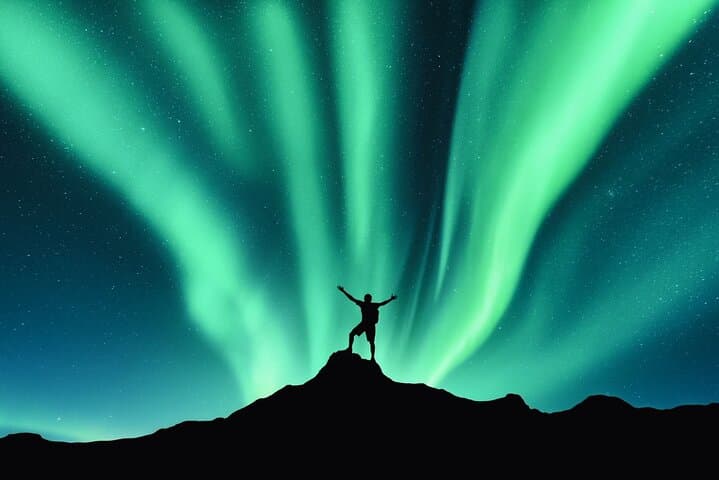
The coach eased out of Akureyri like a quiet promise, headlights slicing the darkness as the town's streetlamps dwindled behind us. On clear nights the sky over North Iceland feels close enough to touch; it hangs low and patient, waiting for the sun's invisible breath. We drove into that waiting room—away from sodium glare and into fjord-wrapped countryside—looking for the aurora, the sky's most theatrical tenant. Within an hour the dark thickened, the air grew sharper, and a pale green curtain unfurled, then shimmered into ribbons. The lights did not simply appear; they performed, pendulums of color that urged us to look up and remember why humans have told stories about the heavens for millennia.
This is a short tour in scale but large in effect: about two and a half hours, a comfortable minibuss ride from hotels in Akureyri, and a patient search for the auroras. The guides scan forecasts, chase clear patches of sky, and park where the dark is best. There are no guaranteed bursts of color, but the odds near Akureyri in winter favor those who come prepared and flexible. The name aurora itself is Roman, but the phenomenon carries folklore across cultures; Greeks called it the 'Dance of the Spirits', medieval Europeans read omens in the shimmer, and old Icelandic tales pictured angels whipping up dresses that painted the night.
Geology and physics meet here in elegant ways. The aurora borealis is born when charged particles from the sun ride the solar wind into Earths magnetic field and collide with molecules in the upper atmosphere. Those collisions emit light: green from oxygen at lower altitudes, reds from oxygen higher up, and purples and blues from nitrogen. Aurora activity rises with solar storms and the Kp index; locals and guides keep a running eye on forecasts from the Icelandic Meteorological Office and spaceweather.com. In North Iceland, the aurora often favors the dark northern horizon and fjord skylines; the mountains and water do a quiet duet with the sky, reflecting and framing the spectacle.
Akureyri itself is a practical launching point. Iceland's second-largest urban area, sometimes called the 'Capital of the North', it balances a compact town center with quick access to sparsely lit coastal roads where light pollution fades fast. The community is built around fishing, tourism, and geothermally warmed public pools where you might soak the chill away before or after a night out. Local guides know the microclimates here: a clear patch a few kilometers up the fjord can mean the difference between an evening of waiting and a full aurora show.
Travelers come to this evening tour for both convenience and the kind of intimacy that only small-group outings offer. The minibus format means you can be nimble: guides pivot from clouded skies to clear skies and set up in places with wide horizons and minimal artificial light. Once the show begins, you'll have time for photographs and to simply watch: the guide will step back and let the sky take the stage.
Practicality matters as much as wonder. Dress in insulated layers, a windproof outer shell, and bring a hat and gloves; North Iceland nights bite through thin clothing even when you think youre warm. A tripod is essential for photography, and set your camera to manual: aperture around f2.8–f4, shutter speeds between 5 and 15 seconds depending on intensity, and ISO between 800 and 3200. Use a remote shutter or a two-second timer to reduce blur. Your phone can capture flashes of color, but for the deep, painterly ribbons you need a camera that can handle low light. Guides will often help adjust settings, but arrive with a basic sense of your equipment.
Timing is straightforward: the tour runs about 150 minutes and typically departs in the evening from hotels in Akureyri. The cost reflects the attentive, small-group nature of the trip; you can expect a price in the region of 140 USD per person. Bookings are usually instant confirmation with free cancellation options, but try to leave a night in reserve in case the weather turns or the aurora forecast improves on another evening.
Sustainability and respect are part of the rhythm here. The aurora is best viewed in dark-sky conditions, so minimizing light pollution and staying on roads keeps viewing areas pristine. Avoid stomping fragile moss and tundra to find a better vantage; these ecosystems recover slowly. Guides balance enthusiasm with stewardship, ensuring the landscape stays for future watchers.
Why this tour? It is accessible—no hiking required—and it places you in expert hands for an iconic Arctic experience. For a couple of hours, the world narrows to wind, sky, and the low hum of conversation as the aurora draws lines across the dome above. You leave with photographs, a cooler sense of your place on this planet, and enough stories to last until the next northern night. If you time it right, dress for the cold, and listen to your guide, the sky will do the rest: daring, moving, and — occasionally — dancing just for you.
Trail wisdom
Small choices, better day.
Dress for long exposure temperatures
Layer up with insulated base and mid layers plus a windproof outer shell; nights can be far colder than daytime highs suggest.
Bring a tripod and remote
For sharp long exposures youll need a stable tripod and either a remote shutter or camera timer to eliminate blur.
Trust local forecasts
Guides use the Icelandic Met Office and Kp index tools to pick the best spots; be flexible with timing and pickup locations.
Protect the landscape
Stay on roads and designated pullouts to avoid damaging delicate moss and tundra.
Local knowledge
Read the place, not just the route.
Watch for native species including Arctic fox (rare sightings), Seabirds such as puffins in season (summer).
Keep an eye out for wildlife during the transition between areas and habitats. Respect distance guidelines.
Dark-sky preservation and staying off fragile tundra are key; guides use existing roads and pullouts to reduce impact.
Follow the guide's instructions on size limits, ethical handling, and leave-no-trace practices.
Hofsos seawater thermal pool for a low-key soak with ocean views. Eyjafjordur viewpoints along the north shore road for quiet aurora frames
Locally recommended viewpoints and quiet spots known best to local operators.
Akureyri has been a regional trading and fishing center since the 17th century and is often called Iceland's 'Capital of the North'.
Maritime roots and regional tradition shape the waterways and working coasts.
Seasonal guide
Four versions of the same landscape.
Spring
Best forLate-season aurora opportunities · Longer daylight for daytime sights
ChallengesUnpredictable spring storms · Variable snow cover on roads
Spring can still produce strong aurora nights while days lengthen; expect changeable weather and pack for both cold and milder conditions.
Summer
Best forMidnight sun and hiking · Extended daytime excursions
ChallengesAuroras are nearly impossible during the midnight sun · Higher tourism traffic
Summer in North Iceland is spectacular for roads and hikes but not for aurora viewing due to prolonged daylight.
Fall
Best forConsistent darkness begins · Crisper, clearer nights for viewing
ChallengesEarly season storms and variable road conditions · Shorter booking windows as season ramps up
Autumn nights grow reliably dark, improving aurora odds; pack warm layers and expect sometimes abrupt weather.
Winter
Best forPeak aurora season · Snow-draped landscapes and dramatic skies
ChallengesCold temperatures and icy roads · Occasional road closures or delays
Winter offers the best aurora chances; plan for cold and occasional itinerary shifts due to weather.
Operator details
What the booking data adds.
Included
- ✓We provide warm drinks (hot chocolate) and biscuits.
- ✓WiFi on board
- ✓Blankets are available.
Good to know
- ✓Infants and small children can ride in a pram or stroller
- ✓Service animals allowed
- ✓Public transportation options are available nearby
- ✓Specialized infant seats are available
- ✓Suitable for all physical fitness levels
Pack with intention
What to bring.
Good to know
Common questions.
The tour runs about 150 minutes (roughly two and a half hours) including pickup and time on location.
Plan the edges
The details that make the day easier.
Akureyri is Iceland's second-largest urban area and is often referred to as the 'Capital of the North'.
After the tour, warm up like a local: try fresh seafood at Rub 23, sample craft beers at Bryggjan Brugghús, or soak in the Akureyri Swimming Pool for a steamy reset. The town has compact cafés and bakeries perfect for post-aurora reflections.
- trailhead
- Akureyri Airport (AEY). Driving distance from town: pick up from central hotels, typically 10–40 minutes to dark viewing spots. Cell service: intermittent once off main roads; guides carry communication devices. Permits required: none for public roads; obey private property signs.
This tour uses roads and pullouts to minimize trampling of fragile tundra; please avoid using bright lights during viewings and pack out all trash.
Explore by topic
Follow the threads.
Keep exploring
Make the story part of the trip.
Set out from Bass Harbor for a private, customizable day on Blue Hill Bay — lighthouses, puffins, seals, and the chance to feel Acadia from the water. Small groups, local captains, unforgettable views.
In four hours you can move from shaded canyon ferns to wind-scoured coastal ridgelines, guided by someone who knows where the light—and the hidden views—live. This private half-day hike on the Monterey Peninsula or Big Sur is compact, curated, and perfect for travelers who want depth without a multiday commitment.
 Related story
Beneath a sky of shifting light, Skaftafell’s ice reads like a map of time. This three-hour guided glacier hike mixes technical instruction with geology and culture: compact, safe, and unforgettable.