
What the day feels like
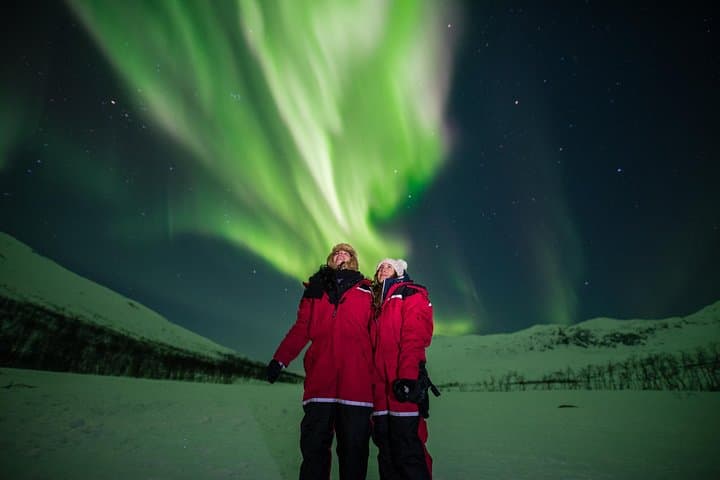
The night arrives with a cold that talks back. Snow underfoot crunches in sharp punctuation, your breath blooms white, and the low, honest glow of a bonfire feels like a promise. For a few hours you and a small group of fellow travelers push north in search of the aurora—the green and violet curtains that refuse to be photographed properly until you’ve stood beneath them. On the Northern Lights tour - All inclusive - Northern Horizon, that search is practical and personal: professional photos are taken for you, thermal suits and warm boots are handed out, and a small-group guide reads the sky like a weathered map.
There’s a certain choreography to aurora chasing. It begins with forecasting—solar activity, cloud cover, and the thin line between patience and luck—and ends with the quiet satisfaction of a good run: hot drinks, sausages over the fire, and the grainy glow of your camera screen where the aurora appears just as the guide predicted. This is not gilded romance; it’s an achievable, carefully managed night adventure. The tour runs 6–9 hours, maxes out at 15 people, and supplies tripods, photo coaching, and photos by email—everything you need to leave with memories rather than frostbite.
Tromsø sits well above the Arctic Circle, a compact city of wooden houses, modern museums, and a harbor that catches the long light of polar seasons. Historically it was a hub for Arctic trapping, whaling, and later, polar research. Indigenous Sami stories once explained the aurora as ancestral spirits or fox fires; today scientists trace it to charged solar particles colliding with Earth’s magnetosphere. Both versions matter here: the aurora is at once mythic and a product of space weather, and the best tours respect the folklore while translating the science.
Geology and geography matter less than atmosphere: clear skies and dark nights. That’s why guides pull away from city light and drive toward fjords and plateaus where sodium streetlamps don’t bleach the stars. During a good night the aurora moves like a living thing—hanging, rippling, retreating—daring you to aim your lens faster than your pulse. The guides on this tour are local experts who chase clarity as much as spectacle. They’ll pick sites that balance foreground interest (a frozen inlet, a stand of birch, a small cabin) with sky, and they’ll reposition when clouds betray a sector of the horizon.
Practical details make this work for a wide range of travelers. The company provides thermal suits and boots; you won’t need to pack elaborate arctic clothing unless you want your own kit. Tripods are available; coaches will help you set camera exposure and ISO; and they’ll even share the evening’s best images by email so you don’t have to babysit a DSLR for hours. Expect pickup in Tromsø in the early evening, a scenic drive into darker country, intermittent stops to test the sky, and a return after midnight. The group size—capped at 15—keeps the experience intimate while maintaining safety.
Why go with a group tour rather than rent a car and chase alone? Aurora hunting is partly logistics and partly local intelligence. Guides know where roads stay clear, where wind scours clouds off ridgelines, and which locations have welcoming hosts or bonfires if conditions force a wait. They also bring safety and comfort: thermal suits, hot drinks, and a team that can pivot when forecasts change. For first-timers, that reduces stress and increases the chance of seeing the lights.
If you’re planning the trip, timing and gear matter. The aurora season here runs from late September through April, with the deepest winter months offering long nights and often crisp, clear skies. March is frequently recommended—cold, but with increasing stability—and this tour lists durations at 360–540 minutes to give flexible windows for travel and photography. Price-wise, the experience starts from $244.49 and includes many extras other operators charge for: warm suits, boots, tripods, and digital photos.
On the ground (and snow), etiquette counts. Keep a respectful distance from private property and reindeer grazing areas. Follow your guide’s instructions at photography sites to preserve fragile lichens and avoid trampling vegetation that’s insulated by snow. Finally, let the night slow you down. Many visitors arrive focused on the perfect shot; the better souvenir is often the small human moments—a shared thermos, a guide’s quiet cheer, the first, breathless gasp when green flames thread the sky.
If you want to increase your odds or get better photos, come with an understanding of basic camera settings, or rely on the coach included with the tour. For less technical travelers, the supplied tripod and the professional images you’ll receive afterward mean you can enjoy the show without missing a beat.
The Northern Lights tour - All inclusive - Northern Horizon is both aspirational and practical: a carefully curated night out that respects the whims of the sky while equipping you to respond. Whether you’re a photographer after a dramatic frame or a curious traveler seeking one of nature’s most elemental spectacles, this is the kind of trip that turns a cold night into a story worth telling. Book through the local-guides link for more detail and to see availability: https://app.advcollective.com/local-experts/northern-lights-small-group-tour-from-tromso-all-inclusive-aurora-chase
Trail wisdom
Small choices, better day.
Dress in layers
Even with provided thermal suits, wear moisture-wicking base layers and insulated mid-layers to stay comfortable during long photo sessions.
Bring a spare battery
Cold drains camera and phone batteries fast—carry two spares inside an inner pocket close to your body.
Listen to your guide
Guides choose locations based on real-time conditions—follow their instructions for safety and best viewing spots.
Know basic camera settings
If you want your own images, know how to shoot long exposures (10–30s), set ISO (800–3200), and open aperture wide.
Local knowledge
Read the place, not just the route.
Watch for native species including Arctic fox (occasional, distant), Sea birds like kittiwakes and eiders in coastal zones.
Keep an eye out for wildlife during the transition between areas and habitats. Respect distance guidelines.
Tours minimize light pollution and avoid sensitive grazing areas; visitors are asked to respect private land and keep noise low to avoid disturbing wildlife.
Follow the guide's instructions on size limits, ethical handling, and leave-no-trace practices.
Undeveloped fjord shoreline viewpoints that local guides use for low-light foregrounds. Small coastal fishing hamlets where lights reflect on sheltered inlets
Locally recommended viewpoints and quiet spots known best to local operators.
Tromsø grew from a 19th-century trading and fishing outpost into a center for Arctic research and exploration; the aurora has been part of local folklore for centuries.
Maritime roots and regional tradition shape the waterways and working coasts.
Seasonal guide
Four versions of the same landscape.
Spring
Best forLonger daylight windows · Stable late-season skies
ChallengesVariable snow cover · Thawing roads
Late winter to early spring (March) balances long, clear nights and improving temperatures—great for photographers who want more stable conditions.
Summer
Best forMidnight sun experiences · Arctic wildlife watching
ChallengesNo true darkness (midnight sun) · Aurora invisible
Summer offers phenomenal daytime adventures but is not suitable for aurora viewing due to continuous daylight.
Fall
Best forEarly aurora season · Autumn colors at lower elevations
ChallengesUnpredictable weather · Shorter nights
September–November opens the aurora season; nights darken but weather becomes more changeable—book flexible tours.
Winter
Best forPeak aurora viewing · Snowy landscapes for foregrounds
ChallengesExtreme cold · Icy roads and potential delays
December–February gives the longest dark hours and classic snowy scenes—dress warm and allow extra travel time.
Operator details
What the booking data adds.
Included
- ✓Norwegian reindeer sausages by the campfire
- ✓Hot drinks, including coffee and tea
- ✓Max 15 people for a more personal experience
- ✓Comfortable transportation with experienced Arctic drivers
- ✓Full Arctic thermal suit and boots
- ✓Instructions on how to photograph the Northern Lights
- ✓Professional portrait taken with high-quality equipment
- ✓Expert photographer and photography assistance
- ✓Receive your photos the next day
- ✓98% success rate in finding clear skies
- ✓Cozy campfire atmosphere
- ✓Snacks
- ✓Expert-trained local Aurora guide
Not included
- —Drop off outside the city center
Good to know
- ✓Public transportation options are available nearby
- ✓Not recommended for travelers with spinal injuries
- ✓Not recommended for pregnant travelers
- ✓Not recommended for travelers with poor cardiovascular health
- ✓Suitable for all physical fitness levels
- ✓Please provide us with your shoe size and height
- ✓Vegetarian option is available, please advise at time of booking if required
- ✓Remember to bring your passport (in case we will drive to Finland) and put on warm clothes!
- ✓Not recommended for travelers with mobility issues
Pack with intention
What to bring.
Good to know
Common questions.
The tour lasts approximately 6–9 hours (360–540 minutes) depending on conditions and travel time to clear-sky locations.
Plan the edges
The details that make the day easier.
Tromsø lies above the Arctic Circle and is one of the most accessible cities for consistent aurora viewing in Europe.
After a night under the aurora, warm up with local seafood at Fiskekompaniet or sample craft beer at Mack Brewery; for coffee and casual bites, try one of Tromsø’s cozy cafes in the city center.
- Closest airport
- Tromsø Airport (TOS)
- Typical pickup
- central Tromsø
- Driving time to viewing sites
- 30–90 minutes
- Cell service
- patchy in remote spots but generally available near roads
- Permits
- none required for typical tour sites
Tours avoid light-polluted sites and minimize impact by using established pullouts; pack out trash, respect wildlife, and avoid driving off designated roads.
Explore by topic
Follow the threads.
Keep exploring
Make the story part of the trip.
Set out from Bass Harbor for a private, customizable day on Blue Hill Bay — lighthouses, puffins, seals, and the chance to feel Acadia from the water. Small groups, local captains, unforgettable views.
In four hours you can move from shaded canyon ferns to wind-scoured coastal ridgelines, guided by someone who knows where the light—and the hidden views—live. This private half-day hike on the Monterey Peninsula or Big Sur is compact, curated, and perfect for travelers who want depth without a multiday commitment.
 Related story
Beneath a sky of shifting light, Skaftafell’s ice reads like a map of time. This three-hour guided glacier hike mixes technical instruction with geology and culture: compact, safe, and unforgettable.