
What the day feels like
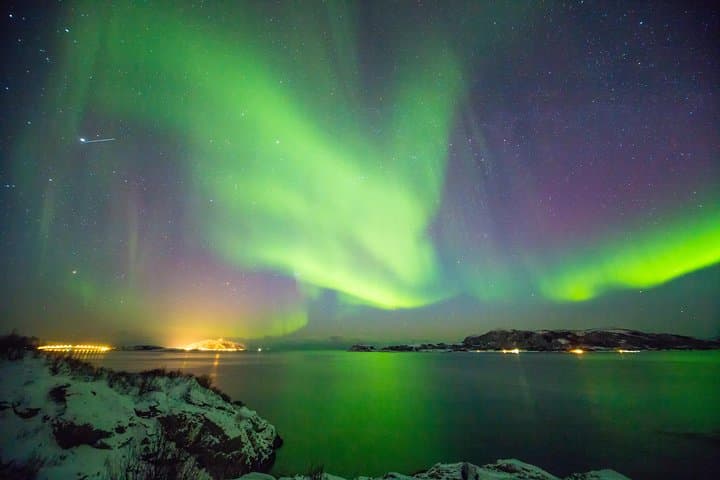
The air tastes metallic and clean as you step out of the city and into a pocket of dark that seems to have been carved for the sky. Streetlights fall away behind you; in front, the city gives permission for the night to stretch. Guides move with the quiet confidence of people who have learned to read the overhead weather as others read maps. The sky begins to breathe—first a whisper of green, then ribs of luminous curtain unfurling, testing the patience of the clouds. Walking under that shifting light, you realize the aurora doesn’t so much hang above you as reach down, daring you to look up.
This is Tromsø—one of the most convenient and charismatic launch points for aurora watching in the Arctic. The <a href="https://app.advcollective.com/local-experts/tromso-northern-lights-walking-tour-city-center-aurora-walk-to-prestvannet">Northern Lights walking tour</a> pivots on proximity: you don’t need to drive hours from the airport or sit in a freezing van. Instead, a local guide routes you out of city glare toward quiet places like Prestvannet pond, where the northern sky becomes a stage. On a three-hour outing, expect a steady, deliberate walk of roughly 2–4 kilometers with stops to watch, photograph, and learn what makes this sky alive.
The phenomenon itself is an intersection of space and earth—solar wind particles colliding with gases in Earth’s upper atmosphere and painting them in electromagnetic light. For centuries, indigenous Sámi people framed the aurora in stories—powerful, living lights with agency and meaning. Today, Tromsø’s culture sits on a similar seam: Arctic modernity built on older rhythms. You’ll hear that context from guides who are part weather-reader, part naturalist, part local storyteller. They’ll point out landmarks, explain how solar activity ties to the colors overhead, and teach etiquette for aurora watching: silence, patience, and minimal use of artificial light.
Geology here is quietly theatrical. Tromsø sits on rugged, glaciated bedrock whose fjords and islands trap cold air and clear skies during calm winter nights—conditions that love to invite the aurora. The city’s scale is small enough to walk, and that intimacy lets a walking tour feel like an unfolding conversation—between you, the guide, and the sky. The tour’s moderate pace is deliberate: long pauses to let the aurora show off, short stretches to keep circulation warm, and practical micro-lessons on camera settings and composition.
Why choose a walking tour rather than a bus chase? It’s private, tactile, and immediate. You feel the cold bite and the warmth of your breath; footprints speak to the land beneath your boots. The guide’s local knowledge—of where city light drops away, where trees frame the sky, and where reflections on frozen ponds double the show—turns each stop into a curated view rather than a fleeting roadside glimpse. For photographers, the walking pace gives time to frame long exposures; for first-timers, the intimacy reduces the overwhelming scale of the night.
Practicalities: the tour runs three hours and is priced from about USD 121. It’s rated as accessible for most people who can walk 2–4 km on flat urban trails in cold conditions. Dress in layers, bring a headlamp with a red filter (to preserve night vision), and have batteries for cameras and phones in your inner pockets—the cold drains charge fast. Guides typically supply hot drinks and local insights; they also monitor aurora forecasts and adapt the route to where the sky is clearest that night.
A few local realities make all the difference. Timing matters: the months around February and March are often a sweet spot for clarity and activity. But the aurora is an unscheduled performance—sometimes dazzling, sometimes shy—so temper expectation with a willingness to be present even if the show is quiet. Because the walk stays near the city center, it’s easy to pair with dinner before or a late beer after; Tromsø’s pubs—like the historic Ølhallen—are a warm spot to debrief your night.
If you’re plotting a visit, a few tactical choices will improve your odds. Book nights with predicted clear skies and check the local KP-index (auroral activity indicator) the afternoon of your tour. Tuck hand-warmers in your gloves, keep spare batteries insulated, and use a tripod for long exposures if you want crisp aurora photos. And let go of the idea of controlling the sky: the best aurora moments often come as a reward for patience.
This tour does more than show you lights; it places the aurora in local context—geological, cultural, and meteorological—while delivering the sensory thrill of standing under moving light. For travelers who want the spectacle without the marathon commitment of multi-hour road chases, it’s a compact, smartly guided option. Walk, listen, and let the night decide how bright the memory will be.
Trail wisdom
Small choices, better day.
Dress in layers
Temperatures can drop quickly; use a moisture-wicking base, insulating mid-layer, and a windproof shell.
Insulate spare batteries
Keep backups in an inner pocket to prevent cold-related drain during long-exposure photography.
Bring a tripod
A compact tripod yields sharper aurora photos during the long exposures you’ll need.
Use red light only
Use a red-filtered headlamp to preserve night vision and respect other viewers.
Local knowledge
Read the place, not just the route.
Watch for native species including Arctic fox (rare in city fringes), Sea birds around the harbor in daylight hours.
Keep an eye out for wildlife during the transition between areas and habitats. Respect distance guidelines.
Local guides emphasize staying on trails and minimizing light pollution; small-group walks help limit disturbance to wildlife and vegetation.
Follow the guide's instructions on size limits, ethical handling, and leave-no-trace practices.
Prestvannet lake at dusk—excellent for reflections and quieter skies. Small lookout points off Tromsø’s promenades that remove most city glare
Locally recommended viewpoints and quiet spots known best to local operators.
Tromsø grew as an Arctic service hub in the 19th century and was a center for polar expeditions; its location above the Arctic Circle made it a natural staging point for aurora observation.
Maritime roots and regional tradition shape the waterways and working coasts.
Seasonal guide
Four versions of the same landscape.
Spring
Best forLonger daylight windows · Stable weather windows
ChallengesUnpredictable temperatures · Late-season snowmelt
Early spring can deliver clearer skies and slightly warmer nights—good for aurora runs without the deepest cold.
Summer
Best forMidnight sun experiences · City festivals
ChallengesNo aurora displays during midnight sun · Short nights
Summer is great for Arctic daytime culture, but not for northern lights—the midnight sun keeps the sky too bright.
Fall
Best forTransition weather patterns · Fewer tourists
ChallengesIncreasing cloudiness · Chillier evenings
Fall brings earlier nights and active skies but also more unsettled weather—check forecasts closely.
Winter
Best forAurora visibility · Night photography
ChallengesSevere cold nights · Short daylight
Winter is peak aurora season: long, dark nights with frequent displays, but plan for serious cold.
Pack with intention
What to bring.
Good to know
Common questions.
The tour lasts approximately 3 hours and typically covers 2–4 km with several stops for viewing and photography.
Plan the edges
The details that make the day easier.
Tromsø sits well north of the Arctic Circle (about 69.65°N) and experiences the polar night when the sun doesn’t rise for several weeks each winter—ideal for aurora viewing.
After the walk, warm up at local spots like the historic Ølhallen pub for a beer from Mack Brewery or try hearty Arctic fare—reindeer stew or fresh cod—at one of Tromsø’s compact restaurants to round out the night.
- Closest airport
- Tromsø Airport (TOS); Meeting point: Tromsø city center (short walk to Prestvannet); Driving distance: 10–20 minutes from airport to city center; Cell service: reliable in city, mostly available on short walking routes; Permits: none required for city-center walking tours.
Support small-group, local-guided tours to minimize emissions and light pollution; avoid using flash and keep off fragile shoreline vegetation to protect Arctic habitats.
Explore by topic
Follow the threads.
Keep exploring
Make the story part of the trip.
Set out from Bass Harbor for a private, customizable day on Blue Hill Bay — lighthouses, puffins, seals, and the chance to feel Acadia from the water. Small groups, local captains, unforgettable views.
In four hours you can move from shaded canyon ferns to wind-scoured coastal ridgelines, guided by someone who knows where the light—and the hidden views—live. This private half-day hike on the Monterey Peninsula or Big Sur is compact, curated, and perfect for travelers who want depth without a multiday commitment.
 Related story
Beneath a sky of shifting light, Skaftafell’s ice reads like a map of time. This three-hour guided glacier hike mixes technical instruction with geology and culture: compact, safe, and unforgettable.