
What the day feels like
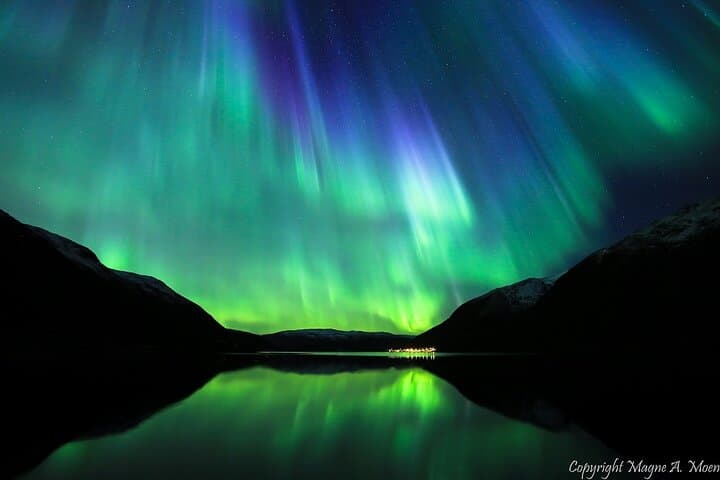
You step out of the minibus into a cold air that smells faintly of sea and pine. A hush falls—the kind of quiet you only get two hours after midnight in the high north—broken by the rasp of branches and the low murmur of your guide. Overhead the sky is a taut, dark canvas. Then a ribbon of pale green unfurls and starts to move as if pulled by an invisible hand. The aurora doesn’t so much appear as decide to show itself, first a ghostly sheen, then sheets and waves of color that pulse and re-form across the heavens. In that instant every long drive, every mittened minute of waiting in the dark feels like an investment repaid.
Tromsø is a pragmatic base for romance with the sky. Sitting at roughly 69.65° north, the city is far enough inside the auroral oval to make regular night chases feasible across a long season, but close enough to the sea and fjords that the landscape always remains in view. The small-group Northern Lights chase leaves from downtown Tromsø and treats the sky like a moving exhibit. Guides read weather models, cloud cover, and solar forecasts and make a late call on direction—coast, inland valleys, or even across three fjords toward the Finnish border—to maximize clear-sky time. On a typical evening you’ll drive 1–2 hours away from the city’s light dome, park the minibus, and wait with hot drinks and biscuits while the sky does its thing.
There’s history folded into the chase. Long before photography and tourism turned the aurora into a must-see, Sami reindeer herders and Norwegian coastal communities read the lights as part of seasonal rhythms. Tromsø itself grew as an Arctic hub in the 19th century: whalers, trappers, and scientists used the port as a staging ground for polar expeditions. That heritage is visible in the town’s maritime architecture, its seafood culture, and in the practical, no-nonsense approach locals take to winter weather—layers first, sentiment second.
Geologically, the region is sculpted by ice and sea. Fjords carved by glaciers create inlets and sheltered valleys that can break up cloud systems—exactly the kind of microclimates guides exploit to find clear sky. On some chases you’ll stop near craggy beaches where tidal currents dare you to step closer; on others you’ll park under birch stands that whisper in the wind. The landscape is an active character in the story: it frames the aurora, gives you foreground for photos, and requires the same respect you’d show any sensitive environment.
Why book a small-group chase? The practical edge is immediate: fewer people means quicker decisions, more space to set up a tripod, and personalized photography coaching. Guides help with camera settings—long exposures, manual focus, white balance—and they’ll suggest composition that uses fjord reflections, silhouetted mountains, or foreground cabins. The tour runs about 5–6 hours, priced from roughly $188, and most operators offer free cancellation—handy when clouds rearrange their plans.
For planners: success isn’t guaranteed, but it’s statistically favorable from September through March. The best nights combine clear skies, active solar wind, and low light pollution. Dress like you mean it—temperatures can drop sharply when you stop moving—and bring a tripod and a camera that lets you control shutter speed and ISO. Expect to be outdoors for extended periods; the company will bring hot drinks and biscuits, and guides will scout locations that balance sky visibility with safety and accessibility.
Access matters. Tours leave from central Tromsø; transfers are typically short. Cell service can be reliable in towns but intermittent once you’re chasing clear sky; share location plans with someone and trust your guide’s local knowledge. If you’re shooting photos, carry spare batteries—cold drains them fast. And if you find your hands freezing while you’re composing a shot, tuck them into an insulated pocket between shots rather than trying to warm them in gloves you’ll need for adjustments.
The chase is as much a social experience as a natural one. You’ll meet photographers, curious travelers, and local guides who can tell you about Sami culture, the science of auroras, and where to find the best cod in Tromsø after a late night. When the sky finally shifts, the mood is part pilgrimage and part celebration: quiet for those who want to watch uninterrupted, buoyant for those who clap or cheer when curtains of light finally appear.
Practical takeaways: the minibus format means relatively low exertion—this is an accessible experience for most people who can handle cold and a few hours out at night. But it’s a trip that rewards thoughtfulness: good footwear, layered insulation, a proper tripod, and a camera you know how to use will make the evening far more rewarding. Above all, bring patience; the aurora has a timing all its own.
Whether you’re a photographer chasing your best long-exposure frame, a traveler who wants to tick the aurora off a bucket list, or someone who simply wants to stand in the Arctic dark under shifting light, a small-group chase from Tromsø is designed to tilt the odds in your favor. The guides do the driving, the weather models, and the scouting; you get the moments when the sky decides to let you in.
Trail wisdom
Small choices, better day.
Dress in layers
Temperatures drop when you’re standing still—wear a warm base layer, insulating mid-layer, and a windproof shell.
Bring a sturdy tripod
Long-exposure aurora shots need stability—lightweight travel tripods often wobble in cold wind.
Protect camera batteries
Carry spares in an inner pocket to keep them warm; cold drains battery life quickly.
Use a headlamp with a red light
Red light preserves night vision and won’t interfere with others' photos when composing shots.
Local knowledge
Read the place, not just the route.
Watch for native species including White-tailed eagle, Reindeer.
Keep an eye out for wildlife during the transition between areas and habitats. Respect distance guidelines.
Minimize light pollution and stick to roads and designated parking spots; guides usually avoid sensitive habitats and request guests pack out all waste.
Follow the guide's instructions on size limits, ethical handling, and leave-no-trace practices.
Ersfjordbotn: a photogenic inlet with dramatic mountains and lower light pollution than the city. Sommarøy: a coastal village with white beaches and open sky views for aurora framing
Locally recommended viewpoints and quiet spots known best to local operators.
Tromsø developed as an Arctic gateway in the 19th century—serving fishing, whaling, and polar exploration—which shaped its maritime culture and scientific legacy.
Maritime roots and regional tradition shape the waterways and working coasts.
Seasonal guide
Four versions of the same landscape.
Spring
Best forLate-season aurora viewing · Longer daylight windows · Milder cold nights
ChallengesUnpredictable snowmelt · Variable cloud cover
Spring offers milder nights and lingering aurora opportunities, but shifting weather patterns can change visibility quickly.
Summer
Best forMidnight sun photography · Hiking and fjord exploration
ChallengesNo aurora due to continuous daylight · Tour services limited for aurora chases
Summer is spectacular for daytime Arctic experiences, but the midnight sun prevents aurora viewing.
Fall
Best forEarly aurora season · Crisp clear nights · Fewer tourists
ChallengesCooling temperatures and early snowfall · Shorter daylight affecting logistics
Autumn brings the aurora back to the skies and often clear, crisp nights—conditions that pleasure both photographers and small-group chases.
Winter
Best forPeak aurora activity · Snowy landscapes for foregrounds · Evening-to-night tours
ChallengesShort daylight hours and cold temperatures · Potential road or weather delays
Winter is prime aurora season with long nights and striking snowy scenery, but it requires cold-weather readiness and flexible timing.
Operator details
What the booking data adds.
Included
- ✓Hot chocolate and biscuits
Good to know
- ✓Public transportation options are available nearby
- ✓Suitable for all physical fitness levels
Pack with intention
What to bring.
Good to know
Common questions.
While sightings can’t be guaranteed, Tromsø lies inside the auroral oval and small-group chases that move to clear skies significantly increase your chances—many departures report successful sightings on most nights.
Plan the edges
The details that make the day easier.
Tromsø sits above the Arctic Circle (about 69.65° N) and experiences polar night—continuous darkness—for parts of winter, increasing aurora visibility windows.
After a chase, head to Fiskekompaniet for fresh Arctic seafood or Ølhallen, Tromsø’s historic pub, to warm up with a local beer. Visit the Polar Museum for context on the region’s exploration history.
- Closest airport
- Tromsø (TOS). Typical pick-up: downtown Tromsø; driving to clear-sky sites: 30–90 minutes. Cell service: good near towns, patchy in remote valleys. Permits: none required for standard roadside stops.
The auroral habitat isn’t fragile in the same way as a nesting site, but light pollution and off-road driving can harm local ecology—stick to roads, minimize light, and pack out trash.
Explore by topic
Follow the threads.
Keep exploring
Make the story part of the trip.
Set out from Bass Harbor for a private, customizable day on Blue Hill Bay — lighthouses, puffins, seals, and the chance to feel Acadia from the water. Small groups, local captains, unforgettable views.
In four hours you can move from shaded canyon ferns to wind-scoured coastal ridgelines, guided by someone who knows where the light—and the hidden views—live. This private half-day hike on the Monterey Peninsula or Big Sur is compact, curated, and perfect for travelers who want depth without a multiday commitment.
 Related story
Beneath a sky of shifting light, Skaftafell’s ice reads like a map of time. This three-hour guided glacier hike mixes technical instruction with geology and culture: compact, safe, and unforgettable.