
What the day feels like
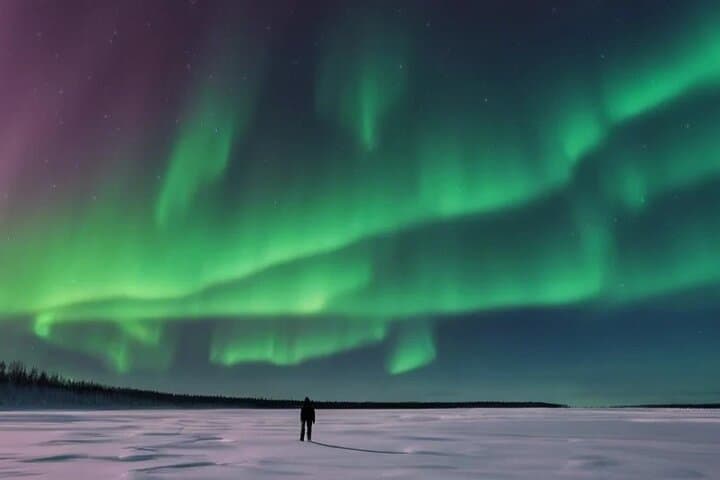
The air bites; the world narrows to breath and firelight. Across a low, snow-carved horizon a band of green unfurls, folding and rearing like a living curtain. Your guide points without needing words — a tilt of the head, the quiet inhale of the group — and the aurora answers, rippling overhead. This is not a stadium of strangers or a hurried roadside stop. It is a small circle around a campfire on a private site outside Rovaniemi where the sky does the talking and silence is part of the show.
Northern Lights Experience is the kind of outing that trades spectacle for intimacy: maximum sky time, minimal travel, and a small-group rhythm that lets the light — not a tour schedule — set the tempo. The company behind the trip is local, and the guides bring the pragmatism of Lapland winter and the soft authority of people who read aurora forecasts like sailors read wind.
Why this place? The Far North is where Earth’s magnetic field funnels charged particles from the sun into the upper atmosphere, creating curtains of light that can flare, shimmer, or pour like molten silk. Rovaniemi sits close to the Arctic Circle, where nights are long enough in winter to give you hours of observing time and the latitude is high enough that a moderate geomagnetic storm can turn the whole sky neon. But the lights are as much about patience and position as solar storms; being on a private, dark site away from city glow gives you a better canvas.
There’s a human story wrapped into the science. This part of Finnish Lapland is crosshatched by Sámi culture, reindeer herding, and a post-war reconstruction era that reshaped Rovaniemi. The town itself bears designs from the post-war rebuild: an orderly plan and public buildings that nod to the modernist hand that guided the region after conflict. On clear nights, locals still point to the same sky and tell the same old stories — the aurora as a living presence, sometimes a warning, sometimes a companion on long winter nights.
What to expect: the tour runs roughly 4–5 hours, designed for small groups of up to eight people. It’s an evening affair: you travel a short distance from town to a private site chosen to limit light pollution and maximize sky view. Guides set up a warming campfire, help with camera settings, and stay flexible with the schedule as the aurora’s timing can be capricious. There’s no marathon driving to distant observation points — the emphasis is on spending more time under the sky and less time in transit.
Practical edge: nights are very cold and dry; layers and proper winter gear are not optional. Expect uneven walking surfaces; the best viewing spots are often a short walk across packed snow or a groomed path. Photographers should bring a tripod and a lens that opens wide; your guide will help dial in exposure settings. If the aurora is a washout due to geomagnetic calm, small-group operators tend to be flexible — and many offer rebooking or refunds, especially with instant confirmation and free-cancellation policies.
Who is this for? Urban travelers who want a clean, comfortable introduction to aurora watching without committing to long overland expeditions; photographers seeking controlled access to dark-sky setups; families who prefer a private experience with a warming fire and guides who can translate science into story. It’s not a hardcore expedition, but it’s also not a drive-by: you need patience, respect for cold weather, and a willingness to let the night unfold.
Insider tips: go early in the winter season if you prize longer nights, but late winter — February to March — can offer clearer skies and marginally warmer temperatures. Insulate your extremities aggressively; the biggest enemy of a great aurora memory is frozen toes. Ask guides about local weather and aurora indices — they’ll track KP values and cloud cover and adapt the site if the forecast shifts.
Booking details: the tour is bookable with instant confirmation, runs about 270 minutes, and is priced from about $155. Small group sizes mean the experience feels personalized. Bring a sense of quiet and curiosity; loud music and bright screens are the quickest way to spoil the moment for everyone.
Why it matters: seeing the Northern Lights is one of those rare experiences that compresses geology, physics, culture, and personal perspective into a single night. It’s restorative in a way that’s not merely cinematic — it’s a chance to stand under an active sky and be reminded how alive the planet’s systems are. This Northern Lights Experience offers a thoughtfully paced way to witness that energy, guided by people who have learned to read both the forecast and the land.
Trail wisdom
Small choices, better day.
Dress in layers
Temperatures can plummet quickly; use a moisture-wicking base, insulating mid-layers, and a windproof, insulated outer shell.
Protect your camera
Use a sturdy tripod and keep spare batteries warm in an inner pocket—cold drains battery life fast.
Mind the light
Avoid bright screens and flash photography to preserve your night vision and the experience for others.
Plan for remote conditions
Expect limited facilities at the viewing site; bring water, snacks, and any medication you need.
Local knowledge
Read the place, not just the route.
Watch for native species including Reindeer, Moose (elk).
Keep an eye out for wildlife during the transition between areas and habitats. Respect distance guidelines.
Operators aim to minimize light pollution and site impact—follow Leave No Trace principles, stay on designated paths, and avoid disturbing wildlife.
Follow the guide's instructions on size limits, ethical handling, and leave-no-trace practices.
Ounasvaara ridge for panoramic winter walks near Rovaniemi. Quiet Kemijoki riverbanks outside town for clear, low-light stretches of sky
Locally recommended viewpoints and quiet spots known best to local operators.
Rovaniemi was largely rebuilt after World War II and its post-war town plan reflects mid-century reconstruction influences.
Maritime roots and regional tradition shape the waterways and working coasts.
Seasonal guide
Four versions of the same landscape.
Spring
Best forLate-season aurora viewing · Longer daylight hours for day activities
ChallengesVariable weather · Thawing snow and slushy paths
March can still deliver strong auroras while offering longer days for other Arctic activities; expect mixed conditions as winter transitions to spring.
Summer
Best forMidnight sun experiences (no aurora) · Hiking and fishing
ChallengesNo aurora due to continuous daylight · High travel demand
Summer in Lapland is spectacular for daytime adventures, but the continuous daylight rules out aurora viewing.
Fall
Best forEarly aurora season · Crisp nights and autumnal landscapes
ChallengesUnpredictable cloud cover · Shorter, colder nights
From late September onwards, nights lengthen enough for aurora viewing though cloud cover can be changeable.
Winter
Best forPrime aurora viewing · Snow activities and cozy campfires
ChallengesExtreme cold · Short daylight hours affecting logistics
Winter offers the best odds for strong aurora displays and long nights—dress warm and be prepared for subzero conditions.
Operator details
What the booking data adds.
Included
- ✓Private transportation
- ✓Tour guide
- ✓Camp-fried sausages
- ✓Hot drinks (cocoa, coffee, tea and berry juice)
Not included
- —Warm winter clothing
Good to know
- ✓Service animals allowed
- ✓Not recommended for travelers with poor cardiovascular health
- ✓Suitable for all physical fitness levels
- ✓Our site is situated in the forest about 100 m from the road. This distance has to be walked along a path in the snow..
Pack with intention
What to bring.
Good to know
Common questions.
Guides monitor weather and aurora forecasts and will choose the best nearby site; many operators allow rebooking or refunds under specific conditions—check the voucher and cancellation policy.
Plan the edges
The details that make the day easier.
Rovaniemi lies near the Arctic Circle and was largely rebuilt after World War II; the town's post-war plan reflects reconstruction efforts and modernist influences.
After the sky show, head back to Rovaniemi's town center for contemporary Lapland cuisine—think reindeer stew, locally foraged mushrooms, and craft beers at a cozy gastropub; a stop at Arktikum museum provides context on local history and Sámi culture.
- Closest airport
- Rovaniemi Airport (RVN);Driving distance from nearest town: typically 15–30 minutes from Rovaniemi city center to private viewing sites;Cell service: generally available in town, spotty at remote sites;Permits
- passes
- none required for guided private-site visits, but follow guide instructions and respect private land
This experience emphasizes low-impact viewing from private, dark sites—minimize light use, pack out all waste, and avoid disturbing native wildlife or vegetation.
Explore by topic
Follow the threads.
Keep exploring
Make the story part of the trip.
Set out from Bass Harbor for a private, customizable day on Blue Hill Bay — lighthouses, puffins, seals, and the chance to feel Acadia from the water. Small groups, local captains, unforgettable views.
In four hours you can move from shaded canyon ferns to wind-scoured coastal ridgelines, guided by someone who knows where the light—and the hidden views—live. This private half-day hike on the Monterey Peninsula or Big Sur is compact, curated, and perfect for travelers who want depth without a multiday commitment.
 Related story
Beneath a sky of shifting light, Skaftafell’s ice reads like a map of time. This three-hour guided glacier hike mixes technical instruction with geology and culture: compact, safe, and unforgettable.