
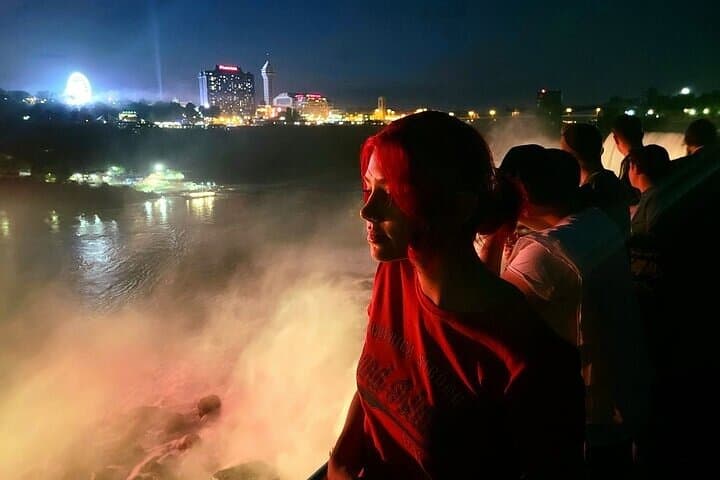
What the day feels like
You arrive as the day softens—light folding over the canyon, tourists thinning into small pockets of silence, and the river’s roar deepening into a single steady chord. The walk begins at the park’s rim, where the air tastes of mineral and mist and the world narrows to the falls themselves. People fall quiet here; the falls have a way of doing that. As the sun slides west, the spray picks up a warm, golden halo. On a private Sunset Tour of Niagara Falls State Park, that light becomes the reason to slow your pace, look carefully, and let the moment stick.
This isn’t a breadcrumbed ferry ride or a quick photo-op from a viewpoint. It’s a focused 90 minutes that places you where the light works best—Prospect Point, Goat Island edges, and the ledges where the falls' power becomes tactile. With a local guide at your side, you learn to read the gorge: how the spray skews colors at dusk, where the mist pulls a curtain and reveals a sudden line of rainbows, and how chosen vantage points translate the thunderous scale into intimate photographs. For anyone who’s ever wanted the falls to feel less like a checklist item and more like a live, breathing place, this sunset walk delivers.
Niagara Falls is geological theater. The falls themselves were sculpted at the end of the last Ice Age, roughly 12,000 years ago, when retreating glaciers rerouted the Niagara River, letting water gouge the gorge from dolostone and shale. The park’s layered cliffs tell that story in bands of rock; the river still carves its narrative below, nudging new edges into place every season. On the human scale, the area has long been an axis of both industry and conservation. Niagara Falls State Park, designed in part by Frederick Law Olmsted and formally established in 1885, is the oldest state park in the United States—an early recognition that this mighty place needed protection and thoughtful public access.
Culture here is edged by the river’s churn. The falls have drawn honeymooners and daredevils, painters and industry, a blur of local commerce and cross-border tourism. Your guide will point out not only the best light but the small markers of local life: the carved stone plaques, the historic railings, the names of viewing platforms that echo the park’s long role in shaping how we look at public landscapes. The evening’s illumination—colored lights that wash the falls after sunset—was introduced in the early 20th century and has become a nightly piece of theater, capped by seasonal fireworks displays when scheduled.
If you want the more private perspective this tour offers, book early. A small-group or private sunset stroll removes the herd effect and makes room for a guide who knows when the light will peak and where the spray will cooperate. The tour operator is registered with the City of Niagara Falls and offers a concierge approach: pre- and post-tour questions answered, local tips, and an insider’s map of the park’s quieter corners. You can learn more and book directly through the tour’s experience page: <a href="https://app.advcollective.com/local-experts/experience-the-magic-sunset-tour-of-niagara-falls-state-park-with-fireworks">Sunset Tour of Niagara Falls State Park with Falls Illumination</a>.
Practical notes: The walk is short—about 90 minutes—but the surfaces are varied: paved promenades, slick viewing ledges, and stairs that descend closer to the water. Wear supportive shoes with good tread and bring a light layer; the temperature near the water can be 5–10°F cooler than downtown. If you’re shooting photographs, a small tripod or solid stance during low light will make all the difference. The park is family-friendly and largely accessible, though some lookout areas use historic stairways that may not be wheelchair-friendly—ask about accessible routes when you book.
Timing matters. Arrive 20–30 minutes before official sunset to settle into a position; the light changes quickly, and the falls’ illumination begins only after dusk. Fireworks—when they’re scheduled, typically through mid-October—add a celebratory coda, but remember that crowds increase during those times and city permitting controls the schedule. If you want a quieter experience, choose a weekday or an off-peak month.
Why this tour? It compresses the best of Niagara’s sensory truths into a focused experience: geological history, human stories, and the simple spectacle of light moving across water. Guided context transforms what many see as a series of pretty snapshots into an evening where the falls articulate themselves to you. If you care about photography, history, or simply the pleasure of being present somewhere dramatic, a sunset walk like this—especially a private one—makes the falls feel like a personalized encounter, not just a postcard.
Ready to plan? Work with a local guide who understands the rhythm of the river and the schedule of illumination. They’ll steer you to the small ledges where the falls reveal color and the viewpoints that read best on camera. Learn more or reserve a time that fits your trip: <a href="https://app.advcollective.com/local-experts/experience-the-magic-sunset-tour-of-niagara-falls-state-park-with-fireworks">book the sunset tour</a> and let someone who knows the falls show you how light can turn thunder into hush.
Trail wisdom
Small choices, better day.
Wear grippy footwear
Trails and viewpoints can be wet and slippery from spray—choose shoes with good tread.
Bring a light layer
Dusk near the water is cooler and damper than inland; a wind shell or fleece is useful.
Charge your camera
Low light means longer shoots—bring a small tripod or steady support and extra battery.
Arrive early
Plan to be at your viewing spot 20–30 minutes before sunset to secure the best vantage.
Local knowledge
Read the place, not just the route.
Watch for native species including Herring gulls and waterfowl, Peregrine falcons nesting on cliff faces.
Keep an eye out for wildlife during the transition between areas and habitats. Respect distance guidelines.
Heavy visitation demands care—stay on trails, pack out waste, and respect wildlife; scheduled illuminations and fireworks follow city permitting to minimize impacts.
Follow the guide's instructions on size limits, ethical handling, and leave-no-trace practices.
Terrapin Point on Goat Island for sweeping rainbow views. Cave of the Winds platform for close spray access (seasonal attraction)
Locally recommended viewpoints and quiet spots known best to local operators.
Niagara Falls State Park was established in 1885 and is the oldest state park in the U.S., shaped by design ideas from Frederick Law Olmsted.
Maritime roots and regional tradition shape the waterways and working coasts.
Seasonal guide
Four versions of the same landscape.
Spring
Best forDynamic river flow · Fewer crowds · Early evening light
ChallengesUnpredictable rain · Cooler temperatures
Spring brings high flow from snowmelt and dramatic spray; pack waterproof layers and expect variable weather.
Summer
Best forWarm evenings · Full illumination schedule · Fireworks possible
ChallengesLargest crowds · Sticky humidity
Summer offers long, comfortable evenings and scheduled illuminations—book ahead to avoid peak crowds.
Fall
Best forCrisp air · Autumn color · Clear light
ChallengesShorter days · Windier conditions
Fall sharpens the light and cools the spray—ideal for photographers who want clarity and fewer tourists.
Winter
Best forIcy panoramas · Snow-dusted vistas
ChallengesCold temperatures · Limited access and shorter tours
Winter makes the gorge otherworldly but many walkways are icy or closed—confirm scheduling and dress warmly.
Operator details
What the booking data adds.
Included
- ✓Bottled water
- ✓Expert Tour Guide
Not included
- —Gratuities
- —Transportation to/from the Meeting Point
Good to know
- ✓Infants and small children can ride in a pram or stroller
- ✓Service animals allowed
- ✓Public transportation options are available nearby
- ✓Suitable for all physical fitness levels
- ✓This is a walking tour.
Pack with intention
What to bring.
Good to know
Common questions.
The tour is approximately 90 minutes and focuses on sunset vantage points and the falls’ illumination.
Plan the edges
The details that make the day easier.
Niagara Falls State Park, created in 1885 and influenced by Frederick Law Olmsted, is the oldest state park in the United States.
After the walk, head to Top of the Falls Restaurant inside the park for elevated views and seasonal fare, or explore nearby historic Red Coach Inn for a quieter meal; local shops near the riverfront sell regional maple treats and handcrafted souvenirs.
- Closest airport
- Buffalo Niagara International (BUF) ~25 miles; Main trailhead: Niagara Falls State Park entrance near Prospect Point; Driving distance from Buffalo: ~30–40 minutes; Cell service: generally good but can be spotty near the gorge; Permits: no permit for public walking tours—fireworks and special events are city-permitted; parking fees apply.
This historic park receives heavy visitation—stick to marked trails, pack out all trash, avoid single-use plastics, and respect wildlife to help preserve the gorge for future visitors.
Explore by topic
Follow the threads.
Keep exploring
Make the story part of the trip.
Set out from Bass Harbor for a private, customizable day on Blue Hill Bay — lighthouses, puffins, seals, and the chance to feel Acadia from the water. Small groups, local captains, unforgettable views.
In four hours you can move from shaded canyon ferns to wind-scoured coastal ridgelines, guided by someone who knows where the light—and the hidden views—live. This private half-day hike on the Monterey Peninsula or Big Sur is compact, curated, and perfect for travelers who want depth without a multiday commitment.
 Related story
Beneath a sky of shifting light, Skaftafell’s ice reads like a map of time. This three-hour guided glacier hike mixes technical instruction with geology and culture: compact, safe, and unforgettable.