
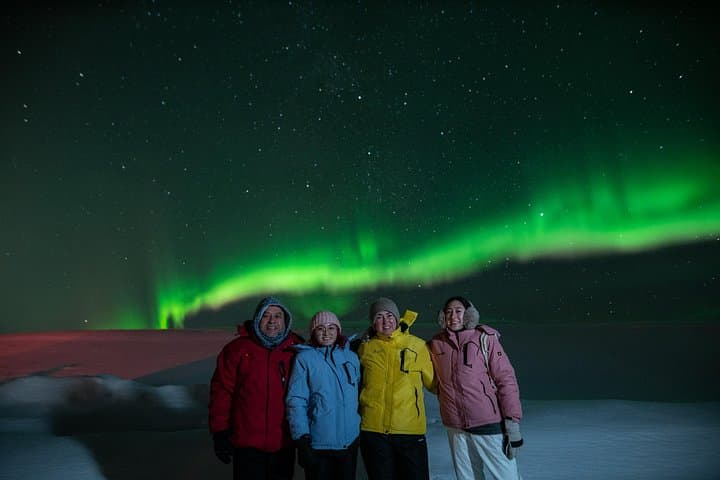
What the day feels like
The van slides out of Reykjavík under a ceiling of low, indifferent clouds. Streetlights blur past like small constellations, and for a moment the city feels like an anchor you are loosening: routine and light falling away as you head north, farther from the glow. The guide checks the aurora forecast on their phone, then smiles with professional restraint—tonight’s show is possible. Around you, the group clamps on hats, tightens scarf knots and watches the horizon. There is a particular hush to these departures, an anticipatory hush: you aren’t just leaving the city, you’re entering the possibility of sky.
The Spirit of the Aurora tour is a compact, practical aurora hunt designed for travelers who want the show without the logistic guesswork. It runs about five hours and starts in Reykjavík with door-to-door pickup. The chemistry of the trip is simple and effective: local guides read the forecast and the micro-weather, find a dark patch of sky, and a dedicated photographer helps you capture it. For many people—first-timers and habitual chasers alike—that dedicated photographer is the value you feel most immediately. Exposure, composition, and the slow breathing of long exposures are handled with the kind of calm expertise that leaves you free to look up and be surprised.
Geology and culture buttress the spectacle. Iceland sits astride the Mid-Atlantic Ridge—an axis of plate divergence that has carved its lava fields, glaciers, and black-sand coasts. That bedrock makes for open, wind-swept places with minimal light pollution at a short drive from Reykjavík. And Icelanders have woven the aurora into cultural threads; folklore once saw the lights as spirits, omens, or playful celestial dogs racing across the sky. Today, the lights are a shared modern wonder: a nightly celestial performance that draws locals and visitors outdoors on clear, cold nights.
The physics behind the curtain is less poetic and no less dramatic. Auroras occur when charged particles from the sun—solar wind—collide with Earth’s magnetosphere and excite atoms in the upper atmosphere. Those atoms release energy as colors of green, pink and purple that sweep, ripple, and sometimes tilt vertically like curtains being drawn. The best shows often align with geomagnetic activity and local clear skies; the guides on this tour watch both.
What the tour promises—and what it realistically delivers—is a blend of logistics and opportunity. Tours are weather-dependent; the operator makes a call by 5 PM each day. If conditions look poor, they cancel and notify you, so you’re not waiting outside for nothing. When conditions are good, expect a shuttle that drives 30–90 minutes to darker skies, simple on-site direction for composition and exposure, and a patient photographer who will frame shots, steady tripods, and help you troubleshoot your camera settings. If you’d rather be an observer than a technician, they’ll shoot for you and provide photos—an especially appealing option for travelers who want professional images without wrestling with their own camera in subzero fingers.
Practicalities are as prominent as the poetry. Dress in layers; nights can be bitter even when the forecast says mild. Bring a tripod if you have one; the photographer can assist, but your own tripod gives you control. Headlamp with a red filter, extra batteries, and a fully charged phone are basic and necessary. Because the tour depends on cloud cover and geomagnetic activity, be flexible with your schedule—block two nights in Reykjavík if your itinerary allows, increasing your odds.
This is not a guarantee-to-see-the-lights product; it’s a weather-backed attempt with professional facilitation. For many travelers the difference between a DIY outing and this tour is time and quality: you spend less time hunting for dark sky and more time learning to read the light when it arrives. Experienced aurora chasers will appreciate the guide’s local shortcuts (less-frozen pass roads, favored pullouts, microclimates), while newcomers will value the hand-holding—both literal and photographic.
Beyond the sky, the trip is a tidy introduction to Icelandic temper: efficient, low-ego, and service-minded. Guides share quick context—why northern storms clear in some valleys, how the light behaves around coastal cliffs—and they prioritize safety. The van is insulated against the cold, and pickups around town mean you aren’t negotiating public transport at midnight.
If you go, come prepared for the intervals between shows: starlit silence and the slow conversation of guides swapping field lore. Your souvenir may be photos—professionally framed exposures, or your own instructed successes—but the memory you keep is quieter: the sense of sky moving in scale and time, of being small under something enormous that is, for a few minutes, choreographed just for you.
Whether you’re a first-timer seeking technical help or an experienced amateur chasing a brilliant green arc, the Spirit of the Aurora tour balances ambition with realism. It gives you more than a ride into the dark: it gives you the chance to see, to understand, and to capture the sky on a night that remembers how to astonish.
Trail wisdom
Small choices, better day.
Layer aggressively
Temperatures can drop quickly; use a base layer, insulating mid-layer, and waterproof outer shell to stay comfortable for hours outside.
Bring a tripod
Long exposures are essential for aurora photography—if you don’t own one, the guide can assist, but your own tripod gives better control.
Charge spare batteries
Cold drains batteries fast—carry spares for cameras and phones in an inside pocket to keep them warm.
Be flexible with nights
Book multiple evenings if possible—auroras need both geomagnetic activity and clear skies, so extra nights increase your chance.
Local knowledge
Read the place, not just the route.
Watch for native species including Arctic fox (rare), Seabirds along the coast.
Keep an eye out for wildlife during the transition between areas and habitats. Respect distance guidelines.
Tours avoid off-road driving and stick to established pullouts to protect fragile moss and tundra; guests are urged to minimize light pollution and follow guide instructions.
Follow the guide's instructions on size limits, ethical handling, and leave-no-trace practices.
Þingvellir and nearby lava fields provide dramatic landscapes for daytime aurora-context photos (when dark enough). Small coastal pullouts east of Reykjavík offer low horizons and subtle reflections for long-exposure shots
Locally recommended viewpoints and quiet spots known best to local operators.
Icelandic folklore once interpreted auroras as spirits or celestial forces; modern Icelanders treat them as part of seasonal life and a point of natural pride.
Maritime roots and regional tradition shape the waterways and working coasts.
Seasonal guide
Four versions of the same landscape.
Spring
Best forLonger daylight balance · Often clearer skies · Good aurora visibility near equinox
ChallengesUnstable weather swings · Variable temperatures
Late winter into March can offer clearer nights and strong auroral activity around the equinox—be prepared for sudden temperature shifts.
Summer
Best forMidnight sun views (not aurora) · Comfortable travel conditions
ChallengesAuroras rarely visible due to midnight sun · Tours typically not offered
Summer’s long daylight means auroras are generally not visible—this tour runs primarily in the darker months.
Fall
Best forDark nights start early · Equinox aurora potential · Fewer tourists than peak winter
ChallengesIncreasing storminess · Shorter, colder nights
September–November brings darker evenings and good aurora chances, though weather can be unsettled.
Winter
Best forPeak aurora season · Snow-dusted landscapes for contrast · Frequent tour availability
ChallengesCold temperatures · Road conditions may be icy
Winter offers the most consistent aurora-viewing window; dress warmly and allow extra travel time for icy roads.
Operator details
What the booking data adds.
Included
- ✓We include cookies and hot chocolate (self serve)
- ✓Warm Blankets
- ✓Transportation
Good to know
- ✓Specialized infant seats are available
- ✓Not recommended for travelers with spinal injuries
- ✓Suitable for all physical fitness levels
Pack with intention
What to bring.
Good to know
Common questions.
There’s no guarantee—the tour increases your odds by bringing you to dark skies and using real-time forecasts; booking multiple nights improves your chance significantly.
Plan the edges
The details that make the day easier.
Auroras are caused by charged particles from the sun colliding with Earth’s atmosphere; Iceland’s latitude makes it one of the best European places to see them from September through April.
After the tour, warm up in Reykjavík: try a hot bowl of kjötsúpa (Icelandic lamb soup) or fresh seafood at local restaurants like Fiskmarkaðurinn, and unwind with a local craft beer at Skúli Craft Bar or a midnight hot dog from Bæjarins Beztu Pylsur.
- Closest airport
- Keflavík International (KEF). Meeting point: central Reykjavík (operator will confirm). Driving to viewing sites: typically 30–90 minutes. Cell service: good near Reykjavik, patchy in remote viewing areas. Permits: none required. Tours run dependent on weather; cancellation decisions made by 5 PM.
Avoid shining bright lights or using flash toward the sky or surrounding wildlife; stay on designated roads and packing out any waste helps protect fragile tundra and moss.
Explore by topic
Follow the threads.
Keep exploring
Make the story part of the trip.
Set out from Bass Harbor for a private, customizable day on Blue Hill Bay — lighthouses, puffins, seals, and the chance to feel Acadia from the water. Small groups, local captains, unforgettable views.
In four hours you can move from shaded canyon ferns to wind-scoured coastal ridgelines, guided by someone who knows where the light—and the hidden views—live. This private half-day hike on the Monterey Peninsula or Big Sur is compact, curated, and perfect for travelers who want depth without a multiday commitment.
 Related story
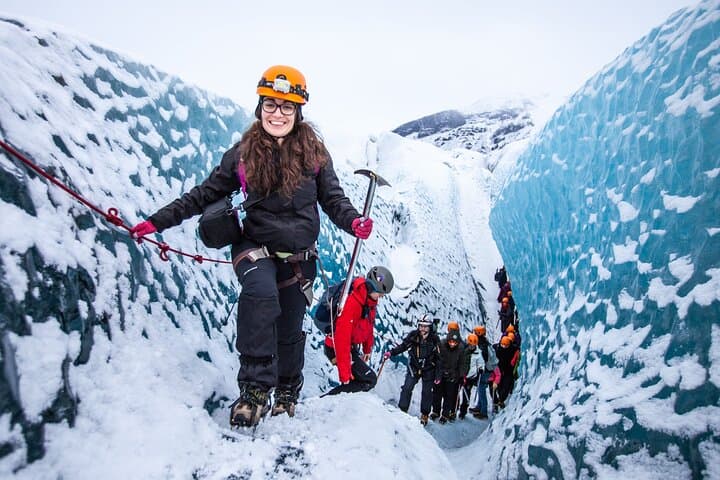
Beneath a sky of shifting light, Skaftafell’s ice reads like a map of time. This three-hour guided glacier hike mixes technical instruction with geology and culture: compact, safe, and unforgettable.