
What the day feels like
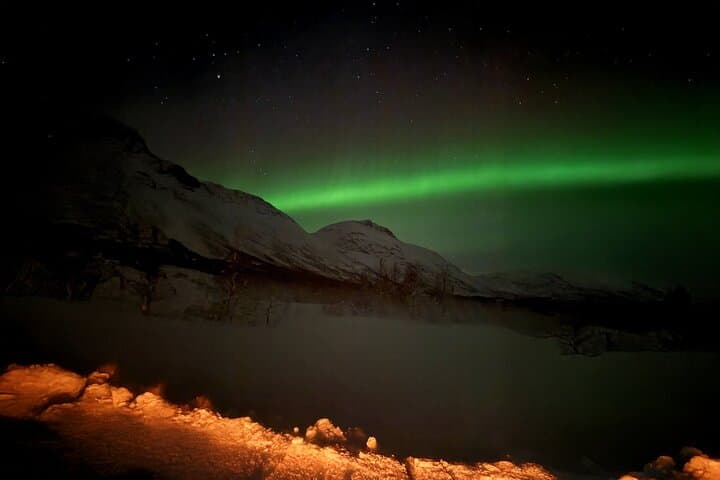
The road out of Tromsø narrows and then disappears into a stretch of midnight black punctuated only by stars and the low amber of the van's heater. Your guide, a local who can read clouds and aurora forecasts like a captain reads a map, taps the radio, checks the sky, and smiles. The group—two tourists from Spain, a couple from Germany, and you—moves from the warm bubble of the van into cold that bites at exposed cheeks. For a few moments, everyone stands quiet, waiting. Then the sky ripples: a smear of pale green flaring into curtains and then folding into a brilliant, slow-motion dance. The Aurora Borealis is archival and immediate at once—ancient solar wind translated into motion you can almost touch.
Tromsø has earned its reputation as one of the world's best urban launch points for aurora chases. Sitting well above the Arctic Circle at roughly 69.6°N, the city is tucked under the auroral oval, the ring-shaped zone where geomagnetic activity makes nightly green shows more likely. That geography is part luck and part science: the oval shifts with solar activity, and local guides in Tromsø have learned to read its moods. They also know the secret of the chase—it's not just about heading north; it's about following clear skies and low light pollution, sometimes driving an hour or two to reach the right microclimate.
This small-group Northern Lights Safari is built around that expertise. The tour runs about five hours, typically departing in the evening from Tromsø with pickup available at central hotels. Groups are intentionally small—between two and fifteen guests—so the guide can keep the itinerary flexible. Warm transportation, hot drinks, and traditional Arctic snacks come standard; your guide mixes local stories and practical photography tips as you hunt for openings in the weather. That human element—someone who knows the hidden valleys, the road closures, and the best low-light camera settings—turns a gamble into a better odds game.
There’s a cultural layer to the night, too. Sami legends once gave names and agency to the lights—spirits of ancestors, fox fires, messages from the gods. Modern Tromsø blends that old reverence with a pragmatic, tourism-minded approach. The city’s historic core traces the boom of 19th-century Arctic exploration; expeditions once launched from here toward Greenland and the polar seas. Today that history feeds an infrastructure: well-maintained roads, knowledgeable guides, and a small-industry of hotels and eateries catering to winter travelers.
Geology plays its part, if quietly. The coastal fjords and islands around Tromsø shape weather in ways visible on the chase. Inland valleys sometimes trap clear cold air; coastal fronts bring cloud. The smartest guides use those patterns, listening to the wind, studying satellite cloud maps, and adjusting the route on the fly. The result is a tour that feels like both a road trip and a vigil—spent alternately scanning the sky and savoring the warmth of thermos tea.
Practical realities matter. Dress in layers; the Arctic night is less about raw temperature and more about wind and exposure. Bring a camera and a tripod (your guide will coach exposure times and white balance), but also come prepared to just watch: the aurora can go from a faint green haze to a full-on crown in minutes, and laptop-perfect photos don't always capture the sensation of being there. Tours like this are designed for accessibility—no mountaineering skills required—but be ready for short walks on icy ground and minimal facilities once you leave the city lights.
For first-time visitors, timing is crucial. The aurora season in Tromsø runs broadly from September to April; peak visibility tends to cluster in winter months when nights are long and skies are cold and clear. March and late February often combine stable weather with long enough nights to give multiple viewing opportunities. If photography is your primary goal, avoid nights of a full moon and look for clear-sky forecasts—your guide will do the heavy lifting on that front, but a bit of pre-trip planning helps.
Why book a small-group chase instead of going solo? Local guides bring something that apps and webcams cannot: real-time decision-making informed by years on these roads, access to rural pullouts away from light pollution, and a social container for the night—shared awe, hot chocolate, and someone to make sense of what you're seeing. The tour is priced accessibly and offers instant confirmation and free cancellation options, which is useful when weather is the boss.
When the aurora finally finishes its performance and the van eases back toward Tromsø, the town looks like a harbor quietly waiting. You return with cheeks flushed from cold and eyes stubbornly bright from the spectacle, the kind of memory that makes the whole trip feel like a small, perfect defiance of ordinary life. In Tromsø, chasing the lights is more than ticking a box—it’s a brief, electric immersion in a sky that insists you look up.
Trail wisdom
Small choices, better day.
Layer for variable cold
Wear insulated base layers, a down mid-layer, and a windproof shell—temperatures and wind chill can change during stops.
Bring a tripod and remote
A stable tripod and a remote or two‑second timer are the easiest ways to get sharp, low‑light aurora photos.
Protect your phone battery
Cold saps battery life—carry spares or a power bank and keep devices close to your body between shots.
Trust the guide’s route choices
Guides chase clear skies and low light pollution, so be ready to drive beyond the city for the best views.
Local knowledge
Read the place, not just the route.
Watch for native species including Arctic fox, Sea eagles.
Keep an eye out for wildlife during the transition between areas and habitats. Respect distance guidelines.
Local guides follow strict Leave No Trace practices—minimizing light pollution and avoiding disturbance to wildlife—supporting sustainable tourism in fragile Arctic environments.
Follow the guide's instructions on size limits, ethical handling, and leave-no-trace practices.
Skarven viewpoint—less visited coastal pullout with clear northern horizons. Ringvassøy island beaches—low elevation, dark-sky spots close to Tromsø
Locally recommended viewpoints and quiet spots known best to local operators.
Tromsø grew as a hub for Arctic exploration in the 19th century; its position above the Arctic Circle made it a natural base for polar science and hunting expeditions.
Maritime roots and regional tradition shape the waterways and working coasts.
Seasonal guide
Four versions of the same landscape.
Spring
Best forLate‑season aurora displays · Milder cold than deep winter · Photography with longer twilight
ChallengesUnpredictable cloud cover · Shortening nights
Late winter into early spring (February–April) often offers clearer skies and slightly milder conditions—still cold, but with longer windows of twilight for balanced photos.
Summer
Best forMidnight sun experiences · Hiking and fjord trips
ChallengesNo darkness—aurora not visible · Warmer weather shifts activities
Summer brings continuous daylight to Tromsø; aurora chases are not feasible—summer is for coastal and mountain adventures instead.
Fall
Best forEarly aurora season begins · Crisp nights and colorful landscapes
ChallengesVariable weather and rain fronts · Shorter nights than winter
Autumn (September–November) sees auroras return as the nights lengthen; prepare for changeable coastal weather and early-season clouds.
Winter
Best forPeak aurora visibility · Long dark nights for extended chases
ChallengesCold temperatures and icy roads · Short daylight for other activities
Winter months (December–February) offer the longest nights and high aurora potential but demand serious cold‑weather preparation and patience with weather-driven schedule changes.
Operator details
What the booking data adds.
Included
- ✓Warm drinks & Arctic snacks: roasted marshmallows , cinnamon lefse , brown cheese , dried reindeer , cloudberries , hot chocolate & thermos coffee
- ✓Air-conditioned vehicle
- ✓Important: Please wear warm clothing suitable for Tromsø’s weather.
- ✓campfire
Good to know
- ✓Specialized infant seats are available
- ✓Travelers should have at least a moderate level of physical fitness
Pack with intention
What to bring.
Good to know
Common questions.
While no tour can guarantee sightings, local guides maximize your chances by tracking auroral activity and cloud cover; small groups and flexible routes increase the odds significantly.
Plan the edges
The details that make the day easier.
Tromsø sits roughly 350 kilometers north of the Arctic Circle and is often called the 'Gateway to the Arctic'—its location places it under the auroral oval for frequent Northern Lights activity.
After the chase, warm up in Tromsø’s compact center—try reindeer stew or Arctic char at Emma’s Drømmekjøkken or Bardus Bistro, then finish with a beer at Ølhallen, Tromsø’s historic pub run by Mack Brewery.
- Closest airport
- Tromsø Airport (TOS)
- Typical driving
- up to 1–2 hours from city to viewing sites
- Cell service
- reliable in town, patchy in rural pullouts
- Permits
- none required
Minimize light pollution by avoiding phone flashes and staying on designated pullouts; support local guides who follow Leave No Trace practices and respect wildlife.
Explore by topic
Follow the threads.
Keep exploring
Make the story part of the trip.
Set out from Bass Harbor for a private, customizable day on Blue Hill Bay — lighthouses, puffins, seals, and the chance to feel Acadia from the water. Small groups, local captains, unforgettable views.
In four hours you can move from shaded canyon ferns to wind-scoured coastal ridgelines, guided by someone who knows where the light—and the hidden views—live. This private half-day hike on the Monterey Peninsula or Big Sur is compact, curated, and perfect for travelers who want depth without a multiday commitment.
 Related story
Beneath a sky of shifting light, Skaftafell’s ice reads like a map of time. This three-hour guided glacier hike mixes technical instruction with geology and culture: compact, safe, and unforgettable.