
What the day feels like
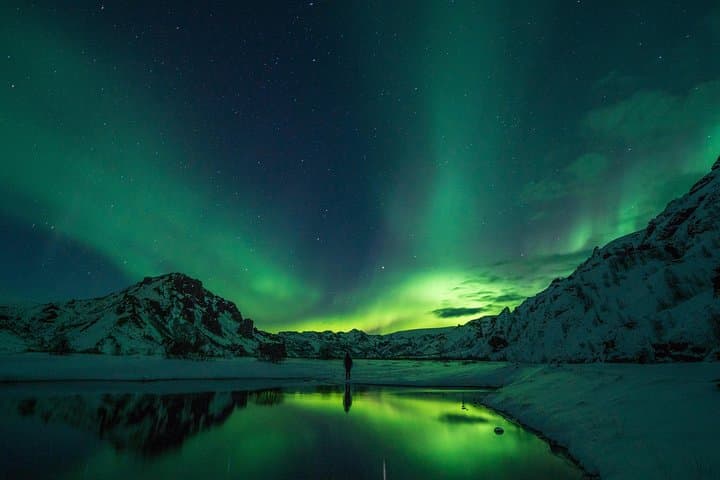
It begins with a reassured hush—an engine warming against the cold, flashlights clicked off, and a small convoy of bundled figures craning their necks toward a sky that feels both near and impossibly distant. Reykjavik’s sodium lamps fade in the rearview as the guide steers away from the city's halo; the landscape slips into a palette of black and silver and the road becomes the only bright thread. Out here, the night has an appetite. The aurora answers like a living thing, unspooling curtains and coils of green and pink that lean and sway as if the sky itself were breathing.
This is the practical thrill of the Northern Lights Tour: a four-hour hunt that trades the predictable comforts of the city for patient pursuit. Guides monitor geomagnetic indices and cloud cover the evening before, and on the night they judge the best window—usually within a 1–1.5 hour radius of Reykjavik—then drive to wherever the forecasts and the sky agree. Because the lights are weather and solar-wind driven, the trip is at once curated and improvisational: you follow expert planning and then let the night decide.
Iceland sits under the auroral oval, a belt of near-constant geomagnetic activity, so the potential for spectacle is reliable from autumn through spring. The country’s sparse population, long winter nights, and northerly latitude make it one of the easiest places in Europe to witness the aurora with the naked eye. Nor is this just a postcard; for Icelanders, the sky has always been a part of cultural navigation: Vikings read weather and sea-lore that tied the heavens to survival, and modern Icelanders still construct a winter life around the long dark—festivals, communal saunas, and nights built for looking up.
Geology plays a quiet supporting role. Iceland is a volcanic island in the North Atlantic, carved by glacial and lava forces; when you drive out toward a dark beach or a black-lava field to watch the sky, the contours you stand on are recent in geological terms. The land seems to hold the cold and the dark in a way that makes the colours of the aurora feel almost tactile, as if the hills and the ocean lend the light a stage.
On a practical level, the tour is built for accessibility. No long climbs, no technical gear, no alpine route-finding—just a short drive from Reykjavik, a few minutes spent setting up a camera, and a lot of standing in the cold while the sky does its work. Guides are trained to read the night and its moving variables: cloud pockets, clearings, and the shifting intensity of the aurora itself. The operator offsets CO2 by planting two trees per tour, a small nod to minimizing the footprint of a global travel habit that runs on long flights and short nights.
Expectations management is part of the guide’s craft. There’s no guarantee the aurora will appear; the tour blends meteorology with patient optimism. When it does come, the effect is both intimate and enormous. The lights aren’t just overhead—they feel like a conversation. They push and pull across your vision, sometimes whispering green ripples and other times exploding into curtains that burn and fold with sudden speed.
For photographers, the experience is technical in a friendly way. A tripod, a fast wide lens, and a willingness to experiment with ISO and shutter speed will get you keepers; your guide can usually recommend settings. For everyone else, the simple act of watching—slow-breathing, rhythm-matching to the sky—can be as satisfying as any frame.
Logistics are straightforward: the tour runs about four hours, departs from central Reykjavik, and often includes hotel pickup. The routes vary depending on that night's forecast, so expect a degree of movement; typical drives are under 90 minutes each way. The tour is offered year-round during the aurora season (autumn to spring), but nights are longest and skies coldest in mid-winter. Small-group and private options are available, giving photographers or families the space they need.
Preparation is equal parts comfort and common sense. Dress warm in layers—wool next to skin, an insulating mid-layer, and a windproof shell—and bring good boots, hat, and gloves. Pack a thermos with a hot drink, and keep a headlamp handy with a red-light mode to preserve night vision. If you're chasing images, bring spare batteries; cold drains them fast. If you’re traveling in peak aurora months (September and March), know that geomagnetic activity tends to spike around equinoxes, improving the odds of dramatic displays.
The tour also offers a gentle civic education: a sense that stargazing in Iceland is not only spectacle but a shared ritual. Guides point out constellations, explain the role of solar storms, and frame the lights within the long story of Iceland’s relationship to weather, sea, and sky. When you return to Reykjavik—hand-warmed, camera full, cheeks flushed from the cold—you’ll find a city that celebrates the long night. There’s often a late coffee or a small bar lit with local craft beer waiting, a chance to debrief the sky with locals who know the value of a good aurora night.
If you want guaranteed warmth, a full aurora experience requires acceptance of uncertainty: the payoff is one of nature’s rare shows, free of ropes and rails, where timing and patience equal reward. It’s a night of motion and stillness, where the world insists you look up, and the sky, in return, does not disappoint.
Trail wisdom
Small choices, better day.
Dress for standing still
Layer wool and fleece with a windproof outer shell—insulated boots and chemical hand warmers keep the night comfortable when the aurora holds.
Tripod for the win
A sturdy tripod and a remote shutter (or 2s timer) are essential for sharp aurora images at long exposures.
Charge and spare batteries
Cold drains camera and phone batteries faster—carry spares in an inside pocket to keep them warm.
Mind your night vision
Use red-light on headlamps and avoid bright screens to preserve night vision while watching faint auroral displays.
Local knowledge
Read the place, not just the route.
Watch for native species including Seals along coastal beaches, Arctic fox in more remote western areas.
Keep an eye out for wildlife during the transition between areas and habitats. Respect distance guidelines.
Operators mitigate impact by limiting stops, using existing pullouts, and offsetting CO2 (this tour plants two trees per booking).
Follow the guide's instructions on size limits, ethical handling, and leave-no-trace practices.
Drive to a black-sand beach for aurora reflections on wet sand. Small, quiet fjords outside Reykjavik that reduce horizon light pollution
Locally recommended viewpoints and quiet spots known best to local operators.
Icelandic folklore often tied auroral displays to omens and sea-weather predictions; historically, sailors and farmers used sky lore to plan seasons.
Maritime roots and regional tradition shape the waterways and working coasts.
Seasonal guide
Four versions of the same landscape.
Spring
Best forLonger twilight for ambiance · Good aurora activity around equinox
ChallengesUnpredictable weather · Shorter nights than mid-winter
Late winter into spring offers strong auroral activity around March equinox, but nights shorten and weather can be changeable.
Summer
Best forMidnight sun photography (non-aurora) · Milder temperatures
ChallengesNo true darkness; aurora not visible · Unreliable aurora season
Summer’s midnight sun means the northern lights are not visible—book this tour autumn to spring instead.
Fall
Best forClear nights after the first cold snaps · Equinox aurora potential
ChallengesVariable coastal cloud cover · Cooling temperatures require warm gear
Autumn sees long nights returning and often clear, crisp skies—early season aurora hunting begins here.
Winter
Best forLongest nights and greatest viewing window · High northern-latitude activity
ChallengesVery cold temperatures · Occasional road closures due to snow and wind
Mid-winter provides the longest nights and excellent aurora chances, but expect serious cold and occasional travel delays.
Operator details
What the booking data adds.
Included
- ✓Professional guide
Good to know
- ✓Specialized infant seats are available
- ✓Service animals allowed
- ✓Public transportation options are available nearby
- ✓Infants and small children can ride in a pram or stroller
- ✓Transportation options are wheelchair accessible
- ✓Suitable for all physical fitness levels
- ✓Wheelchair accessible
Pack with intention
What to bring.
Good to know
Common questions.
The aurora season runs from late August to mid-April, with best odds during clear, cold nights and peaks often around the September and March equinoxes.
Plan the edges
The details that make the day easier.
Auroral activity tends to increase around the March and September equinoxes due to the orientation of Earth's magnetic field relative to the solar wind.
After the tour, warm up in Reykjavik at a seafood restaurant or cozy pub—try a lamb stew or fresh cod and wash it down with a local craft beer; Harpa Concert Hall and downtown Reykjavik offer late-night cafés for post-sky conversation.
- Closest airport
- Keflavik (KEF) ~45–50 minutes to Reykjavik
- Typical pickup
- central Reykjavik hotels
- Driving
- up to 1–1.5 hours to viewing areas
- Cell service
- good along routes but can be spotty at remote pullouts
- Permits
- none required for guided stops
The operator plants two trees per booking to offset CO2 and encourages low-impact viewing—stick to established pullouts, avoid trampling vegetation, and use red-light on headlamps to reduce light pollution.
Explore by topic
Follow the threads.
Keep exploring
Make the story part of the trip.
Set out from Bass Harbor for a private, customizable day on Blue Hill Bay — lighthouses, puffins, seals, and the chance to feel Acadia from the water. Small groups, local captains, unforgettable views.
In four hours you can move from shaded canyon ferns to wind-scoured coastal ridgelines, guided by someone who knows where the light—and the hidden views—live. This private half-day hike on the Monterey Peninsula or Big Sur is compact, curated, and perfect for travelers who want depth without a multiday commitment.
 Related story
Beneath a sky of shifting light, Skaftafell’s ice reads like a map of time. This three-hour guided glacier hike mixes technical instruction with geology and culture: compact, safe, and unforgettable.