
What the day feels like
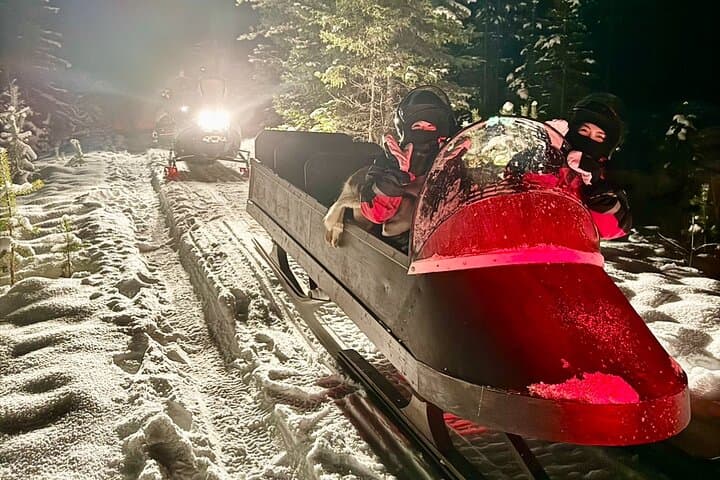
The sleigh glides into a hush that feels intentionally designed—snow swallowing footsteps, trees leaning close like hushers. The driver cuts the engine and for a full, breath-stealing minute there is nothing but the wind and the faint crackle from a distant campfire. Then the sky pulls a curtain of green and violet across itself: ribbons that fold, flare and fall with deliberate choreography. You realize, all at once, that you’ve come into a place where the night performs.
This is not a postcard aurora. The route is a short snowmobile transfer and then a horse-drawn or motorized sleigh to a secluded clearing reached only by snowtrack, the kind of place that exists where human light is held at a respectful distance. A lavvu-style tent—referred to by some operators as a teepee—sits low to the ground, smoke spiraling out and a small group tucked around a campfire. Hot drinks, simple snacks and the low hum of polite conversation make room for the sky to put on its show.
Rovaniemi and the surrounding wilderness sit on the edge of the Arctic Circle for a reason: geomagnetic latitude concentrates auroral activity here. The land underfoot is younger than it looks—glacial sculpting carved the gently rolling ridges and kettle ponds of Lapland during the last Ice Age, then rewilded under birch and pine. The indigenous Sámi people have read these skies and seasons for generations; today, small sustainable-tour operators attempt to thread that legacy through visitor experiences—keeping groups small, favoring traditional shelters, and sharing stories around the fire.
The tour is compact and efficient: three hours from pickup to return (the confirmed tour length is 180 minutes). That makes it ideal for travelers layering aurora-hunting into a longer Iceland- or Scandinavia-style winter itinerary. Expect the core activity—arriving at a hidden clearing by sleigh and spending time under the aurora—to consume about 60–90 minutes of that window, with travel and warm-up time before and after.
Practicalities matter in the Arctic. The trail is flat but exposed; temperatures often sit well below freezing and night-time wind can drive the cold right through your layers. Bring hydration—even when you don’t feel thirsty, the body loses moisture—and protect camera batteries from the cold (they die faster than you do). Operators typically provide warm boots or outerwear if you lack them, but leaning on that as your only plan is a risk: a properly insulated parka, wool base layers and a windproof shell are non-negotiable.
Photographically, the aurora rewards patience and housekeeping: keep batteries warm in an inner pocket, set your camera on a wide aperture and long exposure, and use a tripod. Composition matters—frame the ribbons with the low silhouette of trees or the warm glow of the lavvu to give scale to the sky. As the aurora shifts, be ready to switch exposures quickly; what looks like a static glow can explode into texture in moments.
Cultural context is part of the attraction. After the Second World War, Rovaniemi was largely rebuilt and reinvented as a gateway to Lapland’s nature-based tourism. Today, the region balances built tourism—Santa Claus Village draws family travel—with backcountry experiences that try to preserve the silence visitors come for. Respect local guidance: keep group sizes small, don’t step beyond marked snowtracks, and treat the lavvu and the fire as shared cultural space.
Who should book? This trip is accessible to a wide range of travelers—no snowmobile license is required for guests who are passengers; drivers are provided by the operator. The short duration makes it a good pick for families, couples, or solo travelers who want a focused taste of the Arctic night without committing to multi-day expeditions. That said, the cold is real and unforgiving for the unprepared: if you fidget at -15°C, consider upgrading insulation or opting for a daytime alternative.
Timing is everything. Peak aurora-viewing in Finnish Lapland commonly runs from September through March, with long, dark nights that improve the odds—but even a perfect night requires clear skies. Operators often schedule tours late in the evening (roughly 9–1) to match auroral activity and maximize darkness. The listed price point—about USD 153.80 at time of booking—reflects the specialized transport and the remote location.
The ethical choice matters here. Snowmobiles and tracked transfers concentrate impact; choose operators that limit group size, stay on existing tracks, and brief guests on minimizing light and sound pollution. A memorable aurora is best shared quietly and responsibly.
When the lights finally fold down and the group climbs back into the sleigh, the noise of the world returns like a tide. You won’t want the night to end, but you’ll carry something more durable than a photograph: the particular slow thrill of standing beneath a sky that is still running its ancient calculations—and letting the Arctic night have its moment.
Why go? For the immediacy: three hours from the edge of town to the perfect patch of dark sky, and a front-row seat at one of nature’s most theatrical phenomena. For the cultural thread: a compact, respectful interface with Sámi-inspired shelter and fire. For the practical traveler: a well-scoped, bookable evening experience that fits into a broader Finnish Lapland itinerary.
Trail wisdom
Small choices, better day.
Dress in layers
Wear wool base layers, insulating mid-layers, and a windproof outer shell—temperatures can plunge after dark.
Keep batteries warm
Store spare camera and phone batteries inside an inner pocket to prevent rapid drain in cold conditions.
Mind the schedule
Tours are timed for late evening aurora activity—plan naps and meals accordingly so you can stay alert.
Listen to local guides
Respect snowtracks, stay with the group and follow quiet-hour guidance to protect the viewing experience.
Local knowledge
Read the place, not just the route.
Watch for native species including Reindeer, Arctic fox (rare).
Keep an eye out for wildlife during the transition between areas and habitats. Respect distance guidelines.
Operators increasingly limit group size and use established snowtracks to reduce impact; visitors should avoid off-trail travel and minimize light pollution.
Follow the guide's instructions on size limits, ethical handling, and leave-no-trace practices.
A short detour to a frozen riverbank for quiet star alignment. A daytime visit to quiet backcountry reindeer enclosures (seasonal and responsible options)
Locally recommended viewpoints and quiet spots known best to local operators.
Rovaniemi sits on the Arctic Circle and rebuilt after WWII; the area blends Sámi cultural heritage with modern Arctic tourism.
Maritime roots and regional tradition shape the waterways and working coasts.
Seasonal guide
Four versions of the same landscape.
Spring
Best forLate-night aurora viewings · Longer daylight for daytime activities
ChallengesVariable temperatures · Thawing trails
Early spring (March) offers long nights still good for auroras with slightly milder temperatures and clearer skies.
Summer
Best forMidnight sun experiences · Hiking and boating in daylight
ChallengesNo aurora due to continuous daylight · Limited winter services
Summer has nearly continuous daylight, so aurora-focused evenings are not possible—this tour does not operate in full summer.
Fall
Best forAurora season kickoff · Crisp nights and autumnal landscapes
ChallengesUnpredictable weather · Shorter daylight hours
Fall brings the first reliable dark skies; expect fluctuating weather and early-season cold snaps.
Winter
Best forPrime aurora viewing · Snow-based travel (snowmobile/sleigh)
ChallengesExtreme cold · Icy roads and travel delays
Winter is the optimal season: stable snowtracks, late nights and the highest chance of auroral displays—dress for serious cold.
Operator details
What the booking data adds.
Included
- ✓Information about Northern Lights
- ✓Pick-ups and drop-offs are included in the price in 10 km radius from Rovaniemi city center
- ✓Snowmobiling Equipments (Sleigh pulled by snowmobile, a Helmet, and a pair of Balaclavas)
- ✓A Tour Guide in English (other languages may be available on request: French, Spanish, Finnish)
- ✓Photos taken with your own device
- ✓Winter clothing (Adult & Child size), overalls, boots, gloves
- ✓Snacks & Drinks by the campfire in Teepee
- ✓Air conditioned car
Not included
- —Children under 13 years old must be accompanied by adults paying the full price
- —Infants must not sit on laps
- —Please be ready and wait in your hotel lobby 10 minutes prior to your scheduled pickup time
- —Product may be cancelled or rescheduled if the group size is smaller than 4 persons
- —Product may be cancelled or rescheduled in case of extreme weather conditions
Good to know
- ✓Specialized infant seats are available
- ✓Not recommended for travelers with spinal injuries
- ✓Not recommended for pregnant travelers
- ✓Not recommended for travelers with poor cardiovascular health
- ✓Suitable for all physical fitness levels
Pack with intention
What to bring.
Good to know
Common questions.
No—this tour provides a driver; guests ride as passengers on the sled or sleigh.
Plan the edges
The details that make the day easier.
Rovaniemi sits on the Arctic Circle (about 66°33′N) and is home to the Santa Claus Village—an internationally recognized Lapland landmark.
After the tour, warm up in Rovaniemi with Lappish fare—try reindeer stew, cloudberry jam and smoked fish at a local restaurant such as Nili, then stop in for a sauna or a local craft beer to round out the Arctic evening.
- Closest airport
- Rovaniemi Airport (RVN); Driving distance from city center: typically 20–45 minutes to remote clearings; Cell service: good in town, spotty in the wilderness; Permits: none required for this tour but follow operator safety briefings.
Choose operators that restrict group size, stick to established snowtracks and brief guests on light and noise reduction—these steps reduce wildlife disturbance and preserve dark-sky conditions.
Explore by topic
Follow the threads.
Keep exploring
Make the story part of the trip.
Set out from Bass Harbor for a private, customizable day on Blue Hill Bay — lighthouses, puffins, seals, and the chance to feel Acadia from the water. Small groups, local captains, unforgettable views.
In four hours you can move from shaded canyon ferns to wind-scoured coastal ridgelines, guided by someone who knows where the light—and the hidden views—live. This private half-day hike on the Monterey Peninsula or Big Sur is compact, curated, and perfect for travelers who want depth without a multiday commitment.
 Related story
Beneath a sky of shifting light, Skaftafell’s ice reads like a map of time. This three-hour guided glacier hike mixes technical instruction with geology and culture: compact, safe, and unforgettable.