
What the day feels like
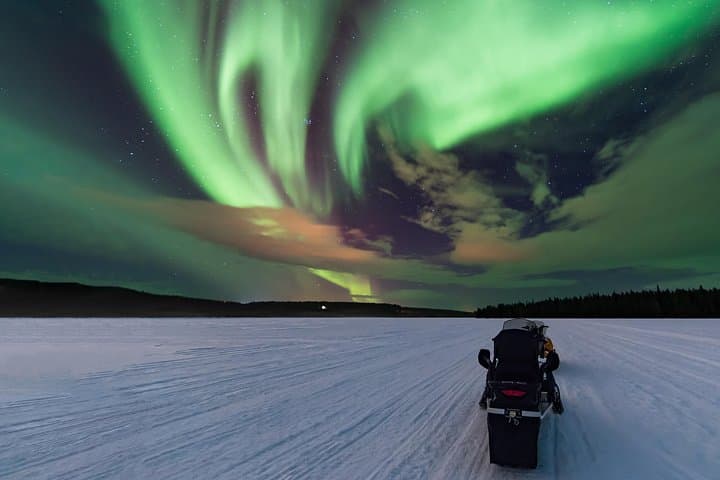
The first time the sky unfurled itself above the Finnish taiga, it did so like a breath held and released: bands of green and violet stretching, folding, and then pouring across a vault of absolute black. You sit on a snowmobile, the engine murmuring beneath you, and the forest seems to hold its breath with you. On a night safari out of Rovaniemi, the snow under your tracks is the only sound that dares compete with the sky—each mile taking you farther from the village lights and deeper into the kind of dark where the Aurora dares to perform.
This is not a slow, stationary viewing. Snowmobiling gives you reach: in roughly 3.5 hours of guided time, you drive well into the Lappish wilderness to chase clear skies and reactive aurora forecasts. The itinerary blends the mechanics of a snowmobile safari—safety briefings, handling, and steady riding—with an observant, almost scientific hunt for northern lights: the guide shifts routes according to the aurora weather forecast, pushing into open expanses and frozen river valleys where the horizon becomes an honest judge of the show. For many travelers, that mix of motion and expectation is what makes the experience electric: you are both participant and witness.
Rovaniemi sits on the Arctic Circle and functions as the practical gateway to Lapland’s winter landscape. The region’s glacial history carved wide, shallow valleys and left an armor of lakes and peatlands that freeze to become auxiliary roads in winter. Indigenous Sámi culture has a long relationship with this environment—reindeer herding remains both a livelihood and cultural touchstone—so a night under the lights is as much an encounter with human history as it is with sky-science.
The geology here is quiet but telling: low rolling hills smoothed by Pleistocene ice, rivers that switch between sluggish winter sleep and explosive spring melt. The snowpack acts like a blanket for the land and a stage for adventure; a pragmatic snowmobiling route uses frozen lakes as straightaways and forest corridors as sheltered conduits. Weather is decisive. Clear, cold nights—often in late winter—deliver the best visibility, while cloud and high humidity can lock the aurora off from sight.
Culturally, Lapland has learned to connect tourism with tradition. Restaurants and cabins around Rovaniemi will serve reindeer stew and Arctic char, and local guides will often explain Sámi narratives about the lights: stories that once described auroras as the breaths of ancestors or playful spirits—an easy reminder to move respectfully while you’re in their landscape.
If you’re planning this outing, the logistics are straightforward but require attention. The tour runs about 210 minutes (roughly 3.5 hours) and commonly costs around USD 165.99 per person. Operators provide thermal suits, helmets, and usually a picnic or hot snack roadside stop; bring layers under the suit, warm boots, and your own camera setup if you want better images. Snowmobiles let you travel 20–60 kilometers from Rovaniemi depending on conditions and the aurora forecast, so expect to be in remote places with intermittent cell coverage.
Practical safety is simple: listen to the guide, maintain safe following distance, and keep lights low when stopping to preserve night vision. A slow, steady pace conserves fuel and preserves the silence that makes aurora sightings feel intimate. If you’re unfamiliar with snowmobiles, most tours are beginner-friendly—the machines are forgiving at low speeds—but pay attention to handling instructions, especially in turns and on frozen water.
Photography here is its own learning curve. The aurora demands a stable tripod, a wide aperture (f/2.8 or wider if possible), ISO settings that balance sensitivity and noise (commonly ISO 800–3200, depending on your lens), and exposures ranging from a few seconds to 20 seconds. Bring an extra battery—cold kills power fast—and a headlamp with a red-light option so you don’t blow out night vision when adjusting settings.
This safari is ideal for couples, families with older children, and solo travelers who want a balance of motion and spectacle. It’s not a wilderness survival trial; it’s a guided, carefully managed leap into the Arctic night that rewards patience and preparation. When the lights finally ripple above, the moment is quiet and plain: an honest natural display where the sky seems to move to its own music, and you’re close enough to feel its presence.
If you want to bookmark this experience, consider combining it with daytime activities—reindeer farm visits, snowshoeing, or a visit to Santa Claus Village—so the trip feels like a proper Lapland week rather than a single, spectacular night. And if you’d like to learn more or reserve a place on a vetted northern lights snowmobile safari, check this local operator’s guided option that pairs skilled guides with responsible routes: <a href="https://app.advcollective.com/local-experts/northern-lights-snowmobile-safari-arctic-aurora-adventure">Northern Lights snowmobile safari</a>.
You’ll leave with cold in your boots, perhaps a smear of soot from the outdoor fire, and a real sense of having moved through a night that is both scientifically remarkable and oddly human—an experience you’ll tell others about in detail, the way you only tell true stories of being someplace the world seemed to tilt for you.
Booking details: the tour confirms instantly, typically includes thermal gear and a hot picnic stop, and offers free cancellation in many cases; prices start around USD 165.99. Travel light, layer well, and be ready to trade a little warmth for one of the most memorable nights the Arctic can offer.
Trail wisdom
Small choices, better day.
Layer for Arctic cold
Wear a moisture-wicking base, insulating mid-layer, and bring thermal socks—operators provide outer suits but not always insulated footwear.
Protect camera batteries
Keep spare camera batteries in an inner pocket close to your body to preserve charge in cold conditions.
Listen and follow
Maintain your guide's line and avoid overtaking—group safety and route visibility depend on steady spacing.
Use red light at stops
Switch to a red headlamp to preserve night vision while adjusting camera settings or putting on gloves.
Local knowledge
Read the place, not just the route.
Watch for native species including Reindeer, Arctic fox (rare sightings).
Keep an eye out for wildlife during the transition between areas and habitats. Respect distance guidelines.
Snowmobile tours can impact quiet habitats—choose operators that minimize off-trail riding, avoid sensitive reindeer pastures, and follow leave-no-trace principles.
Follow the guide's instructions on size limits, ethical handling, and leave-no-trace practices.
Frozen river bends that act as natural amphitheaters for auroras. Small roadside clearings used by local guides for quieter, low-light viewing
Locally recommended viewpoints and quiet spots known best to local operators.
Rovaniemi lies on the Arctic Circle and grew as a modern town after WWII rebuilding; the area has long been important to Sámi reindeer herding traditions.
Maritime roots and regional tradition shape the waterways and working coasts.
Seasonal guide
Four versions of the same landscape.
Spring
Best forLonger nights early in the season · Stable cold spells ideal for clear skies
ChallengesUnpredictable melt late in season · Variable ice conditions on lakes
Late winter into early spring (February–March) often provides clear, cold nights and slightly milder daytime temps—good aurora odds with improving travel comfort.
Summer
Best forNot suitable for aurora hunting in midnight sun · Daytime wilderness excursions
ChallengesMidnight sun prevents dark skies · Snowmobile routes unavailable
Summer is not a window for aurora safaris; use these months for hiking, canoeing, and cultural visits instead.
Fall
Best forEarly-season aurora sightings from September · Fewer tourists than peak winter
ChallengesVariable road and ice conditions · Shorter daylight can complicate logistics
Autumn sees the return of dark skies from September, but snowmobile-specific tours typically begin once snow is reliable.
Winter
Best forPeak aurora viewing · Consistent snowmobile access
ChallengesExtreme cold snaps · Short daylight hours
Winter is the optimal season for northern lights snowmobile safaris—expect the best access and the highest likelihood of clear, cold nights.
Operator details
What the booking data adds.
Included
- ✓Twin driving on a snowmobile
- ✓Winter equipment: helmet, balaclava, gloves, boots and thermal overall
- ✓Aurora Hunting with snowmobile safari
- ✓Professional guide. Guiding in English, other languages on request
- ✓Driving and safety instructions
- ✓Detailed introduction about the Aurora
- ✓Transfer Access Lapland Office to the activity starting point and back
Good to know
- ✓Not recommended for travelers with spinal injuries
- ✓Not recommended for travelers with poor cardiovascular health
- ✓Not recommended for pregnant travelers
- ✓Public transportation options are available nearby
- ✓Suitable for all physical fitness levels
Pack with intention
What to bring.
Good to know
Common questions.
No—most tours are beginner-friendly and include a safety briefing and hands-on instruction, though you should be comfortable on basic motorized vehicles.
Plan the edges
The details that make the day easier.
Rovaniemi sits on the Arctic Circle and markets itself as the official home of Santa Claus; the line of the Arctic Circle actually passes through the city.
After the ride, warm up in Rovaniemi with hearty Lappish fare—reindeer stew or smoked Arctic char—paired with a local craft beer or berry-based dessert. Small downtown cafés and riverside taverns offer a cozy post-adventure scene.
- Closest airport
- Rovaniemi Airport (RVN); Typical drive to trailhead: 20–30 minutes from town; Cell service: spotty in remote viewing spots; Permits: none for guided tours—ensure you book a licensed operator.
Choose operators that follow designated trails, avoid sensitive reindeer grazing areas, and practice low-impact stopping; snowmobiles produce emissions—support companies that offset or adopt quieter, newer machines.
Explore by topic
Follow the threads.
Keep exploring
Make the story part of the trip.
Set out from Bass Harbor for a private, customizable day on Blue Hill Bay — lighthouses, puffins, seals, and the chance to feel Acadia from the water. Small groups, local captains, unforgettable views.
In four hours you can move from shaded canyon ferns to wind-scoured coastal ridgelines, guided by someone who knows where the light—and the hidden views—live. This private half-day hike on the Monterey Peninsula or Big Sur is compact, curated, and perfect for travelers who want depth without a multiday commitment.
 Related story
Beneath a sky of shifting light, Skaftafell’s ice reads like a map of time. This three-hour guided glacier hike mixes technical instruction with geology and culture: compact, safe, and unforgettable.