
What the day feels like
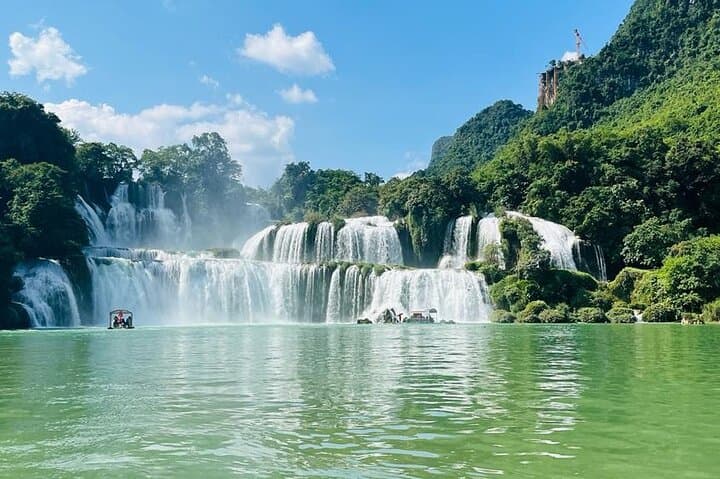
The first time the falls reveal themselves is not gradual; they arrive like a curtain being ripped aside. You round a bend on a narrow riverside lane, bamboo and wet limestone pressing in, and the Quây Sơn River suddenly opens into tiers of boiling white. Water hurls itself over jagged steps and into shallow pools that scatter rainbows across the spray. Ban Gioc doesn’t politely sit in the background; it dares you to approach.
This two-day private adventure is built to let you answer that dare without crowd fatigue or rigid itineraries. You’ll trade Hanoi’s traffic for a single-minded focus on one of Southeast Asia’s most dramatic transboundary waterfalls and the lives that knit themselves to its banks. On the Vietnamese side the cascade is known as Ban Gioc; across the border it’s Detian. Either name, the effect is the same: a wide, multi-tiered rush that shifts personality with the seasons, from a delicate lacework of falls in late winter to a thunderous, curtain-like wall during the summer monsoon.
But the trip is as much cultural as it is scenic. The tour includes time in Khoi Ky Village, where the Tay people live in stilted houses and still bring down fish from the river in woven baskets. Sleeping in a Tay stone house—sparse, sturdy, warmed by the scent of wood smoke—turns the waterfall visit into a deeper, quieter exchange. On day two you explore Nguom Ngao Cave, a cavern of calcite columns and echoing chambers whose cool dark is a sharp counterpoint to the sunlit spray outside.
Geology and history are on constant display. The falls have been sculpted for millennia by the Quây Sơn as it finds fault lines in the karst limestone. Those same exposed layers tell a larger story: This edge of Cao Bang Province sits against the border with Guangxi, China, and for centuries the river has been a conduit for trade, migration, and sometimes contested maps. Today the border is an administrative line and a reminder that water doesn’t care for human boundaries; it follows gravity.
The human history here is intimate. The Tay and Nung peoples have farmed rice terraces and harvested river fish for generations. Traditional house forms—stone bases with wooden upper living spaces—respond to floods and cold winters, and local homestays invite visitors to witness daily life rather than watch it from a distance. Meals are simple and local: grilled river fish, sticky rice steamed in bamboo, and a sharp rice wine if you’re offered a toast.
Practical details matter on a trip like this. The tour is a private, multi-day experience with instant confirmation and a price point that begins at about $289 USD. Expect roughly 48 hours out of town: a long drive from Hanoi (most travelers allow 6–7 hours by road), arrival, hikes, river-side walks, cave exploration, and time for slow meals with a Tay family. Beaches and boardwalks this is not; the terrain alternates between low riverbanks, wet limestone paths, village lanes, and carved steps down to viewpoints. Footing can be slick; waterproof footwear and careful pacing keep the focus on wonder rather than slips.
Timing is everything. In high monsoon the falls are at their fullest and closest to spectacular; bamboo raft rides to the base may be available but are wetter and more weather-dependent. Late autumn—September through November—delivers clearer skies, comfortable temps, and steady but not overwhelming flow. Winter is quieter and cooler; spring stirs the hills green with new rice paddies.
For photographers, Ban Gioc rewards planning: dawn and late afternoon give the best light and smaller crowds. For anyone who prefers people over pixels, the homestay conversations—about mountain weather, seasonal foraging, and the rhythms of river life—are worth the trip on their own.
The tour balances comfort and authenticity. Your private guide handles logistics—entrances, boat options, and village introductions—while leaving space for spontaneous detours. That private element matters in a region where language and practice shape the experience; a local guide smooths communication and ensures respectful engagement.
If you go, go curious and prepared. Keep hydrating on the road, limit single-use plastic, and tip your hosts; homestays are low-impact tourism when matched with thoughtful travelers. Bring a change of shoes for the boat-side scramble, a rain layer, and enough time to sit by the river after dinner and let the falls keep you company. On a clear night, the sound of that water becomes a steady presence, and you’ll realize the falls aren’t only a place to visit; they’re a place that visits you back.
Why take this trip? Because it’s both cinematic and sincere: a natural spectacle that resists being reduced to a single photo, and a human-scale cultural exchange that resists tourist theater. Two days won’t exhaust Ban Gioc’s offerings, but they will leave you with a clear impression of why this edge-of-country waterfall keeps calling travelers who want scenery with context, and adventure with hospitality.
Trail wisdom
Small choices, better day.
Bring waterproof footwear
Stone paths and raft landings are often slick; shoes with good traction and quick-dry uppers help you move confidently.
Pack a light rain layer
Weather changes fast near the falls—storms can spike river flow and spray; a packable shell protects camera gear and comfort.
Carry local currency
Smaller vendors, homestays, and village markets may not accept cards—bring Vietnamese đồng for tips and snacks.
Respect homestay customs
Ask before photographing inside homes and accept offered food as a sign of hospitality—small gestures matter.
Local knowledge
Read the place, not just the route.
Watch for native species including Black gibbon (rare, in higher forested areas), River fish such as carp and small catfish common in the Quây Sơn.
Keep an eye out for wildlife during the transition between areas and habitats. Respect distance guidelines.
The area benefits from community-based tourism; support local homestays, avoid single-use plastics, and stick to marked paths to protect riparian habitats.
Follow the guide's instructions on size limits, ethical handling, and leave-no-trace practices.
Take a short walk upstream where quieter cascades and rice paddies frame the river in late afternoon light.. A small morning market near Trung Khanh where Tay vendors sell fresh river fish and local sticky rice.
Locally recommended viewpoints and quiet spots known best to local operators.
Ban Gioc sits on the Quây Sơn River along the Vietnam–China border; the falls have long been a local landmark for Tay and Nung communities and a strategic landmark in regional histories.
Maritime roots and regional tradition shape the waterways and working coasts.
Seasonal guide
Four versions of the same landscape.
Spring
Best forLush green paddies · Cave exploration · Fewer tourists
ChallengesCooler mornings · Variable water flow
Spring brightens the hills and fills rice terraces; the flows are moderate and caves are cool and accessible.
Summer
Best forFull-throttle waterfalls · Bamboo raft approaches · Lush vegetation
ChallengesHeavy rain and slippery trails · Higher river levels affecting raft access
Monsoon season amplifies the falls and provides dramatic spray, but plan for wet conditions and possible schedule shifts.
Fall
Best forClear skies and light crowds · Comfortable temperatures · Photographic sunsets
ChallengesShorter daylight hours · Cooling nights
Autumn offers the best balance—steady water, crisp air, and excellent visibility for photos and hikes.
Winter
Best forQuiet homestays · Sharp landscape contrasts · Dry trails on clear days
ChallengesCold nights · Reduced vegetation color
Winter is quieter and chillier—great for travelers who prefer solitude and don’t mind lower temperatures at night.
Operator details
What the booking data adds.
Included
- ✓Second Day: Breakfast at the homestay and lunch at a local restaurant
- ✓All entrance fees (Ban Gioc Waterfall, Nguom Ngao Cave, Ban Gioc Pagoda)
- ✓Accommodation in Khoi Ky Stone Village (Private room in a homestay)
- ✓Private transportation (round-trip from Hanoi)
- ✓First Day: Lunch and dinner at a local restaurant.
- ✓Private English-speaking guide
Not included
- —Personal expenses and Travel insurance
- —Tips for the guide and driver
- —Other costs outside the program
Good to know
- ✓Infants are required to sit on an adult’s lap
- ✓Suitable for all physical fitness levels
Pack with intention
What to bring.
Good to know
Common questions.
Expect approximately 6–7 hours by road from Hanoi’s Noi Bai Airport, depending on traffic and stops—many tours travel overnight or start early to make the most of two days.
Plan the edges
The details that make the day easier.
Ban Gioc (Vietnam) and Detian (China) together form one of Asia’s largest transnational waterfalls—the multi-tiered cascade drops roughly 30 meters and stretches across several hundred meters in width at high flow.
After a day of falls and caves, sit down in Khoi Ky for grilled river fish, sticky rice steamed in bamboo, and a local rice wine. In Cao Bang town try street-side bánh cuốn and search for small breweries or cafés that serve local wild honey—conversation with a Tay host often becomes the trip highlight.
- Closest airport
- Noi Bai International Airport (Hanoi). Driving distance: ~320–350 km
- entrance
- Ban Gioc ticket gate near Trung Khanh. Cell service: Patchy; expect intermittent 3G
- 4G near towns. Permits
- Passport recommended; no special permits for Vietnamese-side visit.
This region supports community-based tourism—pack out waste, avoid single-use plastics, support Tay homestays directly, and stick to marked trails to protect riverbanks and karst formations.
Explore by topic
Follow the threads.
Keep exploring
Make the story part of the trip.
Set out from Bass Harbor for a private, customizable day on Blue Hill Bay — lighthouses, puffins, seals, and the chance to feel Acadia from the water. Small groups, local captains, unforgettable views.
In four hours you can move from shaded canyon ferns to wind-scoured coastal ridgelines, guided by someone who knows where the light—and the hidden views—live. This private half-day hike on the Monterey Peninsula or Big Sur is compact, curated, and perfect for travelers who want depth without a multiday commitment.
 Related story
Beneath a sky of shifting light, Skaftafell’s ice reads like a map of time. This three-hour guided glacier hike mixes technical instruction with geology and culture: compact, safe, and unforgettable.