
What the day feels like
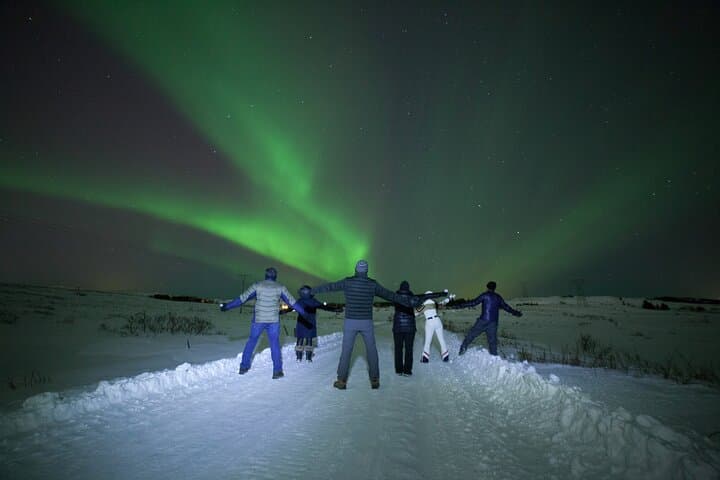
There’s a particular hush that takes over the car when the city lights drop behind you and the guide turns the heater down to let the night breathe. Headlights slice through the cold Icelandic dark, and the road unfurls between lava fields and skeletal lupine. Your guide—part meteorologist, part storyteller—taps a weather app, studies the sky, and smiles. Tonight’s search is not random luck; it’s a practiced hunt for geomagnetic windows, clear patches, and the thin, high clouds that might hide the show. You sip hot chocolate and break into buttery biscuits as the van slides to a stop at a turnout where the horizon is wide and human light is small. Then green edges bloom along the sky, soft at first, then folding like a slow curtain. You watch, and for a while the world is rewriting itself above you.
The Private Northern Lights Tour operates like this: thoughtful logistics, patient searching, and small-group attention that turns a hunt into something intimate. The team that runs the trip—started by a guide known as David—now works as a family of local experts who monitor solar activity and weather in real time. They’ll only run the tour when conditions look promising, and they’ll pick you up from your Reykjavik lodging so you don’t have to navigate the dark yourself. The guiding style is low-key and practical: hot drinks, a promise to send your night photos after the tour, and a steady stewardship of safety in coastal pullouts and rural roads.
Iceland’s place under the auroral oval makes it one of the more reliable countries to see the lights, but the landscape plays a role beyond latitude. The black, volcanic coastline and the low, unbroken horizons around Reykjavik create frames for the display—long ridgelines and skeletal mountains silhouette the aurora’s movements. Geologically, you’re also standing on a rift zone: tectonic forces split this island and create the stark, exposed terrains that make the sky the main act. Culturally, the lights have threaded into local lore; Icelanders have long read the sky as part of seasonal stories that guided fishing, farming, and travel across a harsh but beautiful island.
The appeal of booking a private small-group option isn’t just comfort. It’s efficiency: with a local driver who knows where the weather clears, you increase your odds of seeing the lights on any given winter night. It’s also about experience—being able to sidle away from other groups to a quieter pullout, receiving direct photo help from the guide, and getting a hand-warm cup of cocoa while you wait. This particular trip runs roughly 3–5 hours, enough time to chase openings without committing to an all-night vigil. Tours include photos delivered after the outing, and they operate with a flexible cancellation policy when conditions look poor.
If you’re packing for this, think cold, layered, and camera-ready. Insulated boots, a warm down or synthetic jacket, mittens, and a headlamp will make sitting on a cold rock tolerable. For photographers, a tripod and a wide-aperture lens are non-negotiable, and your guide will help you dial in exposure settings in the field. Expect a mix of easy stops and short walks to viewpoints; the terrain is mostly paved or gravel road pullouts, but you’ll want sturdy footwear.
Practical notes: the tour price begins at USD 1,300 for private bookings, reflecting the exclusive guide attention and guaranteed pickup service for small groups. Because Northern Lights visibility depends on solar activity and cloud cover, there’s no absolute guarantee, but the operators commit to running when odds are favorable and offer a strong local weather-read that increases your chance compared with self-driving.
The transition from Reykjavik to the dark viewing spots is part of the charm. Reykjavik itself is a compact place to base yourself—grab dinner beforehand, but keep your plans flexible; many travelers nap in the afternoon and head out after midnight. After the tour, if your appetite is back, a steaming bowl of lamb soup or a fish stew at a downtown eatery will warm both body and storytelling. The evening remains manageable for varied travelers: families, couples, and small groups who prefer not to spend the night exposed on a windswept hill.
There’s a conservation note threaded through responsible aurora tourism: the best viewing spots are often on fragile coastal terrain. Stay with your guide, avoid trampling moss or venturing onto dunes, and keep light pollution low for everyone’s benefit. Supporting local guides—people who know the rules and respect private land—helps preserve both landscape and access for future nights of northern green.
If your travel mood leans toward quiet wonder and practical adventure, a private Northern Lights outing from Reykjavik is a careful, efficient way to make that long-held bucket list item feel accessible. It’s not glamour; it’s a weather-smart, people-centric approach to watching the atmosphere dance, complete with cocoa, company, and images that arrive in your inbox afterward. For travelers who want the spectacle without the stress of midnight navigation, this kind of guided trip turns a lottery into an informed pursuit—one that leaves you, finally, under the arc of color, knowing you chased it thoughtfully and well.
(For booking details and local guide backgrounds, see this local expert listing: <a href="https://app.advcollective.com/local-experts/chasing-the-northern-lights-from-reykjavik-private-small-group-aurora-tour">Chasing the Northern Lights from Reykjavik – Private Small Group Aurora Tour</a>.)
Trail wisdom
Small choices, better day.
Dress in layers
Temperatures drop quickly—use a moisture-wicking base, insulating midlayer, and windproof shell.
Bring a tripod
Long exposures are essential for Aurora photos—stabilize your camera to capture color and detail.
Charge devices
Colder temperatures drain batteries faster; bring spares and keep them insulated.
Follow your guide
Guides know local access rules and choose viewing spots to minimize light pollution and respect private land.
Local knowledge
Read the place, not just the route.
Watch for native species including Arctic fox (rarely seen), Seabirds along the coast.
Keep an eye out for wildlife during the transition between areas and habitats. Respect distance guidelines.
Stay on marked roads and follow guide directions to avoid trampling fragile moss and coastal habitats; supporting licensed local guides helps protect access and ecosystems.
Follow the guide's instructions on size limits, ethical handling, and leave-no-trace practices.
Distant coastal pullouts with low horizon and minimal light pollution. Small roadside hot spots where guides wait for clear breaks in cloud cover
Locally recommended viewpoints and quiet spots known best to local operators.
Icelandic communities have observed aurora for centuries—sagas and fishermen’s lore often reference the lights as omens and seasonal markers.
Maritime roots and regional tradition shape the waterways and working coasts.
Seasonal guide
Four versions of the same landscape.
Spring
Best forLonger nights early in season · Transitional weather windows
ChallengesUnpredictable cloud cover · Variable road conditions
Late winter into spring still offers strong aurora chances, but increasing daylight shortens viewing windows.
Summer
Best forMidnight sun photography planning · Off-season travel deals
ChallengesMidnight sun eliminates aurora visibility · Short nights
Summer’s bright nights make aurora tours impractical—book other Icelandic adventures instead.
Fall
Best forClear night skies · Milder temperatures than mid-winter
ChallengesStorm fronts can roll in quickly · Unpredictable cloud cover
Autumn is an excellent balance of long nights and accessible weather; aim for September–October for early-season displays.
Winter
Best forPeak aurora activity · Snow-dusted landscapes
ChallengesCold temperatures · Short daylight hours
Winter offers the best aurora odds—dress for cold, and expect late starts and late finishes.
Operator details
What the booking data adds.
Included
- ✓Private transportation
- ✓WiFi on board
- ✓Air-conditioned vehicle
- ✓Hot Chocolate and Bisquits
Good to know
- ✓Suitable for all physical fitness levels
Pack with intention
What to bring.
Good to know
Common questions.
Tours run approximately 3–5 hours, depending on conditions and how far the guide needs to drive to reach clear skies.
Plan the edges
The details that make the day easier.
Iceland sits directly under the auroral oval, a ring-shaped zone around the geomagnetic poles where aurora activity is most frequent—this is why the country offers reliably strong Northern Lights viewing opportunities.
After the tour, head back to downtown Reykjavik for a late bowl of lamb soup or a seafood stew and a local craft beer; for a quick local treat, try the famous Bæjarins Beztu Pylsur hot dog stand in the city center.
- Closest airport
- Keflavik International Airport (KEF). Pickup: Reykjavik hotels. Driving from Reykjavik to viewing spots: typically 20–90 minutes. Cell service: generally good in Reykjavik and along main roads but can be spotty in remote pullouts. Permits: none required for guided tours, but always follow landowner rules.
Avoid off-road driving and trampling moss—these ecosystems recover slowly; minimize light use and follow your guide to reduce disturbance to wildlife and preserve dark-sky viewing.
Explore by topic
Follow the threads.
Keep exploring
Make the story part of the trip.
Set out from Bass Harbor for a private, customizable day on Blue Hill Bay — lighthouses, puffins, seals, and the chance to feel Acadia from the water. Small groups, local captains, unforgettable views.
In four hours you can move from shaded canyon ferns to wind-scoured coastal ridgelines, guided by someone who knows where the light—and the hidden views—live. This private half-day hike on the Monterey Peninsula or Big Sur is compact, curated, and perfect for travelers who want depth without a multiday commitment.
 Related story
Beneath a sky of shifting light, Skaftafell’s ice reads like a map of time. This three-hour guided glacier hike mixes technical instruction with geology and culture: compact, safe, and unforgettable.