
What the day feels like
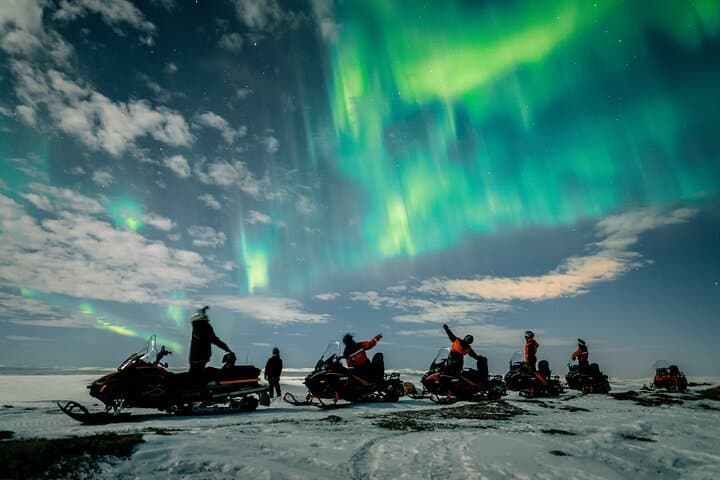
The sled wakes before you do. A thin ring of LED light finds the helmets lined up in the snow, steam from breath dissolving into the cold Arctic air. You kick the starter, feel the engine settle into a low, steady growl, and the night opens like a page turned: black, vast, and promising. Out here, north of the Arctic Circle, the sky is the main attraction—an ocean that can suddenly shift into curtains of green and purple. The snowmobile isn’t just a mode of transport; it’s your ticket away from streetlights and human noise, a mechanical companion that dares you deeper into the silence of Finnmarksvidda.
This four-hour excursion departs from Alta and follows a stretch of the old postal road toward Beskardes, a ridgeline that marks the edge of the inland plateau. Historically the postal road threaded this landscape long before modern tracks—used by Sámi couriers and later by rugged post drivers who kept communication alive across the tundra. The geology here is patient: exposed bedrock, endless plateaus, and the wind-sculpted plains of Finnmarksvidda. In winter, the land reads as a map of light and shadow; the snow keeps score and every ridge becomes a stage for the aurora.
The magic of Alta is practical as much as it is mysterious. The town’s stable, dry winter climate produces some of Norway’s clearest aurora conditions, which is why observatories and long-standing local lore celebrate the lights here. Local Sámi culture threads the story; reindeer herding still shapes the rhythms of the plateau, and traditional stories that personify the aurora—fire foxes running along the snow—sit alongside modern science in conversations with guides.
On the trail, the ride itself is immediate and tactile. The snowmobile hum is a steady presence, the handlebar warmth under thick gloves a small, intense comfort. Tracks cut through old, frozen rivers and across wind-polished drifts; your guide points out the old postal markers or a distant cluster of reindeer. The snowpack can be forgiving or hard as glass—conditions vary—and the guide will set a pace that balances speed with stargazing pauses. When the aurora arrives, it moves with intent: first a faint glow, then a ripple, and finally curtains that fold and unfold like a living theater. The sky seems to reach down to touch the sleds, to tease you into standing and stretching your neck skyward.
Why choose a snowmobile aurora tour? Because it pairs accessibility with wildness. You don’t need to be an Alaskan veteran or a mountaineer—most tours provide training, suits, and helmets—yet the setting is undeniably remote. For travelers who want a short-time, high-impact night in the Arctic, this hits the sweet spot: an adrenaline element combined with a contemplative reward.
Practicalities matter up here. Dress for more than cold; dress for comfort while sitting and for the bite of wind across exposed faces. Battery performance drops in subzero temperatures—bring spares, keep cameras close to your body, and warm them between shots. Guides in Alta are used to the rituals of aurora hunting: check the forecast, listen to the sky, and be ready to move as the lights demand. There’s no guarantee on a single night—clouds and solar activity decide—but the dry air and long winter nights on Finnmarksvidda stack the odds in your favor.
If you’re chasing photographs, plan for a wide-angle lens, tripod, and remote release. For everyone else, the memory will be the odd silence as the sleds idle and the sky swirls, the smell of cold oxygen and hot coffee in a thermos, the brief camaraderie among strangers who have been led out to the edge of the world to look up.
Sustainability is part of the conversation. Responsible operators stick to established trails to avoid disturbing reindeer grazing grounds and fragile tundra. Guides will brief you on how to minimize light pollution and leave no trace—simple rules that matter a lot where recovery is slow.
For a traveler thinking about this trip: expect a compact, high-impact night. Build some flexibility into your stay in Alta in case clouds force a reschedule. Bring warm, layered clothing and a curiosity about local culture; ask your guide about Sámi traditions and the local ecology. In return, you’ll get the kind of night that folds neatly into memory—equal parts speed and stillness, mechanical hum and a sky that refuses to be predictable.
Trail wisdom
Small choices, better day.
Layer smart
Wear moisture-wicking base layers and an insulated outer shell—you’ll be sitting and exposed to wind chill during the ride.
Protect camera batteries
Keep spare batteries in an inner pocket close to your body to avoid rapid drain in subzero temperatures.
Listen to your guide
Guides read snow and weather; follow their pace and trail choices for safety and better aurora chances.
Bring a headlamp
A low-level red light preserves night vision and is handy for gearing up or changing camera settings between sightings.
Local knowledge
Read the place, not just the route.
Watch for native species including Reindeer, Arctic fox (rare).
Keep an eye out for wildlife during the transition between areas and habitats. Respect distance guidelines.
Operators stick to established trails to protect tundra vegetation and reindeer grazing areas; visitors are asked to minimize light and noise and to pack out all waste.
Follow the guide's instructions on size limits, ethical handling, and leave-no-trace practices.
Drive up to Sorrisniva for its riverside lodge and ice hotel experience. Ask guides about small Sami lavvus (tents) and nearby reindeer herding patches you can visit respectfully
Locally recommended viewpoints and quiet spots known best to local operators.
The trail follows parts of the old postal road used to connect settlements across Finnmarksvidda; the area is also central to Sámi culture and reindeer herding.
Maritime roots and regional tradition shape the waterways and working coasts.
Seasonal guide
Four versions of the same landscape.
Spring
Best forLonger nights early in season · Cold, clear skies for aurora
ChallengesThawing snowfields · Variable temperatures
Late winter to early spring can still deliver excellent aurora views, though warming days can change snow conditions.
Summer
Best forMidnight sun experiences · Hiking Finnmarksvidda (different tours)
ChallengesNo aurora during midnight sun · Warmer, wetter weather
Summer offers long daylight and different activities—aurora viewing is not possible during the midnight sun.
Fall
Best forCrisp nights for auroras · Fewer tourists
ChallengesEarly snow can make travel unpredictable · Shorter daylight for other activities
Autumn can produce early clear nights for aurora, but weather turns quickly and tours may be limited.
Winter
Best forAurora viewing · Snowmobiling across frozen plateaus
ChallengesExtreme cold · Short daylight hours
Winter is the optimal season for this experience: stable, cold nights and long periods of darkness increase aurora potential.
Operator details
What the booking data adds.
Included
- ✓Pick-up and drop-off in Alta
- ✓Snacks
- ✓Helmets
- ✓Coffee and/or Tea
- ✓Warm thermal suits, shoes and gloves
Good to know
- ✓Public transportation options are available nearby
- ✓Not recommended for travelers with spinal injuries
- ✓Not recommended for pregnant travelers
- ✓Not recommended for travelers with poor cardiovascular health
- ✓Travelers should have at least a moderate level of physical fitness
- ✓Only the holders of a valid B class drivers license are allowed to drive a snowmobile in Norway. You are required to present your license for verification before taking part on the ride. Guests without a valid driving license are only allowed to be passengers.
- ✓You will share a snowmobile with another passenger, so each of you will get to drive half of the trip.
Pack with intention
What to bring.
Good to know
Common questions.
No. Tours include a briefing and hands-on instruction; guides pair less experienced riders with seasoned drivers or provide double rides.
Plan the edges
The details that make the day easier.
Alta is nicknamed the 'City of the Northern Lights' and was the site of one of Norway’s early auroral observatories at Haldde—locals have been studying and celebrating the aurora here for more than a century.
After the ride, head to Sorrisniva or a local Alta restaurant for reindeer stew or Arctic seafood; visit the Northern Lights Cathedral for an architectural counterpoint to the sky’s show and ask about Sámi culture at local cultural centers.
- Closest airport
- Alta Airport (ALF); Driving distance from Alta city center to meeting point: typically under 30 minutes; Cell service: reliable in Alta but limited on Finnmarksvidda; Permits: none required, but follow guide instructions and protected-area rules.
Tours use established snowmobile trails to protect fragile tundra and reindeer habitat—minimize light pollution, pack out waste, and support operators who partner with local Sámi communities.
Explore by topic
Follow the threads.
Keep exploring
Make the story part of the trip.
Set out from Bass Harbor for a private, customizable day on Blue Hill Bay — lighthouses, puffins, seals, and the chance to feel Acadia from the water. Small groups, local captains, unforgettable views.
In four hours you can move from shaded canyon ferns to wind-scoured coastal ridgelines, guided by someone who knows where the light—and the hidden views—live. This private half-day hike on the Monterey Peninsula or Big Sur is compact, curated, and perfect for travelers who want depth without a multiday commitment.
 Related story
Beneath a sky of shifting light, Skaftafell’s ice reads like a map of time. This three-hour guided glacier hike mixes technical instruction with geology and culture: compact, safe, and unforgettable.