
What the day feels like
The motor hums, gulls wheel, and the marsh exhales its salty perfume as the boat slips past Shem Creek at first light. Onboard, the group is quiet in that curious way people are when the promise of discovery hangs in the air. Children press faces to the rail. An older couple exchanges binoculars for coffee. Captain Rickie jabs a thumb at the horizon and says, 'There—today the ocean’s been generous.' In thirty minutes you have left the city behind: live oaks and antebellum facades give way to tidal creeks and a low, flat horizon where barrier islands rise like teeth out of the water. This is where the past surfaces—literally.
Charleston’s coastline is a map of time. During the Miocene and Pliocene epochs, this stretch of the southeast coast was submerged beneath a warm sea that teemed with sharks, whales, and mollusks. Over millions of years, currents and storms exhumed fossilized teeth and shells and scattered them across the beaches of barrier islands. Today’s hunt—part family outing, part geology lesson—follows those currents, ferrying small groups to quieter spits of sand where the finds accumulate. The best tours, like the expert-guided <a href="https://app.advcollective.com/local-experts/shark-tooth-and-shell-hunting-tour-charleston-fossil-beach-adventure">Shark Tooth and Shell Hunting Tour</a>, know which channels to run and when the tides will reveal the best pockets of fossils.
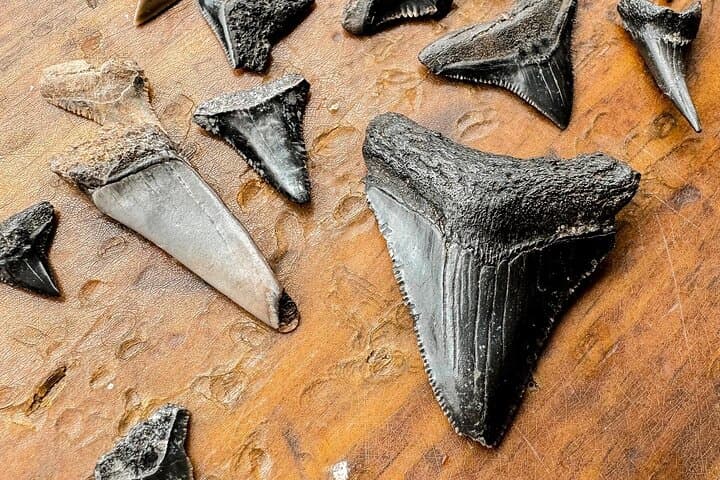
The rhythm of the experience is gentle and addictive. You tromp across low dunes, let the surf lap at your ankles, and sweep your feet through wrack lines where the sea has left its trophies. The sought-after prize—megalodon teeth—are rare but real, usually worn and often small; more commonly you’ll find teeth from sandbar and tiger sharks, perfect for a kid’s triumph or a pocket full of lumps that feel like history. Guides teach you to read the beach: look where darker sediment meets pale sand, search where storm wrack gathers, and examine depressions where a wave has scoured into older layers.
This is a family-friendly outing by design. Boats hold small groups (nine passengers max), the ride is short—roughly two to three hours door-to-door on the water—and all hunting gear is provided. But it’s also an active nature tour. You’ll move over raw, shifting sand, navigate sun and wind, and spend time on an island with no services. The payoff is both physical and mnemonic: a tangible object from the deep and a lesson about coastal geology you can hold in your hand.
Practical details matter. Tours often depart from Mount Pleasant or nearby docks and run 2–3 hours total; expect a short cruise, a predictable walk on soft sand, and roughly 45–90 minutes of focused searching depending on tide and conditions. Weather can decide the day: calm seas make for easier beach access and a more thorough hunt; nor’easters and frontal systems can strand you onshore or send the boat back early. Wear quick-dry shoes you don’t mind filling with sand, layer sun protection, and bring a small pack for water and found treasures. Guides will typically allow you to keep what you find—cleaning tips included.
Beyond the hunt is the Lowcountry culture. Charleston and its surrounding communities are built on a layered history of Native American, colonial, and Gullah-Geechee influences that show up in cuisine, music, and attitudes toward the coast. Guides will often point out islands named for long-ago plantations or fishing camps and explain local efforts to preserve oyster reefs and dune systems that buffer the mainland. Conservation is part of the narrative: leave live shells and young crabs where you find them, remove trash, and respect nesting areas when present.
When to go? Fall is my pick—calmer seas, thinning crowds, and warm days without mid-summer’s relentless heat. Spring offers wildflowers and migrating birds; summer brings easy school schedules but stronger sun and more boat traffic; winter is quieter and sometimes prime for uncovering older exposures after storms, but it’s colder and less predictable. Tours are seasonally scheduled and can sell out on holiday weekends, so book in advance and check tide charts if you want to maximize your odds of success.
For photographers, the light is a gift. Sunrise and late afternoon throw long shadows and warm tones across fossils and dunes; a low-angle flash can bring detail to a serrated tooth against the sand. Bring a small towel to wipe saltwater and a shallow tray or ziploc to protect finds while you shoot.
If you want the ease of a guided experience and a real chance at a meaningful find, look for small-boat operators with local knowledge. The <a href="https://app.advcollective.com/local-experts/shark-tooth-and-shell-hunting-tour-charleston-fossil-beach-adventure">Shark Tooth and Shell Hunting Tour</a> emphasizes small groups, hands-on instruction, and a respectful approach to barrier-island ecology. Go prepared, keep expectations balanced—finding a megalodon tooth is rare, finding a story is not—and let the tide decide how generous the day will be.
Back on the boat, hands rinsed and pockets full, Charleston’s skyline slides back into view. There’s a habit you’ll carry home: the quick, private thrill of turning up something that’s been waiting for millennia. It’s a simple lesson in patience, geography, and watershed history that’s equal parts science and scavenger hunt—accessible, honest, and distinctly Lowcountry.
Trail wisdom
Small choices, better day.
Time it with the tide
Low tide exposes more beach and concentrates fossils—ask your guide about optimal tide windows before booking.
Wear water-friendly footwear
Soft sand and surf demand sturdy sandals or water shoes you don’t mind filling with sand.
Bring sun protection
Wide-brim hats, SPF 30+ sunscreen, and UV shirts help you stay comfortable during the hunt.
Stow finds safely
Bring a small zip bag or box to protect fragile teeth and shells from salt and chafing on the ride back.
Local knowledge
Read the place, not just the route.
Watch for native species including Royal terns and oystercatchers, Dolphins often sighted near the boat route.
Keep an eye out for wildlife during the transition between areas and habitats. Respect distance guidelines.
Respect dunes and nesting habitat, dispose of trash, and avoid taking live shells; many local operators emphasize low-impact landings to protect fragile island ecosystems.
Follow the guide's instructions on size limits, ethical handling, and leave-no-trace practices.
Shem Creek boardwalk for pre- or post-tour shrimp boats and waterfront restaurants. Unmarked tidal creeks where sea glass and small fossils collect after storms
Locally recommended viewpoints and quiet spots known best to local operators.
The Charleston coastline preserves a geologic archive; fossils along barrier islands date to the Miocene and Pliocene when the area was offshore marine habitat.
Maritime roots and regional tradition shape the waterways and working coasts.
Seasonal guide
Four versions of the same landscape.
Spring
Best forMigratory birds · Milder temps · Low crowds
ChallengesUnpredictable late storms · Cold mornings
Spring offers blooming dunes and good birdlife; mornings can be cool and tide windows may shift with spring storms.
Summer
Best forFamily schedules · Warmer water · Long daylight
ChallengesHigh heat and sun · Higher boat traffic
Summer is popular for families and warm days, but bring strong sun protection and book ahead for weekend tours.
Fall
Best forCalmer seas · Fewer crowds · Pleasant weather
ChallengesResidual hurricane season in early fall
Fall is ideal: gentler weather and clearer beaches after summer storms, with fewer tourists on the islands.
Winter
Best forStorm-exposed finds · Quiet tours
ChallengesCold winds · Shorter days
Winter can uncover older fossil layers after storms but expect colder conditions and possible cancellations.
Operator details
What the booking data adds.
Included
- ✓All Safety Equipment
Not included
- —You may bring your own. Cooler and Ice will be available for storage.
Good to know
- ✓Infants are required to sit on an adult’s lap
- ✓Not recommended for travelers with spinal injuries
- ✓Not recommended for travelers with poor cardiovascular health
- ✓Service animals allowed
- ✓Public transportation options are available nearby
- ✓Suitable for all physical fitness levels
Pack with intention
What to bring.
Good to know
Common questions.
Tours are typically 2–3 hours total with about 45–90 minutes spent on the beach searching, depending on tide and sea conditions.
Plan the edges
The details that make the day easier.
Fossilized shark teeth found along Charleston’s barrier islands date back millions of years to the Miocene and Pliocene epochs, when the area was a warm, shark-rich sea.
After the tour, head to Shem Creek or nearby Bowens Island for Lowcountry seafood—shrimp, oysters, and a cold local beer pair well with sandy pockets and salt in your hair. Fleet Landing and rustic shrimp shacks give a taste of Charleston’s coastal food culture.
- Closest airport
- Charleston International (CHS). Typical departure: Mount Pleasant docks
- Shem Creek, 15–25 minutes from downtown Charleston. Driving from downtown
- ~20 minutes. Cell service: intermittent on barrier islands; good on the boat. Permits: none typically required—follow guide rules.
Barrier islands are dynamic and fragile—pack out all trash, avoid trampling dune vegetation, and do not remove live animals; choose operators who practice low-impact landings.
Explore by topic
Follow the threads.
Keep exploring
Make the story part of the trip.
Set out from Bass Harbor for a private, customizable day on Blue Hill Bay — lighthouses, puffins, seals, and the chance to feel Acadia from the water. Small groups, local captains, unforgettable views.
In four hours you can move from shaded canyon ferns to wind-scoured coastal ridgelines, guided by someone who knows where the light—and the hidden views—live. This private half-day hike on the Monterey Peninsula or Big Sur is compact, curated, and perfect for travelers who want depth without a multiday commitment.
 Related story
Beneath a sky of shifting light, Skaftafell’s ice reads like a map of time. This three-hour guided glacier hike mixes technical instruction with geology and culture: compact, safe, and unforgettable.