
What the day feels like
The bus leaves Tromsø when the town has already traded daylight for a chilled, blue twilight. Streetlamps shrink behind you as the city’s glow thins and the Arctic landscape swells—low ridges feathered with birch and pine, fjord shoulders slicing into the night. There’s a quiet optimism onboard: old thermoses, wool mittens, the low hum of people exchanging weather stories. The guide taps the microphone and the road becomes the threshold; the sky, a patient performer, promises a show.
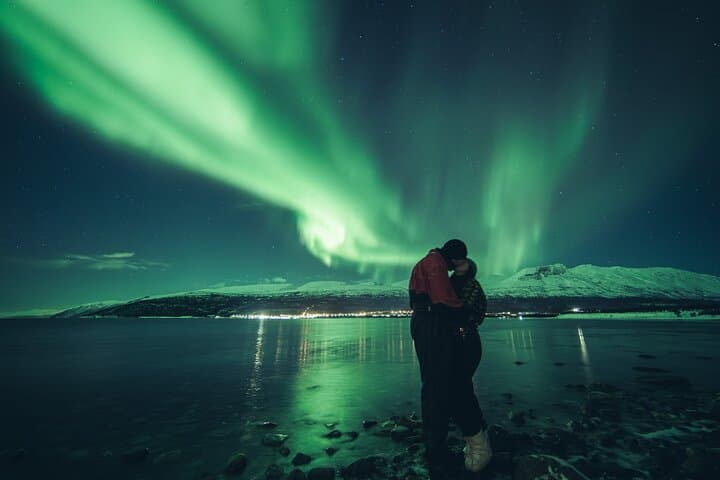
Seeing the aurora in northern Norway is part theater, part science and a lot of weather—an interplay between solar storms, the geomagnetic field, and the precise emptiness of a dark Arctic sky. Tromsø sits inside the auroral oval, the ring of frequent aurora activity that circles the geomagnetic pole. That geological fortune makes the town one of the most dependable launchpads in the world for aurora chases. Still, no operator can guarantee green curtains will drape the heavens; the best they can do is put you beneath the right sky where the lights are most likely to appear.
History and culture sit quietly alongside the spectacle. Tromsø’s maritime past—seeded by Viking routes and later Arctic exploration—means the town has always been about navigation: of seas, ice, and stars. Sami reindeer herders and Norwegian fishermen once read the skies for weather and luck; today that instinct is repurposed for aurora forecasts. Local guides blend modern meteorology with intimate, local knowledge—where clouds thin fastest, which fjord basins hold cold air, which gravel pullouts offer the widest horizons.
Geology is part of the show too. The region’s fjords and mountains funnel cold air and shape cloud banks; inland plateaus hold the clear, skeletal nights that auroras prefer. On a good night, the sky doesn’t merely glow—it contorts, ripples, and folds in ways that make the air feel alive. The aurora will sometimes begin as a distant, pulsing haze, then bloom into sheets and ladders of green, amber, and faint violet that appear to move with muscle and intent. It is tempting to anthropomorphize: the lights are dancers, coy and improvisational, testing the audience’s patience before their crescendos.
Practically speaking, the tour is built to maximize that chance without asking you to be an Arctic specialist. Expect a 6–7 hour window from evening into early morning. You’ll travel in a heated, comfortable coach to dark-sky sites—sometimes a short distance outside Tromsø, sometimes farther—where guides watch cloud cover and aurora forecasts in real time. Stops usually include short hikes or walks across frozen clearings or compacted snow; terrain can be icy, so traction and steady footwear matter as much as photographic gear.
Timing matters. The core aurora season here runs from late September through early April; the deepest, most stable nights often come in the heart of winter when temperatures drop, humidity falls, and skies clear. But midwinter also brings the shortest nights and the coldest temperatures. Some of the clearest displays happen around the equinoxes, and March is widely regarded as a particularly favorable month for a blend of long nights, higher solar activity, and slightly milder temperatures.
What you’ll need is simple: patience, layers, and a willingness to step off the bus into the cold to stand and look up. Photography demands one more thing—a steady tripod and a basic grasp of manual settings. Guides will help you set exposure and focus, and many tours include a photographer or assistant who can point your lens in the right direction.
The experience is about balance. There’s an adrenaline spike when the curtain opens—the room-wide inhale as green ribbons unfurl—but there’s also a contemplative tempo to the night. People cluster in small groups, warm their hands on thermoses, share hot drinks and local tips. The best parts of these nights often happen between displays: quiet moments under a sky so expansive you can hear the air seem colder.
For the traveler, this tour is a logical, low-barrier way to chase one of nature’s great spectacles. You don’t need to plan multi-night backcountry trips or learn advanced winter travel skills; you do need common sense about cold-weather safety and a few useful items in your pack. Consider trips that offer flexible cancellations—the Arctic weather can change quickly—and choose operators who prioritize safety and small-group attentiveness.
In the end, the aurora is a reminder that the world still moves on a larger, slower clock than our calendars. A Tromsø night chase is not a guaranteed headline; it’s an invitation—to witness, to be patient, and to learn how the sky writes itself in light. If the curtains open, you’ll remember the hush, the sudden collective exhale, the way the light seemed to rearrange the whole landscape. If not, you leave with a clearer sense of the Arctic’s rhythms and a reason to plan another night.
Trail wisdom
Small choices, better day.
Layer, then layer again
Temperatures can plummet; pack base layers, an insulated midlayer, and a weatherproof outer shell to stay comfortable during long sky watches.
Bring a tripod
Long exposures are necessary for aurora photography—no tripod means missed photo opportunities.
Traction for icy walks
Small stretches of snow or ice are common at stopping points—microspikes or crampons increase safety.
Charge extra batteries
Cold drains battery life; carry spares in an inner pocket to keep them warm and working.
Local knowledge
Read the place, not just the route.
Watch for native species including Arctic fox (rare), Sea eagles along the fjord coastline.
Keep an eye out for wildlife during the transition between areas and habitats. Respect distance guidelines.
Tour operators in the region are increasingly focused on minimizing light and noise pollution—stay on designated roads and follow your guide’s instructions to reduce impact.
Follow the guide's instructions on size limits, ethical handling, and leave-no-trace practices.
Ersfjordbotn viewpoint for mirror-like reflections on calm nights. A small coastal pullout where local guides sometimes stop for midnight coffee with unobstructed northern horizons
Locally recommended viewpoints and quiet spots known best to local operators.
Tromsø has a long history as a gateway to Arctic expeditions and polar research, earning nicknames like 'Paris of the North' during the early 20th century.
Maritime roots and regional tradition shape the waterways and working coasts.
Seasonal guide
Four versions of the same landscape.
Spring
Best forLonger nights than summer · More stable weather windows
ChallengesUnpredictable cloud cover · Variable temperatures
Late winter to early spring (February–March) often yields strong aurora activity with gradually milder temperatures—ideal for photographers who want balance.
Summer
Best forMidnight sun experiences · Whale watching and hiking
ChallengesAurora not visible due to continuous daylight · Higher travel costs
Summer offers no aurora viewing—use the season for Arctic daylight activities instead.
Fall
Best forEmerging aurora season · Fewer tourists
ChallengesShortening daylight complicates scheduling · Variable coastal weather
Autumn marks the start of aurora season; cloud forecasts become critical as you plan night chases.
Winter
Best forPeak aurora season · Clear, cold nights
ChallengesVery cold temperatures · Limited daylight for daytime sightseeing
Winter brings the best chances for strong displays but demands serious cold-weather gear and planning.
Pack with intention
What to bring.
Good to know
Common questions.
No—aurora sightings depend on solar activity and clear skies. Tours maximize your chances by shifting locations based on live forecasts, but sightings cannot be guaranteed.
Plan the edges
The details that make the day easier.
Tromsø sits above the Arctic Circle at about 69.65° N, placing it well within the auroral oval where geomagnetic activity frequently produces visible auroras.
After the tour, head to Ølhallen for a locally brewed beer or Fiskekompaniet for Arctic seafood—Tromsø’s food scene blends reindeer and seafood with cozy pubs and a strong local-sourced ethos.
- Closest airport
- Tromsø Airport (TOS)
- Tour pickup
- city-center locations
- Typical drive
- up to 1–2 hours from Tromsø
- Cell service
- generally good near town but patchy in remote spots
- Permits
- none required for standard guided tours
Operate with minimal light pollution and follow guides’ instructions to avoid disturbing wildlife; pack out all waste and support operators that contribute to local conservation efforts.
Explore by topic
Follow the threads.
Keep exploring
Make the story part of the trip.
Set out from Bass Harbor for a private, customizable day on Blue Hill Bay — lighthouses, puffins, seals, and the chance to feel Acadia from the water. Small groups, local captains, unforgettable views.
In four hours you can move from shaded canyon ferns to wind-scoured coastal ridgelines, guided by someone who knows where the light—and the hidden views—live. This private half-day hike on the Monterey Peninsula or Big Sur is compact, curated, and perfect for travelers who want depth without a multiday commitment.
 Related story
Beneath a sky of shifting light, Skaftafell’s ice reads like a map of time. This three-hour guided glacier hike mixes technical instruction with geology and culture: compact, safe, and unforgettable.