
What the day feels like
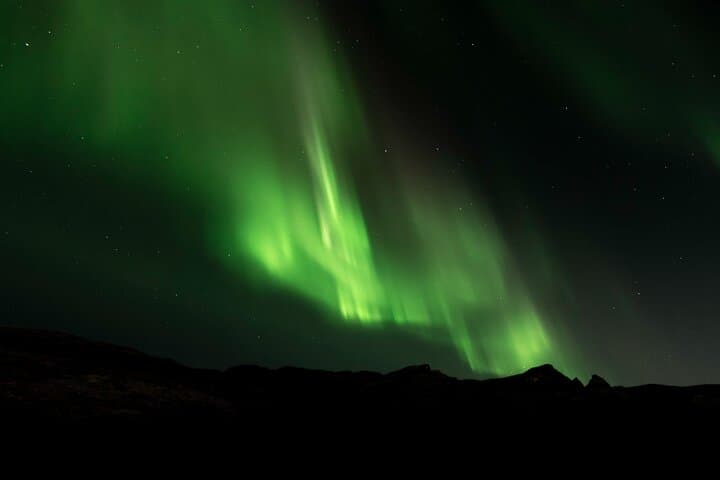
The van pulls out of Reykjavik just after dinner, headlights carving a path through a city that still hums with geothermal heat and warm light. Behind the glass, the coastline drops away into black; ahead, the sky is a thick, patient dark. Our guide checks a phone, squints at the forecast, and then smiles—the kind of small, knowing smile that says conditions are good enough to leave the city lights behind. We climb a ridge outside town, engines hush, and the first green ribbons unfurl like breath across a stage. The aurora doesn’t roar—it moves. It ripples, stretches and folds like silk pulled by an invisible hand, and for the next few hours the sky becomes a live performance. It’s private, intimate, and oddly domestic: hot drinks passed around thermoses, boots crunching on frozen gravel, conversations punctuated by collective intake of breath.
This is what a private northern lights hunt in Iceland offers: a guided, curated attempt to witness an unpredictable cosmic show. It isn’t only luck—knowledge helps. Guides read the sky the way sailors read wind, combining solar activity reports, cloud cover models and local microclimates. Iceland sits under the auroral oval, a ring-shaped zone of high auroral probability that circles the geomagnetic pole, which is why the country is one of the world’s most reliable aurora destinations from September through April. The island’s volcanic heart and sparse winter light pollution make the spectacle easier to appreciate, and the long winter nights stretch the window for viewing.
There’s a geology to the light, too. Aurora borealis occurs when charged particles from the sun collide with atmospheric atoms, but the backdrop—the dark, jagged silhouettes of basalt columns, distant glaciers, and fjords—gives the phenomenon its cinematic scale. Cultural threads are braided in the experience. Icelandic folklore long attributed strange lights to ghosts or the reflections of seals; later, Nordic scientists and poets made the display a national emblem of the country’s wildness. Local guides often weave these stories into the hunt, adding texture: an old farmer’s hamlet where aurora sightings were recorded in household journals, or the sagas’ references to portentous skies.
A private tour changes the equation. Rather than joining a bus that chases lights on a schedule, you’re in a small group with a driver-guide who tailors routes to the night’s conditions. That means faster moves when clouds roll in and patient waits at promising clearings when the forecast looks marginal. The trip’s flexibility also supports better photography: guides know where to set up for landscape foregrounds—lava fields, lighthouses, or sea stacks—transforming sky motion into a frameable composition.
Practicalities matter: the tour spans 4–7 hours, so dress like you’re camping in a cold desert. Layers, insulated boots and a windproof shell are essentials. Thermoses and quick snacks keep spirits high between displays. Bring a camera on a tripod, and spend a few minutes with your guide to dial in manual settings: long exposures and wide apertures are your friends. Expect intermittent cell service as you move away from Reykjavik; that’s part of the point—the dark sky is achieved by leaving the grid.
Timing your trip is a balance between solar cycles, weather, and patience. Peak chances sit in winter and the shoulder months when nights are long. But the best nights are the ones with clear skies and high geomagnetic activity—both unpredictable—so a private hunt that only runs when conditions look promising increases your odds. Even if the aurora is faint, the slow green wash can be unforgettable when set against Iceland’s stark terrain.
For travelers, this tour is compact: it starts in Reykjavik, requires minimal technical skill, and asks only for reasonable mobility—good boots and the ability to move on uneven ground. It’s ideal for travelers who want a higher probability of seeing the lights without sacrificing comfort, and for photographers who want control over composition and timing. Beyond the spectacle, a night hunt is a lesson in humility; you learn to read weather models, feel the scale of Earth’s magnetic conversation with the sun, and appreciate how small decisions—where to stop, how long to wait—shape an experience of wonder.
Responsible travel matters on these excursions. Guides minimize their carbon footprints by planning efficient routes and using private vehicles rather than multiple runs, and they manage group behavior to reduce light pollution and preserve sensitive landscapes. Respect the land: stay on designated pullouts, avoid trampling fragile moss or lichen, and leave no trace. The aurora is fragile in a cultural sense, too—locals value quiet nights as much as tourists value spectacle.
Practically speaking: book a private hunt if your time is limited, want a tailored photo stop, or are traveling with a group. Expect a manual confirmation for the tour—operators often wait to commit until forecasts align—and a price that reflects personalized service. If the lights don’t materialize, a trustworthy operator will reschedule or refund according to their cancellation policy; many tours offer free cancellation windows tied to weather uncertainty.
When the night ends and you roll back toward Reykjavik, there’s a soft afterglow—both in the sky and inside the van. You’ve seen a cosmic conversation, yes, but you’ve also shared a small, intentional piece of Iceland: its willingness to reveal itself on its own terms. A private northern lights hunt is less about checking a box and more about learning to wait, read, and witness—skills that translate to any good adventure.
If you go: prepare for cold, bring a tripod and patience, and choose a private operator who prioritizes safety and sustainable practices. Whether you leave with a phone full of photos or simply the memory of green curtains sliding across an Arctic night, the hunt will change how you think about the sky.
Trail wisdom
Small choices, better day.
Dress in Layers
Temperatures drop sharply at night; wear a base layer, insulated mid-layer, and windproof outer shell to stay comfortable during long waits.
Bring a Tripod
Handheld shots won’t capture long-exposure aurora; stable support is essential for sharp night photos.
Charge Power Banks
Cold drains batteries quickly; carry a charged power bank to keep cameras and phones alive.
Trust the Guide’s Route
Guides move to optimize sky clarity and minimize light pollution—follow their lead for the best viewing spots.
Local knowledge
Read the place, not just the route.
Watch for native species including Arctic fox (rare, in remote areas), Sea birds along the coast.
Keep an eye out for wildlife during the transition between areas and habitats. Respect distance guidelines.
Guides emphasize staying on established pullouts to protect fragile moss and lichen; minimizing flash photography and light pollution helps preserve night skies.
Follow the guide's instructions on size limits, ethical handling, and leave-no-trace practices.
Small coastal pullouts near Grótta lighthouse for minimal light pollution and ocean foregrounds. Lava fields east of the city where basalt textures add dramatic foreground interest
Locally recommended viewpoints and quiet spots known best to local operators.
Icelandic communities have observed unusual sky phenomena for centuries; older sagas and farm records sometimes note auroral displays as omens or natural curiosities.
Maritime roots and regional tradition shape the waterways and working coasts.
Seasonal guide
Four versions of the same landscape.
Spring
Best forLonger nights early in season · Fewer tourists than peak winter
ChallengesUnpredictable weather · Melting snow can make pullouts muddy
Early spring still offers long nights and good aurora odds, but expect variable cloud and thawing ground conditions.
Summer
Best forMidnight sun photography (not aurora) · Extended daylight activities
ChallengesAurora invisible during bright nights · Limited booking availability for winter tours
Summer’s midnight sun makes aurora viewing impractical—this tour runs in the dark months instead.
Fall
Best forClear, crisp nights in late season · Fewer crowds and good road access
ChallengesEarly-season storms · Shorter nights at start of season
Autumn ushers in long nights and increasing auroral activity; weather can swing quickly, so expect volatility.
Winter
Best forPeak aurora season · Long nights maximize viewing windows
ChallengesCold, icy roads · Possible cancellations due to severe storms
Winter gives you the best statistical chance to see the lights, but plan for very cold conditions and occasional weather-related changes.
Operator details
What the booking data adds.
Included
- ✓Private transportation
- ✓WiFi on board
- ✓We usually provide Hot Chocolate, let us know if you wish for another kind of hot beverage
Not included
- —Dinner
Good to know
- ✓Wheelchair accessible
- ✓Infants and small children can ride in a pram or stroller
- ✓Service animals allowed
- ✓Specialized infant seats are available
- ✓Suitable for all physical fitness levels
- ✓Northern Lights can never be guaranteed. Refund will only be issued if you do not see any clear skies.
- ✓We do not operate the tour unless the conditions (cloud cover, weather forecasts ...) are exceptionnal
- ✓If Northern Lights do not show up, we will give up and return to Reykjavík at 2:30am latest.
- ✓Please note that the winter nights in Iceland can be very cold, and it is required that you dress accordingly.
Pack with intention
What to bring.
Good to know
Common questions.
A private tour increases your chances because guides choose optimal routes and only run when forecasts are favorable, but sightings can never be guaranteed—aurora activity and local cloud cover both influence visibility.
Plan the edges
The details that make the day easier.
The auroral oval above Iceland is positioned such that the country regularly falls within the most active zone for northern lights, making Iceland one of the top global locations for aurora viewing.
After a night under the aurora, head back into Reykjavik’s Old Harbour for fresh seafood or a bowl of kjötsúpa (Icelandic lamb soup). Finish with a pint at a local microbrewery on Laugavegur or a warming cup of hot chocolate at a café—both feel earned after a cold night outdoors.
- Closest airport
- Keflavik International Airport (KEF). Typical meeting point: Reykjavik central pickup. Driving time from Reykjavik: 20–60 minutes to prime viewing areas. Cell service: reliable near city, intermittent in rural pullouts. Permits: none required for standard roadside viewing; respect private property and protected areas.
Stay on established pullouts and avoid trampling fragile tundra; guides should minimize driving distance and manage group lighting to reduce light pollution and protect night-sky quality.
Explore by topic
Follow the threads.
Keep exploring
Make the story part of the trip.
Set out from Bass Harbor for a private, customizable day on Blue Hill Bay — lighthouses, puffins, seals, and the chance to feel Acadia from the water. Small groups, local captains, unforgettable views.
In four hours you can move from shaded canyon ferns to wind-scoured coastal ridgelines, guided by someone who knows where the light—and the hidden views—live. This private half-day hike on the Monterey Peninsula or Big Sur is compact, curated, and perfect for travelers who want depth without a multiday commitment.
 Related story
Beneath a sky of shifting light, Skaftafell’s ice reads like a map of time. This three-hour guided glacier hike mixes technical instruction with geology and culture: compact, safe, and unforgettable.