
What the day feels like
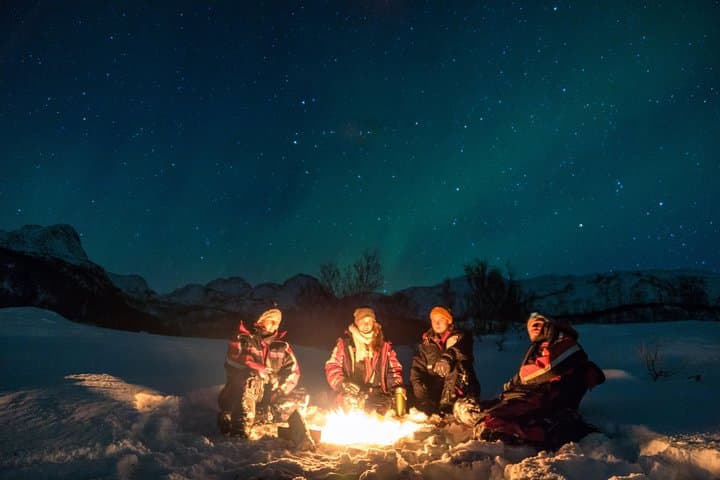
The bus eases away from Alta under a sky so brutally black it feels like a blank canvas. Inside, a small group of strangers becomes a single-minded crew: thermoses clutched, camera bags rinsing condensation onto nylon, breath steaming. Our guide tosses an expert glance at the weather app, then at the horizon. "We chase the clear pockets," she says. "The lights decide where we go tonight." Four hours later, with the road unspooling along the Altafjord and a fire crackling, the sky begins to move. Bands of green fold and peel like silk; the whole atmosphere seems to breathe. The aurora is not wallpaper here—it’s a living thing, teasing and then committing to an arc of light that pushes you light-years away from the hum of everyday life.
Alta’s sky has a reputation that’s earned: Altafjord’s cold inland air and long polar nights create one of Norway’s most reliable aurora corridors. Alta Adventure has been working these routes since 2007, building a local rhythm that blends meteorology with instinct and a practical willingness to drive. Their claim—an 80–90 percent chance to see the aurora when conditions permit—comes from a simple playbook: follow the clear skies, avoid light pollution, and wait where geomagnetic forecasts look promising. A four-hour outing, price from about $222, means you’re committing a single evening to a big, potentially life-changing natural show.
This is an experience that layers geology and history beneath the spectacle overhead. The surrounding landscape—old fjord walls carved by ice, coarse rock scarred by glaciers—remains almost mute in the night, but it has stories: Stone Age settlements left fragile marks on the coast, and the Alta rock carvings (now a UNESCO World Heritage site) nearby testify to people living with long winters and brilliant skies for millennia. Modern Alta adds chapters too: Sami reindeer herding is still part of the cultural fabric, and wartime history threaded through this coastline shows in quiet monuments and local tales.
Culturally, the Northern Lights have always carried agency in this region. For the Sami, aurora lights were and are entwined with myth and practical respect—an emissary of weather, a presence to treat with careful silence on certain nights. Guides on these trips share those stories during pauses by the roadside, pairing natural science—how charged particles meet Earth’s atmosphere—with human stories: reindeer routes, the tough logic of life above the Arctic Circle, and the community rituals that mark the seasons.
Practicalities are the backbone of a good aurora hunt. The tour is usually a four-hour loop that leaves in the evening, sometimes traveling tens of kilometers away from town to find clearer sky. Stops vary: sometimes a short pullout for hot chocolate and photos, sometimes a makeshift camp with a fire if driving distances and weather permit. Expect to be back just after midnight. Roads are typically paved and well-maintained, but winter conditions in Troms og Finnmark mean snow tires and winter-ready vehicles are non-negotiable—your operator handles that, but you should plan for slippier boots on icy pullouts.
If you’re thinking like a photographer, arrive with a tripod and a willingness to learn exposure. The best aurora shots are patient work: long exposures (5–25 seconds), a wide aperture (f/2.8–f/4), and a moderate ISO (800–3200) to balance sensitivity and noise. Phones can capture aurora under the right conditions, but a proper camera and tripod will get you the dramatic arcs and color saturation the sky sometimes produces.
Comfort is about layers and battery life. Temperatures can sink well below freezing—gloves, a down jacket, insulated boots, and chemical hand warmers make the difference between a memorable night and a cold retreat. Bring spare batteries for cameras (cold drains them fast) and a headlamp with a red setting so you can keep your night vision.
Beyond equipment and forecasts, the most important planning note is emotional: patience. Aurora travel is a blend of science and circumstance. You’re not buying a guaranteed light show; you’re paying for expert guidance, local knowledge, and a higher probability of seeing the aurora without the logistics fuss. And even if the lights are shy, you’ll come away with a clearer sense of Arctic skies, Sami stories, and the particular hush of the fjord at night.
For those who want a broader trip, Alta makes a practical base. Spend an afternoon at the Alta Museum to see the prehistoric rock carvings, try local Arctic cuisine—reindeer stews (Finnbiff) and seabird dishes—and, if you’re hungry for more winter adventure, consider dog-sledding or a visit to the nearby Sorrisniva Igloo Hotel. On the drive back, the lights may fold into curtains, may sputter into green dust, or may paint a full corona that seems to descend into the fjord itself. That is when the sky feels most like a living presence—generous, capricious, and utterly worth the chase.
Trail wisdom
Small choices, better day.
Dress in layers
Temperatures can drop fast—base layer, insulated midlayer, and a waterproof outer shell keep you on location longer.
Bring a tripod
Long exposures are needed for crisp aurora photos; handholding will blur the lights.
Protect batteries from cold
Store camera and phone batteries inside an inner pocket to prevent rapid draining.
Follow your guide’s safety advice
Guides know where to park and when to create a safe viewing spot—stay with the group on icy shoulders.
Local knowledge
Read the place, not just the route.
Watch for native species including Reindeer, Arctic fox (rare).
Keep an eye out for wildlife during the transition between areas and habitats. Respect distance guidelines.
Respect reindeer grazing areas and avoid driving off established roads; operators minimize light pollution by choosing remote viewing spots and practicing leave-no-trace principles.
Follow the guide's instructions on size limits, ethical handling, and leave-no-trace practices.
Alta Museum and the UNESCO-listed rock carvings for daytime context. Sorrisniva Igloo Hotel for a stop-in to see ice art and local architecture
Locally recommended viewpoints and quiet spots known best to local operators.
Alta’s coastline is marked by ancient rock carvings and a history of Sami reindeer herding; WWII and post-war coastal developments also shaped modern Alta.
Maritime roots and regional tradition shape the waterways and working coasts.
Seasonal guide
Four versions of the same landscape.
Spring
Best forLate-night aurora viewing · Longer daylight for daytime activities
ChallengesUnpredictable thaw conditions · Variable road conditions
Spring (March–April) can offer excellent aurora activity with slightly milder nights; expect a mix of snow and slush on pullouts.
Summer
Best forMidnight sun and extended daylight activities · Hiking and coastal exploration
ChallengesNo aurora visibility during the midnight sun · Short nights for night tours
Summer replaces aurora hunting with long daylight hours—this specific tour is not suitable in the high summer months.
Fall
Best forEarly auroras as nights lengthen · Crisp, clear evenings
ChallengesRapidly cooling temperatures · Variable weather fronts
Autumn offers early-season aurora chances and dramatic weather transitions; bring flexible layers and expect quick changes.
Winter
Best forPeak aurora season · Snow-covered landscapes and night photography
ChallengesExtreme cold, snow or wind · Reduced daylight for daytime sightseeing
Winter is the prime season for aurora chasing—long dark nights and frequent activity—but prepare for seriously cold conditions.
Operator details
What the booking data adds.
Included
- ✓Local history, possibility to borrow warm suits/boots
- ✓We will offer a warm chocolate and light snacks/sandwich during the tour. Let us know if you have any allergy or any diet limitation (vegan/vegetarian)
Not included
- —We have some tripods for rent (100 NOK extra)
Good to know
- ✓Service animals allowed
- ✓Not recommended for travelers with spinal injuries
- ✓Not recommended for pregnant travelers
- ✓Not recommended for travelers with poor cardiovascular health
- ✓Travelers should have at least a moderate level of physical fitness
- ✓Minimum age of 12 years
- ✓Choose Alta Havn (Alta Harbour) as your pick up place if you are coming to Alta by cruise ship. Our guide will be there looking for you at the parking place with a black minibus.
- ✓If your ship has a different time schedule than our tour, please contact us and we try to adapt to you.
Pack with intention
What to bring.
Good to know
Common questions.
Alta Adventure reports an 80–90% chance to see aurora when conditions are favorable; guides chase clear skies and will drive to improve your odds, but sightings depend on solar activity and local weather.
Plan the edges
The details that make the day easier.
Alta is home to the Alta rock carvings—a UNESCO World Heritage site with petroglyphs dating from around 4200 to 500 BCE, showing the area’s long human connection to Arctic landscapes.
After the tour, head into Alta town for hearty local fare—try Finnbiff (reindeer stew) or Arctic char at a local restaurant, then grab a craft beer at a neighborhood pub; the Alta Museum offers daytime context with rock carvings and exhibits on Sami culture.
- Closest airport
- Alta Airport (ALF); Typical meeting
- trailhead
- central Alta pickup; Driving: expect 15–60 minutes of driving from Alta depending on conditions; Cell service: generally good along main roads but patchy in remote pullouts; Permits: none required for this guided tour; Dress: full winter layers recommended.
This tour minimizes light pollution and follows established roads to protect fragile tundra; visitors should pack out all trash, avoid disturbing wildlife and reindeer herds, and follow guide directions to reduce impact.
Explore by topic
Follow the threads.
Keep exploring
Make the story part of the trip.
Set out from Bass Harbor for a private, customizable day on Blue Hill Bay — lighthouses, puffins, seals, and the chance to feel Acadia from the water. Small groups, local captains, unforgettable views.
In four hours you can move from shaded canyon ferns to wind-scoured coastal ridgelines, guided by someone who knows where the light—and the hidden views—live. This private half-day hike on the Monterey Peninsula or Big Sur is compact, curated, and perfect for travelers who want depth without a multiday commitment.
 Related story
Beneath a sky of shifting light, Skaftafell’s ice reads like a map of time. This three-hour guided glacier hike mixes technical instruction with geology and culture: compact, safe, and unforgettable.