
What the day feels like
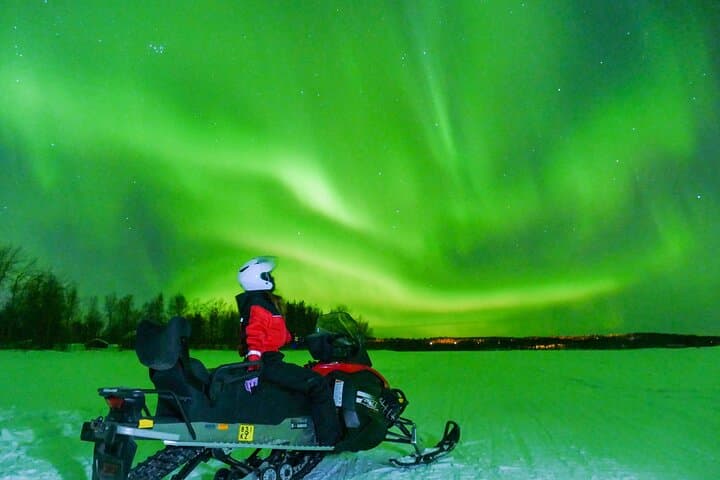
The night starts before you reach the stars. Engines cough to life, helmets click, and the guide counts off in a language thick with consonants as Rovaniemi’s pine line slides past in a blur of black and silver. The snow under the sleds is not just a surface—it’s a track, a conductor that sends you through a dark, cold cathedral where silence hangs like breath. Within thirty minutes you’re far from any municipal glow, the only light coming from headlamps and the pale wash of the moon. Then the sky moves.
There’s a particular economy to a snowmobile aurora chase: fast on the trail, patient in the clearing. The tour described here trades long treks on foot for speed and reach, opening pockets of Lapland that would otherwise be hours away. As you follow groomed tracks and cross frozen rivers, the spruce and birch stand at attention, their branches powdered with snow. The guide brings you to a field or a lakeshore—places with wide, unobstructed skies—and hands around steaming cups and a small snack. You warm your palms by a crackling fire while the heavens begin their quiet performance: ribbons of green, now violet, now like brushstrokes across the firmament.
This is not spectacle as spectacle; it’s an earned encounter. A good operator reads weather, geomagnetic forecasts, and the mood of the sky the way a mountaineer reads clouds. When you book <a href="https://app.advcollective.com/local-experts/chasing-the-northern-lights-on-a-snowmobile-adventure-in-rovaniemi">this snowmobile aurora tour</a>, you’re buying access—to groomed trails, to experience, and to local know-how that maximizes the odds of seeing the lights while minimizing disturbance to wildlife and terrain.
Lapland is both place and story. The region is the ancestral home of the Sámi people, whose livelihoods have long revolved around reindeer, and whose cosmology includes a deep respect for the night sky. Geologically, the terrain is old and glacial: scattered drumlins, thin soils, and expanses that were shaped and scoured by ice sheets. Practically, that means you’re riding across a landscape that is fragile in summer and surprisingly resilient in winter—but always deserving of careful travel.
Culturally the night ride links contemporary tourism with traditional livelihoods. In this part of Finland, snowmobiles are tools, not toys: used for transport, forest work, and now for responsible eco-tourism. Local guides will often point out signs of reindeer herding, explain how aurora forecasting works, and tell stories about constellations. After the ride you’re likely to find yourself in town sampling Lappish food or visiting the Arktikum museum to ground the night’s wonder in local history.
For travelers, the draw is obvious: an efficient, cinematic way to find auroral displays without the long walks or complex logistics. For photographers, it’s a chance to frame the dance from remote spots with minimal light pollution. For casual adventurers, it’s an evening that pairs physical motion with contemplative pause—the sleds provide momentum, the sky brings stillness.
Practical notes: the tour lasts about three and a half hours, typically runs at night, and includes warm gear orientation, helmets, and a short break by a fire. Dress in insulated layers, bring a camera on a tripod if you want star shots, and be prepared for sudden temperature swings when you stop. The guides will brief you on sled handling and safety; if you’re new to snowmobiling, lean into the instruction and let the lead guide set pace.
If you want to push further, combine the ride with daytime activities: husky sledding, ice fishing, or a visit to a reindeer farm for a grounding contrast to the bright, mobile night. If photography is your aim, arrange for a guide who understands exposure times and can position sleds for compelling foregrounds—the difference between a document and a postcard is often a good foreground element and patient framing.
Inevitably, nature will always have veto power. There will be nights when the sky is stubbornly blank; that’s part of the trade-off when chasing the aurora. A reputable operator will have contingency plans: alternative viewing sites, communicating the science behind auroral cycles, and offering flexibility in rebooking.
In the end, the ride is about movement—through space, through cold, and into a human-sized reverence for the cosmos. The sled hums beneath you, trees rush by, and then you stop and watch the world rearrange itself in green and violet strokes. It’s intimate, efficient, and, handled the right way, deeply respectful of place. For travelers who want to experience the Arctic night without a multi-day expedition, a guided snowmobile aurora chase is a direct and unforgettable way to let the sky do the surprising.
Trail wisdom
Small choices, better day.
Dress in layers
Base layers and a warm outer shell let you regulate temperature when riding versus stopping by the fire.
Bring a tripod
If you want aurora photos, a sturdy tripod and a remote shutter are worth carrying in your pack.
Listen to the guide
Snowmobile handling, speed, and safe stopping are taught on-site—follow instructions for both safety and better viewing spots.
Protect extremities
Bring insulated gloves and a balaclava; frostbite risk increases when you’re stationary and cold.
Local knowledge
Read the place, not just the route.
Watch for native species including Reindeer, Snowy owls and other winter raptors.
Keep an eye out for wildlife during the transition between areas and habitats. Respect distance guidelines.
Stick to groomed trails and follow guide instructions to minimize disturbance to wintering wildlife and sensitive tundra vegetation.
Follow the guide's instructions on size limits, ethical handling, and leave-no-trace practices.
Ounasvaara hill lookout for a quick daytime panorama. Small lakeshores west of Rovaniemi that offer mirror-like reflections when conditions are right
Locally recommended viewpoints and quiet spots known best to local operators.
Rovaniemi sits on the Arctic Circle and has long been a crossroads for Sámi reindeer herding traditions and Arctic trade routes.
Maritime roots and regional tradition shape the waterways and working coasts.
Seasonal guide
Four versions of the same landscape.
Spring
Best forLonger daylight for travel · Stable cold nights for clear skies
ChallengesVariable snow quality · Thawing trails late season
Late winter into early spring offers reliably cold nights and longer windows for aurora with diminishing snowpack on lower trails.
Summer
Best forNot applicable for snowmobile aurora tours · Midnight sun experiences
ChallengesNo snow for sleds · Continuous daylight prevents aurora viewing
Summer ends the snowmobile season and brings midnight sun conditions that make aurora tours impossible.
Fall
Best forEarly-season aurora sightings · Cooler crowds
ChallengesUnstable weather · Shorter, unpredictable snow cover
Autumn can offer early aurora opportunities but is less reliable for snowmobile access until consistent snow arrives.
Winter
Best forAurora viewing · Snowmobile access and full winter services
ChallengesSevere cold nights · Short daylight hours for other activities
High winter is peak season: deep snow, maintained trails, and the best odds for clear, dark nights ideal for aurora chases.
Operator details
What the booking data adds.
Included
- ✓Aurora borealis trip by snowmobile
- ✓Guiding service
- ✓Pickup & return service
- ✓Thermal overalls, boots, helmets, and balaclavas
- ✓Deep into the arctic nature
- ✓Driving and safety instructions
- ✓Hot berry juice and biscuits
Good to know
- ✓Not recommended for travelers with spinal injuries
- ✓Not recommended for pregnant travelers
- ✓Not recommended for travelers with poor cardiovascular health
- ✓Suitable for all physical fitness levels
- ✓A minimum of 2 full-paying adults is required for the tour to operate. A single traveller may join an existing group.
- ✓The driver of a snowmobile must hold a valid driving license. Guests without a valid license may ride as a passenger behind a driver or the guide, subject to availability and safety conditions.
- ✓On shared snowmobiles, two guests share one snowmobile and may switch driving during the break. For groups with an odd number of participants, the single traveller will sit behind the guide or be paired with another single traveller from the same group when possible. Alternatively, guests may choose to book a solo driving option, where one person drives one snowmobile.
- ✓Pricing is per person and varies depending on whether you choose a shared snowmobile (shared with another participant) or solo driving (one person per snowmobile).
- ✓Drivers are responsible for any damage caused to the snowmobile. Please refer to the indemnity clause for full details.
- ✓Children under 140 cm will travel in a sled pulled by the guide’s snowmobile. For safety reasons, we strongly recommend that at least one adult accompanies young children in the sled. Children over 140 cm must sit as a passenger on a snowmobile behind the driver/guide and are charged at the adult rate.
- ✓The Northern Lights are a natural and unpredictable phenomenon, and sightings cannot be guaranteed. However, our professional experience and forecasting tools help increase your chances of seeing them.
- ✓Thermal overalls, boots, helmets and balaclavas will be provided. The total duration includes transfer, clothes changing, driving & safety instruction time.
- ✓Pick-up service is included from selected locations. If your accommodation is not listed, please contact us to check availability.
- ✓You will receive the final meeting time and meeting point upon confirmation. Failure to participate in the safari due to missing the meeting time or meeting point will not be eligible for a refund.
Pack with intention
What to bring.
Good to know
Common questions.
Expect temperatures well below freezing; guides provide safety briefings and some operators offer additional insulated suits—dress in layers and bring warm mittens.
Plan the edges
The details that make the day easier.
Rovaniemi lies on the Arctic Circle and is known as the official hometown of Santa Claus; its high latitude also makes it one of Finland’s most reliable places to see the aurora borealis.
After the ride, head to Nili Restaurant for Lappish flavors (reindeer, cloudberry) or visit the Arktikum museum cafe to warm up; many small pubs in Rovaniemi pour local beers and offer a relaxed spot to compare notes with fellow travelers.
- Closest airport
- Rovaniemi Airport (RVN). Typical drive time to trailheads: 10–45 minutes from town. Cell service: good near town, variable in remote clearings. Permits: none for guided tours; operator supplies helmets and briefing.
Choose operators that use groomed trails, respect reindeer routes, and practice low-impact policies; pack out all waste and avoid lighting unnecessary fires in the Arctic landscape.
Explore by topic
Follow the threads.
Keep exploring
Make the story part of the trip.
Set out from Bass Harbor for a private, customizable day on Blue Hill Bay — lighthouses, puffins, seals, and the chance to feel Acadia from the water. Small groups, local captains, unforgettable views.
In four hours you can move from shaded canyon ferns to wind-scoured coastal ridgelines, guided by someone who knows where the light—and the hidden views—live. This private half-day hike on the Monterey Peninsula or Big Sur is compact, curated, and perfect for travelers who want depth without a multiday commitment.
 Related story
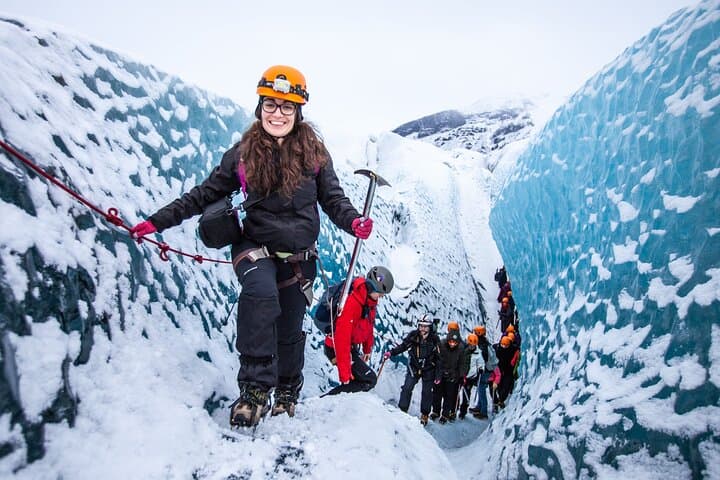
Beneath a sky of shifting light, Skaftafell’s ice reads like a map of time. This three-hour guided glacier hike mixes technical instruction with geology and culture: compact, safe, and unforgettable.