
What the day feels like
By the time the van threads the last switchback above Lake Buyan, the air changes—thicker, cooler, fragrant with wet earth and coffee flowers. A rail of ferns leans over the roadside; beyond them the valley drops away into mist. You step out and listen: waterfalls arriving before you can see them, a layered percussion that grows clearer with each turn off the main road. This is North Bali, a green seam of rice terraces, volcanic ridges and river-carved canyons where Banyumala, Banyu Wana Amertha and Leke Leke fall like curtains through the trees. A private tour here feels like being granted permission to an island’s quieter chapters—places locals have always known and travelers are only now discovering.
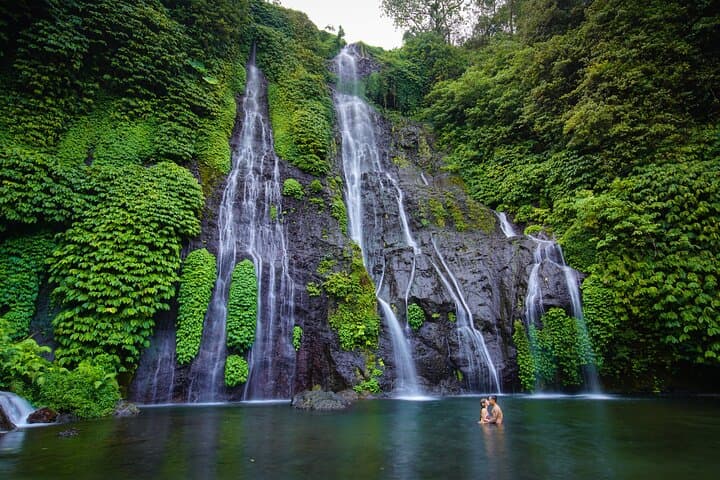
The route is deceptively simple on a map; the reality is a textured journey. The full-day Private Waterfalls Tour in North Bali runs about eight hours, leaving early to stitch together three main sites with short walks, time for swims in cool, clear plunge pools, and a lunch stop at a hillside warung. Driving between falls takes you out of the southern tourist corridor—Seminyak and Ubud blur southwards—and into a landscape shaped by Bali’s volcanic geology. Rivers, sourced in the island’s central highlands, have cut under basalt and breccia for millennia, sculpting narrow gorges and the vertical planes that create such photogenic drops. The result: waterfalls with distinct personalities. Banyumala is a broad, twin cascade that spreads and sheets over volcanic rock; Banyu Wana Amertha drops through a fern-fringed slot into a deep, emerald pool; Leke Leke tumbles in a theatrical vertical ribbon, a favorite for photographers.
History and culture run in parallel to the natural drama. This is Balinese country—temples hinge to ridgelines, rice terraces step down like woven cloth, and the scent of incense lingers in village shrines. Many of these cascades are sacred to local communities; offerings and small altars are often set near access paths. The people here maintain a quieter life than the southern resorts—farmers tending clove and coffee trees, artisans carving wood, families running small warungs that serve fresh grilled fish and spicy sambal. The tour’s private format usually includes a local guide who can explain place names and point out cultural markers you might otherwise miss. For more details about local guides and expert-run itineraries, see this local-expert link: https://app.advcollective.com/local-experts/explore-north-balis-hidden-waterfalls-leke-leke-banyuwana-amertha-banyumala
Practicalities matter. The day averages 8 hours door-to-door (Viator lists a fixed duration of 480 minutes) with roughly 30–90 minutes of walking spread across multiple sites. Trails to the falls are short but can be steep, muddy and include carved stone steps or roots—expect slick surfaces. Elevation sits higher than Bali’s coastal plains; morning temperatures are pleasant, but tropical sun and humidity climb by midday. Swimming is possible at most pools; water shoes and quick-dry layers make a big difference. The tour is private, which means pacing is yours: linger at a pool, wait for a photographer’s light, or skip a plunge to savor a quiet viewpoint. Pricing starts from about US$52 per person, making this an accessible day trip for small groups.
Timing is everything. Early starts avoid afternoon showers and the busiest crowds; you’ll also get cleaner light for photos—soft through the canopy and glancing off spray. The wet season (roughly November–March) intensifies flows and makes pools fuller, but some access steps become treacherous; the drier months (April–October) offer easier footing and sunnier breaks between showers. Local guides know the microclimate of each trail and will advise the best order of visits. If you want a deeper local context, the link to North Bali’s hidden waterfalls provides guide options and logistical details: https://app.advcollective.com/local-experts/explore-north-balis-hidden-waterfalls-leke-leke-banyuwana-amertha-banyumala
What to expect on the ground: trails of packed dirt, mossy stone stairways, rope handrails in steeper sections, and small family-run stalls selling cold drinks near trailheads. Facilities are minimal—think composting toilets or simple latrines at busy drops—so plan accordingly. Respect for local customs is important: cover shoulders when passing shrines and step aside during offerings. The tour’s private nature and local-guide partnership helps support community-based businesses—guides often coordinate entrance fees and contribute to small conservation efforts that protect the streams.
For travelers: pack light but intentionally. Water shoes or sturdy sandals make river entry easier; a waterproof camera or phone in a soft case keeps memories safe; quick-dry clothes and a lightweight rain shell cover sudden squalls. Bring cash for small entry fees, donations, or a warung lunch—card machines vanish beyond the main towns. If you’re photographing, a polarizing filter will cut glare on the water and deepen greens; a wide-angle lens captures the vertical drama of Leke Leke or expanding tiers of Banyumala.
The payoff is tactile: the slap of humidity cooling as you step into a pool, the taste of mineral water that smells of soil and stone, the way the forest seems to lean in, as if to watch. Return south late in the day and the drive feels different—towns lighting up, restaurants filling, you carrying a day’s worth of rainforest hush. If you want to learn more about arranging a guide or customizing the route—longer hikes, photography-focused stops, or temple additions—this local resource is a useful starting point: https://app.advcollective.com/local-experts/explore-north-balis-hidden-waterfalls-leke-leke-banyuwana-amertha-banyumala
In short: this is a day built for contrast—movement and pause, heat and cold, the island’s cultivated calm and its raw, moving water. For travelers who want to trade beach clubs for basalt cliffs and emerald pools, North Bali’s waterfalls are a precise, affordable and unforgettable doorway into the island’s wilder side.
Trail wisdom
Small choices, better day.
Start Early
Begin at first light to avoid the midday crowds and afternoon showers common in the tropics.
Grip the Trail
Wear water shoes or trail sandals—roots and wet rocks on descent/ascent are slippery.
Protect Your Gear
Bring a waterproof phone pouch and a microfleece or quick-dry top for post-swim chills.
Carry Cash
Small entry fees, parking and warungs typically accept only cash—have IDR on hand.
Local knowledge
Read the place, not just the route.
Watch for native species including Long-tailed macaque, Various kingfisher and sunbird species.
Keep an eye out for wildlife during the transition between areas and habitats. Respect distance guidelines.
Small local entrance fees support trail maintenance; avoid single-use plastics, stay on designated paths and respect shrine areas to reduce impact.
Follow the guide's instructions on size limits, ethical handling, and leave-no-trace practices.
Twin pool at Banyumala’s upper ledge (less visited on weekdays). Coffee plantation viewpoint above Lake Buyan for panoramic shots
Locally recommended viewpoints and quiet spots known best to local operators.
These waterfalls sit within traditional Balinese landscapes where streams feed rice terraces and many falls are linked to nearby temple rituals.
Maritime roots and regional tradition shape the waterways and working coasts.
Seasonal guide
Four versions of the same landscape.
Spring
Best forFewer crowds · Clearer trails · Good photo light
ChallengesOccasional showers · Variable water flow
Spring (March–May) balances wetter months and clearer skies—falls have decent flow and paths dry faster after rains.
Summer
Best forStable weather · Easier footing · Warung lunches outdoors
ChallengesBusy weekends · Stronger sun in exposed sections
June–August offers drier trails and reliable conditions—ideal for swimming and photography.
Fall
Best forLush foliage · Strong flows · Fewer tourists
ChallengesShort, sharp storms possible · Some trails muddier
September–November keeps the falls dramatic while crowds taper; watch for localized downpours.
Winter
Best forFull waterfall volume · Dramatic skies · Fewer southern tourists
ChallengesMonsoon rains · Slippery access steps
December–February brings heavier rain and higher flows—spectacular but sometimes risky; local guides will advise safety.
Operator details
What the booking data adds.
Included
- ✓Bottled water
- ✓Lunch
- ✓All Fees and Taxes
- ✓Air-conditioned vehicle
Not included
- —Alcoholic Beverages
Good to know
- ✓Not recommended for travelers with spinal injuries
- ✓Not recommended for pregnant travelers
- ✓Not recommended for travelers with poor cardiovascular health
- ✓Travelers should have at least a moderate level of physical fitness
- ✓The total tour duration includes the transportation and time spent at each location.
Pack with intention
What to bring.
Good to know
Common questions.
The private tour runs about eight hours and typically includes transport, a local driver/guide, entrance fees to waterfalls, and time for swimming; confirm specifics with your operator.
Plan the edges
The details that make the day easier.
Banyumala’s name derives from Balinese words meaning 'waters of the world', reflecting local reverence for the island’s freshwater sources.
After the hike, stop at a local warung in Munduk for grilled fish and sambal or visit Munduk Moding Plantation for coffee and views—both support small businesses and extend the day into a cultural exchange.
- Closest airport
- Ngurah Rai International Airport (DPS). Typical drive: 2.5–3.5 hours from Denpasar
- South Bali; from Ubud ~2 hours. Trailheads
- short 10–30 minute walks from parking. Cell service: patchy in gorges. Permits: small local entrance fees; no formal national park permits required.
These streams are community-managed; pack out all trash, avoid disrupting moss and stream banks, and tip guides and warung owners to support local stewardship.
Explore by topic
Follow the threads.
Keep exploring
Make the story part of the trip.
Set out from Bass Harbor for a private, customizable day on Blue Hill Bay — lighthouses, puffins, seals, and the chance to feel Acadia from the water. Small groups, local captains, unforgettable views.
In four hours you can move from shaded canyon ferns to wind-scoured coastal ridgelines, guided by someone who knows where the light—and the hidden views—live. This private half-day hike on the Monterey Peninsula or Big Sur is compact, curated, and perfect for travelers who want depth without a multiday commitment.
 Related story
Beneath a sky of shifting light, Skaftafell’s ice reads like a map of time. This three-hour guided glacier hike mixes technical instruction with geology and culture: compact, safe, and unforgettable.