
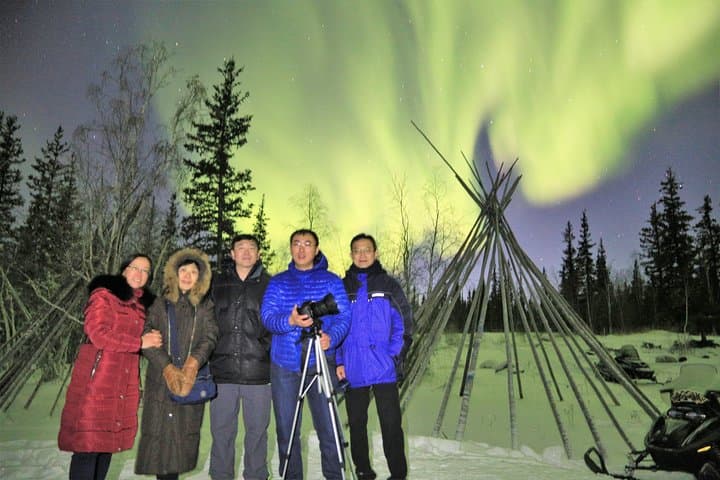
What the day feels like
You step off the heated bus into a wooden hush: the Ingraham Trail stretches out under a sky so emptied of city glow that constellations feel close enough to touch. The air bites at exposed cheeks, and a guide hands you a flask of hot tea while rearranging tripods. On a clear night, the aurora does not announce itself with fanfare; it arrives in waves—first a pale smear, then curtains of green that fold, shiver, and ripple like an invisible sea. This is the work of a winter sky, coaxed into motion by winds from the sun. On the Northern Lights Tour Yellowknife, that sky becomes a living backdrop, and your bus becomes a portable dark-sky window, stopping at lake-front pullouts so the aurora can be framed across frozen water and pine silhouettes.
Yellowknife sits on the north shore of Great Slave Lake, and the nearby Ingraham Trail was carved during the 1940s as a supply route, later evolving into an access corridor for fishing, camping and—seasons permitting—aurora watching. Geologically, the trail threads through the Canadian Shield: granite outcrops, shallow lakes, and boreal forest. Those lakes are not just scenery; they act as black mirrors that amplify the aurora’s colors and give photographers long reflections to play with. Culturally, the Northwest Territories’ Indigenous communities have long read the sky as part of seasonal cycles and stories, and modern-day Yellowknifers lean into that relationship—local guides share knowledge about timing, lore, and respect for the land.
This tour is pragmatic about its promise. It’s a four-hour, small-group bus experience that increases your odds of sightings by using the Ingraham Trail’s darker vantage points and by moving to where the sky looks most promising. Practical perks matter: your guide offers complimentary hot snacks and will take photos of you beneath the lights—images included in the tour price. For photographers and casual stargazers alike, the value is clear: no negotiating winter driving, no navigating unlit backroads, and a higher chance of aurora against those famous lake reflections. If you’re after technical skill-building, the guides are good at offering shooting tips and adjusting camera settings for long exposures, but they won’t replace a hands-on photography workshop.
When to go is straightforward: winter. Clear, cold nights—typically from late November through March—are your best bet. The long nights and frequent geomagnetic activity make Yellowknife one of the world’s most reliable aurora destinations; some operators cite dozens to hundreds of aurora nights each year, and the town’s infrastructure has grown to match that demand. That said, you’ll need to dress for the weather: even if the bus is warm, waiting outside for a photo or walking to a lakeshore can be bone-cold. Many visitors rent parkas and boots locally if they don’t want to pack heavy gear.
Logistics are tidy. The tour runs about four hours, usually with hotel pickup and drop-off in Yellowknife, and the price is competitive—starting from about USD 73 per person. You’ll be on paved sections and maintained pullouts along the Ingraham Trail, with a friendly guide doing the driving and the scouting. Cell service is intermittent once you head east, which is part of the charm—phones drop to silence and the sky takes over. If you want printed tips or local context before you go, the tour page provides details on clothing and camera basics; book early in peak winter months, when availability tightens.
For travelers, the experience is a clean blend of theater and science: watching the aurora is both a spectacle and an exercise in patience. You’ll leave with a short photo set from your guide and, if you bring your own camera, a memory card full of long-exposure experiments. If you’re not a shooter, the warmth of the bus, stories from guides, and the occasional rush of the sky will be enough.
Ready to chase the lights? Learn more and secure a spot on the <a href='https://app.advcollective.com/local-experts/northern-lights-tour-yellowknife-ingraham-trail-aurora-photography-tour'>Northern Lights Tour on the Ingraham Trail</a>. The route’s lakes and outcrops make for picture-perfect aurora frames, and the guided stops mean you spend more time under the sky and less time fumbling through directions. Whether you want an accessible intro to aurora photography or a no-fuss night beneath one of planet Earth’s most dramatic natural shows, this tour does the heavy lifting. Book the <a href='https://app.advcollective.com/local-experts/northern-lights-tour-yellowknife-ingraham-trail-aurora-photography-tour'>aurora photography tour</a> to maximize sightings, and if you need winter gear, many operators in town will outfit you so you can focus on the sky, not shivering.
The aurora is not guaranteed; it is weather-driven and wild. But by moving along the Ingraham Trail, using a local’s eye for clear pockets of sky and lake-backed vantage points, you increase the odds considerably. When the lights do arrive, the experience is equal parts quiet reverence and childlike wonder—a reminder that some of the best travel moments come when you stand very small beneath something vast.
Trail wisdom
Small choices, better day.
Layer aggressively
Temperatures can drop quickly—use a base layer, midweight insulating layer, and a windproof outer shell.
Bring a tripod
For crisp aurora photos, a sturdy tripod and a cable release or remote are vital.
Charge spare batteries
Cold drains camera and phone batteries fast—carry spares in an inner pocket to keep them warm.
Trust the guide
Guides know where to pull off for dark skies and best reflections—follow their directions for safety and better photos.
Local knowledge
Read the place, not just the route.
Watch for native species including Snowy owl, Arctic hare.
Keep an eye out for wildlife during the transition between areas and habitats. Respect distance guidelines.
Respect local wildlife and avoid trampling shoreline vegetation; keep to established pullouts and pack out all trash to protect fragile boreal habitats.
Follow the guide's instructions on size limits, ethical handling, and leave-no-trace practices.
Lake Latham pullouts along the Ingraham Trail for glasslike reflections. Small clearings where the boreal forest frames the horizon with minimal light pollution
Locally recommended viewpoints and quiet spots known best to local operators.
The Ingraham Trail was developed during the 1940s and later used for access to fishing and resource sites; it now doubles as Yellowknife’s nearest dark-sky corridor.
Maritime roots and regional tradition shape the waterways and working coasts.
Seasonal guide
Four versions of the same landscape.
Spring
Best forEarly-season aurora chances · Quieter roads · Some milder winter nights
ChallengesLonger daylight reducing dark hours · Unpredictable spring melt conditions
Late winter/early spring can still deliver aurora but nights shrink and roadside conditions vary as thaw begins.
Summer
Best forMidnight sun activities nearby · Fewer tourists · Hiking and fishing options
ChallengesNo aurora viewing due to bright nights · Short nights even at high latitudes
Summer is excellent for daytime outdoor activities but unsuitable for aurora viewing because of near-constant daylight.
Fall
Best forEarly dark nights for aurora · Autumn colors in boreal forests
ChallengesCooling temperatures and early snow · Less predictable road maintenance
As nights lengthen, opportunities for aurora return; expect bracing cold and variable road conditions.
Winter
Best forPeak aurora viewing · Long, dark nights · Reflective lake ice for photos
ChallengesExtreme cold, sometimes below -30°C/-22°F · Icy roads and dress requirements
Winter is prime aurora season with long nights and frequent activity, but dress warmly and prepare for deep cold.
Operator details
What the booking data adds.
Included
- ✓Cookies
- ✓Guaranteed Departure of this tour
- ✓Coffee and/or Tea
- ✓Your Pictures Free
- ✓Pick Up & Drop Off from All Hotels and BnB in Yellowknife
- ✓Driver / Guide / Host
Not included
- —Gratuities
- —Winter Clothing
- —We do not Pick Up or Drop Off to and from Airport for this tour
Good to know
- ✓Suitable for all physical fitness levels
- ✓Pets Not Allowed
Pack with intention
What to bring.
Good to know
Common questions.
The tour lasts about four hours and generally includes hotel pickup and drop-off within Yellowknife.
Plan the edges
The details that make the day easier.
Yellowknife is known as one of the best aurora-viewing destinations in North America due to its northern latitude and frequent clear skies—residents report auroras on many winter nights each year.
After your night under the lights, head to Bullock’s Bistro for hearty local fare and The Woodyard Brewhouse for a local beer; visit the Prince of Wales Northern Heritage Centre by day to learn more about Indigenous history and northern life.
- Closest airport
- Yellowknife Airport (YZF)
- Typical drive to trailhead
- ~20–35 minutes east via Ingraham Trail
- Cell service
- intermittent along the trail
- Permits
- none required for this tour; tour includes pickup and drop-off
Minimize light pollution and disturbance: use headlamps with red filters, stay on designated pullouts, and pack out all trash to protect lake shorelines and wildlife.
Explore by topic
Follow the threads.
Keep exploring
Make the story part of the trip.
In four hours you can move from shaded canyon ferns to wind-scoured coastal ridgelines, guided by someone who knows where the light—and the hidden views—live. This private half-day hike on the Monterey Peninsula or Big Sur is compact, curated, and perfect for travelers who want depth without a multiday commitment.
 Related story
Beneath a sky of shifting light, Skaftafell’s ice reads like a map of time. This three-hour guided glacier hike mixes technical instruction with geology and culture: compact, safe, and unforgettable.
 Related story
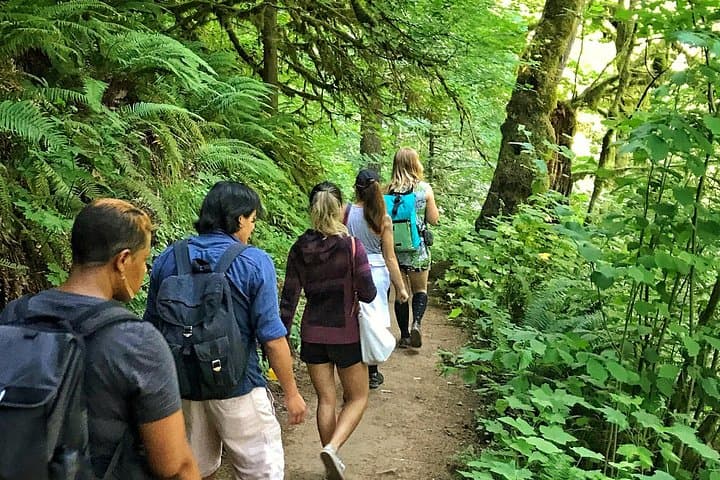
Lose the city for a few hours without leaving it: this 5-mile, 900-foot-gain Forest Park loop threads old-growth pockets, city viewpoints, and cultural landmarks for a compact taste of Portland’s wild side. Expect moss, roots, and stories.