
What the day feels like
You step off the van and the air changes—cool, mineral-heavy, carrying the faint perfume of wet basalt and moss. The canyon opens in stages: cleaved cliffs of columnar basalt, river ribboning far below, and a chorus of waterfalls that do not ask permission to be beautiful. On a half-day tour from Portland, the Gorge compacts eons of geology and a dozen postcard views into a single, breath-stealing loop. This is not a rushed photo stop; it’s a calibrated taste of one of North America’s most photographed natural theaters.
The Gorge is a story written in lava and ice. Between 17 and 15 million years ago, fissure eruptions poured basalt across a landscape that would one day be carved by the Columbia River. When the Missoula Floods churned through at the end of the last ice age, torrents scoured the rock, revealing the layered cliffs and amphitheaters that now channel streams into spectacular drops. The result: waterfalls of differing personalities—some slender as ribbons, others like draperies unraveling from a basalt shelf.
Culturally, the Columbia River Gorge has been a corridor for millennia. Indigenous peoples, including the Wasco and Multnomah bands of the Chinookan peoples, navigated the river and seasonal food resources here long before Euro-American exploration and the Oregon Trail reshaped the valley. By the 20th century, the highway that threads the Gorge became the oldest scenic highway in the United States, offering viewpoints and lodge stops that feel like time-capsuled waypoints for modern travelers.
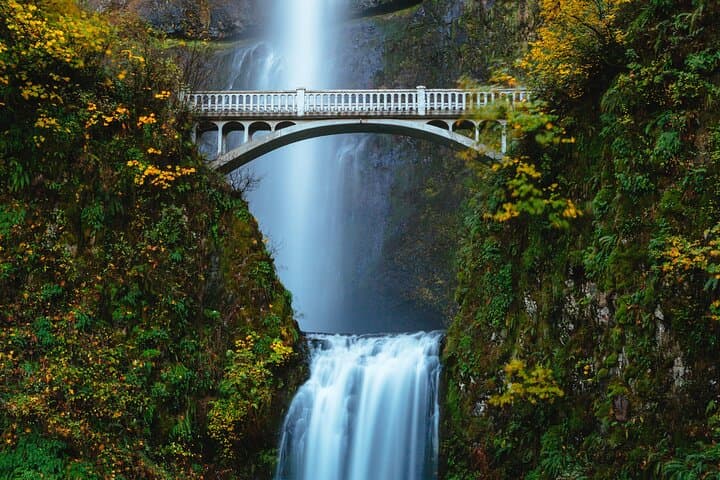
On a guided half-day tour you’ll move deliberately: Vista House at Crown Point, perched like an observatory above the river; Multnomah Falls, the Gorge’s crown jewel with a graceful 611-foot drop and a historic lodge at its base; and smaller, equally charming falls tucked along short trails. Guides will point out basalt columns and discuss the flood history, while leaving space for the canyon’s own show—the water, the wind, the way light shifts the rock.
Practical matters matter. This is a 4-hour, mostly accessible driving tour that includes short walks—some paved, some uneven. Trails range from gentle boardwalks to stair-stepped paths; choose footwear with traction for slick sections. Spring and early summer are the peak window for full waterfalls and wildflowers; late summer slims the falls but opens up warmer weather and fewer people. Bring layers: the Gorge can feel several degrees cooler than Portland, and mist near major falls soaks thin fabrics fast.
If you want to stretch legs beyond the tour, there are options: a longer hike to the top of Multnomah Falls for a different perspective, or a short walk to Latourell Falls’ basalt amphitheater. For photographers, morning light illuminates the east-facing cliffs; afternoons can gift iridescent mist-bows and saturated colors.
A practical itinerary note: many operators offer hotel pickup in Portland and loop along the Historic Columbia River Highway, stopping at viewpoints and the Vista House. If you prefer to craft your own route, plan for limited parking at the busiest falls—arriving early or late in the afternoon reduces wait times.
Sustainability and stewardship are baked into how you experience the Gorge. This area is protected as the Columbia River Gorge National Scenic Area; stick to marked trails, carry out any trash, and avoid trampling fragile riparian vegetation. The Gorge is popular for good reason, and protecting its trails and viewpoints keeps them beautiful for the next person.
Why go on a guided half-day tour rather than DIY? A guide compresses context into a short window—history, geology, best photo angles—and handles the logistics of traffic and parking. For travelers short on time or those who want to learn the landscape’s story without guesswork, a guided loop is both efficient and enlightening. If the idea of mist on your face, basalt underfoot, and a succession of waterfalls in an easy, accessible package appeals, this particular Columbia River Gorge experience is hard to beat.
If you’re planning a visit from Portland, consider pairing the tour with a follow-up: a brewery stop in Hood River, a wine tasting in the Gorge’s orchard country, or a riverside meal at Multnomah Falls Lodge. And when you want to read more or reserve a spot, this half-day option is presented with full details and local expertise on the tour page, which also highlights key stops like Vista House and Multnomah Falls: https://app.advcollective.com/local-experts/exploring-columbia-river-gorge-waterfalls-vista-house-half-day-tour. For photographers and casual hikers alike, the Gorge is a condensed, high-value outdoor experience—an afternoon that leaves you with a folder full of images and a clearer sense of Oregon’s geological heart.
Trail wisdom
Small choices, better day.
Wear grippy shoes
Trail sections near waterfalls can be slick; opt for shoes with good traction to stay safe on wet rock and stairs.
Bring a quick rain layer
A lightweight waterproof shell keeps you comfortable in waterfall spray and changing canyon weather.
Charge your camera
You’ll be stopping often for photos—carry spare battery or a power bank for phones.
Plan for limited mobility options
While many viewpoints are accessible, some falls require stairs or uneven paths—check specifics if mobility is a concern.
Local knowledge
Read the place, not just the route.
Watch for native species including American Dipper, Bald Eagle.
Keep an eye out for wildlife during the transition between areas and habitats. Respect distance guidelines.
High visitation puts pressure on trails and parking; stick to trails, pack out trash, and follow local guidelines to protect riparian habitats.
Follow the guide's instructions on size limits, ethical handling, and leave-no-trace practices.
Latourell Falls’ basalt amphitheater (short, less-crowded loop). Wahkeena Falls and its fern-lined footpath for quieter photos
Locally recommended viewpoints and quiet spots known best to local operators.
The Columbia River Gorge was designated a National Scenic Area by Congress in 1986 to protect its scenic, cultural, and recreational resources.
Maritime roots and regional tradition shape the waterways and working coasts.
Seasonal guide
Four versions of the same landscape.
Spring
Best forFull waterfalls · Wildflowers · Cooler hiking
ChallengesMud and slick trails · Unpredictable showers
Spring offers peak flows and blooming understory plants, but expect wet, muddy trails—bring waterproof shoes.
Summer
Best forWarmer weather · Clear viewpoints · Late sunsets
ChallengesLower flows on some falls · Higher visitor numbers
Summer brings drier weather and easier walking but thinner falls later in the season and more crowds at popular sites.
Fall
Best forFall color · Crisp air · Fewer crowds
ChallengesShorter daylight · Cooler temperatures
Autumn colors frame the canyon and crowds thin; layer up for chilly mornings and shorter touring windows.
Winter
Best forIcicle formations · Dramatic storm light · Solitude
ChallengesIcy trails · Possible road or trail closures
Winter transforms some falls into icy spectacles but brings hazardous footing—use caution and check conditions.
Operator details
What the booking data adds.
Included
- ✓Air-conditioned vehicle
- ✓Bottled water
- ✓Knowledgeable, local and friendly guide
- ✓Transportation in a premium, high-roofed passenger van
- ✓Live commentary throughout the tour
Not included
- —Gratuities- If you enjoy the tour and would like to tip your guide, a 20% gratuity is suggested
Good to know
- ✓Service animals allowed
- ✓Public transportation options are available nearby
- ✓Suitable for all physical fitness levels
- ✓A maximum of 12 people per booking
Pack with intention
What to bring.
Good to know
Common questions.
The guided tour lasts approximately 4 hours and includes multiple stops along the Historic Columbia River Highway.
Plan the edges
The details that make the day easier.
The Columbia River Gorge National Scenic Area was established by Congress in 1986 to protect the region's scenic, cultural, recreational, and natural resources.
After a morning of falls, stop at Multnomah Falls Lodge for a sandwich and local beer, or drive east to Hood River for orchard tastings and craft cider—both offer a taste of Columbia Gorge agriculture and hospitality.
- Closest airport
- Portland International Airport (PDX); Typical drive time from downtown Portland to the Gorge: 30–45 minutes; Cell service: intermittent in remote sections; Permits
- passes
- No general entry fee, but parking is limited at popular falls—guided tours reduce parking hassle.
This area is part of the Columbia River Gorge National Scenic Area—pack out all trash, stay on designated trails, and avoid disturbing riparian habitats to protect sensitive ecosystems.
Explore by topic
Follow the threads.
Keep exploring
Make the story part of the trip.
Set out from Bass Harbor for a private, customizable day on Blue Hill Bay — lighthouses, puffins, seals, and the chance to feel Acadia from the water. Small groups, local captains, unforgettable views.
In four hours you can move from shaded canyon ferns to wind-scoured coastal ridgelines, guided by someone who knows where the light—and the hidden views—live. This private half-day hike on the Monterey Peninsula or Big Sur is compact, curated, and perfect for travelers who want depth without a multiday commitment.
 Related story
Beneath a sky of shifting light, Skaftafell’s ice reads like a map of time. This three-hour guided glacier hike mixes technical instruction with geology and culture: compact, safe, and unforgettable.