
What the day feels like
The boat slips from Reykjavik Old Harbour like a slow exhale—electric lights of the city receding, the black wedge of Faxaflói Bay opening ahead. Night hangs clean and high; the kind of Arctic darkness that lets the sky do the talking. Wrapped in a borrowed blanket, mug of hot chocolate warming my palms, I watch the crew point toward a smear of pale green unspooling above the horizon. For a few minutes the world narrows to the shiver of light overhead and the small, steady breath of the vessel beneath my feet.
A harbor cruise to see the Northern Lights is less about speed and more about patience and placement. Reykjavik, with its compact harbor and quick access to the wider bay, is an ideal launch point: you trade the convenience of an evening out of the city for clearer skies where light pollution thins. Guides on these small-ship runs combine practical seamanship with local lore, explaining the aurora’s physics one moment—charged particles from solar wind colliding with Earth’s magnetosphere—and Icelandic folklore the next, where the lights were once omens and messages from the beyond.
Geologically, the setting is apt. Iceland sits astride the Mid-Atlantic Ridge; the landscape is a patchwork of glacially carved fjords, volcanic slopes, and sheltered bays. The bay’s surface can reflect the aurora in quick, liquid strokes, making the effect twice as mesmerizing. Culturally, Reykjavik’s maritime history quietly frames the trip: the city grew from small fishing settlements clustered around this very harbor, and even now the ocean is part of everyday life—food, business, and folklore all shaped by the sea.
Practicalities matter on a winter night at sea. This tour runs roughly two to two-and-a-half hours, leaving from the Old Harbour after sunset. Operators provide warm blankets and hot beverages and keep group sizes small to preserve a quiet, intimate experience. Expect a mix of photographers, first-time aurora chasers, and locals who treat evening cruises as a kind of clear-air therapy. Price sits around USD 105 per person with instant confirmation and free cancellation—reasonable for a guided, out-on-the-water experience in one of the world’s best aurora-viewing regions.
Photographers get specific advice from crews: bring a tripod, set your lens wide and fast, use manual focus to infinity, and don’t forget spare batteries—the cold drains power fast. But even non-photographers leave with material memories: the slow curtain and ripple of color, the hush of passengers craning necks in unison, and the tactile comfort of a hot drink in both hands.
Timing is everything. The season runs broadly from late September through early April, when long nights make aurora viewing possible, though activity depends on solar weather. Check the Icelandic Meteorological Office aurora forecast (vedur.is) and local Kp-index updates before you book. Also remember weather is capricious: a clear forecast over land doesn’t always mean a clear horizon at sea, but the mobility of a boat helps—captains can nudge lights and angles to seek darker sky if conditions allow.
Safety and comfort are straightforward but essential: dress in warm, windproof layers; wear insulated, waterproof boots with good grip; bring a headlamp with a red-light option for night photography; and plan to sit or stand for stretches if the vessel is small. Seas are typically sheltered in Faxaflói Bay, but some evenings bring chop, so motion-sickness prep is wise if you’re prone.
Beyond the aurora, the cruise folds into Reykjavik’s larger night economy. After disembarking you can wander the Old Harbour for late bites—fresh fish soup, Icelandic fish and chips, or a small brewery taproom—so the outing becomes an entire evening: a taste of the sea, a show in the sky, and a local table to warm up afterward.
Why go by boat rather than stay on shore? The answer is mobility and perspective. From the water, city lights blink away, horizons widen, and the aurora often seems to move with more cinematic freedom. For first-time viewers the experience reduces crowds and adds a layer of seafaring romance without being kitsch. For repeat chasers, it’s a tactical move—boats can find inky pockets of sky when shorelines are washed out by streetlamps.
If the lights don’t appear, the evenings are rarely wasted: you still get a winter sea breeze, island silhouettes, and the peculiar, calming clarity that comes from standing on an open deck under an Arctic sky. The best trips are those that combine respect for the elements with careful planning: check forecasts, dress for exposure, bring a charge pack, and go ready to savor both the possibility of the aurora and the grounded pleasures of a night at sea.
For travelers, a Northern Lights boat cruise from Reykjavik is a compact, high-reward adventure—two hours that feel longer because of the intensity of what you’re watching. It asks little beyond your willingness to stay up late, step onto a vessel, and let the sky decide. When the curtains finally pull open, the payoff is elemental: color, motion, and that particular silence that only great wilderness shows seem to command. It’s a short journey, but one that can make the night stick to memory for years.
Trail wisdom
Small choices, better day.
Dress in layers
Temperatures on deck feel several degrees colder than on shore—use a moisture-wicking base, insulating mid-layer, and windproof outer shell.
Bring a tripod
A small, sturdy tripod is essential for low-light aurora photography and will dramatically improve long-exposure shots.
Prep for motion
If you’re prone to seasickness, take preventative medication before boarding and stay on deck where the horizon is visible.
Reserve early
Tours fill quickly during aurora season—book nights around new moon phases for darker skies and better contrast.
Local knowledge
Read the place, not just the route.
Watch for native species including Common eider, Atlantic seals near the coastline.
Keep an eye out for wildlife during the transition between areas and habitats. Respect distance guidelines.
Operators follow local guidelines to minimize disturbance to marine life and reduce light pollution—choose companies that use low-impact lighting and responsible waste practices.
Follow the guide's instructions on size limits, ethical handling, and leave-no-trace practices.
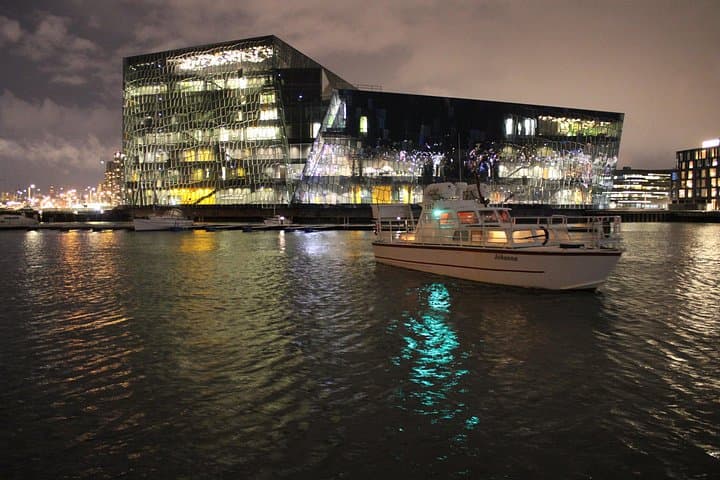
Walk the Westman Island silhouette line from the harbor for quiet shore views. Visit Harpa concert hall steps before boarding for modern architecture and quick cafes
Locally recommended viewpoints and quiet spots known best to local operators.
Reykjavik’s Old Harbour was the center of the city’s fishing industry and played a key role in Iceland’s 19th- and 20th-century maritime economy.
Maritime roots and regional tradition shape the waterways and working coasts.
Seasonal guide
Four versions of the same landscape.
Spring
Best forLate-season aurora · Fewer tourists
ChallengesUnpredictable weather · Shortening nights
Early spring can still deliver strong aurora displays, but nights are shorter and weather shifts quickly—dress for mixed conditions.
Summer
Best forMidnight sun cruises (not aurora) · Coastal wildlife viewing
ChallengesNo aurora due to midnight sun · Cool sea breezes
Aurora season ends by late spring—summer trips focus on daylight coastal scenery and birdlife rather than lights.
Fall
Best forEarly aurora season · Crisp evenings and clearer skies
ChallengesIncreasing storms · Variable visibility
Autumn nights lengthen quickly, offering more opportunities to see the aurora as long as you watch for storm fronts.
Winter
Best forPeak aurora viewing · Atmospheric night photography
ChallengesCold, icy conditions · Higher chance of canceled sailings in storms
Winter is prime aurora season with long nights, but expect cold and occasional schedule changes due to weather.
Pack with intention
What to bring.
Good to know
Common questions.
The tour runs approximately 120–150 minutes from boarding to return, allowing time to transit to darker sky and search for aurora displays.
Plan the edges
The details that make the day easier.
The aurora borealis is caused by charged particles from the sun colliding with Earth's magnetosphere, and Iceland’s location close to the Arctic Circle makes it one of the most reliable places to see the phenomenon.
After the cruise head back to the Old Harbour for fresh fish soup or Icelandic fish and chips, or warm up with a craft beer at a nearby taproom; Harpa concert hall and several small seafood restaurants are within easy walking distance.
- Closest airport
- Keflavík International Airport (KEF) ~50 km
- 45–60 min drive; Departure point
- Reykjavik Old Harbour; Driving from downtown Reykjavik: 5–10 minutes; Cell service: Good near shore, may fluctuate at sea; Permits: None required
Choose operators that minimize light and noise pollution, follow wildlife approach guidelines, and ask about waste management—pack out any personal trash to keep bays clean.
Explore by topic
Follow the threads.
Keep exploring
Make the story part of the trip.
Set out from Bass Harbor for a private, customizable day on Blue Hill Bay — lighthouses, puffins, seals, and the chance to feel Acadia from the water. Small groups, local captains, unforgettable views.
In four hours you can move from shaded canyon ferns to wind-scoured coastal ridgelines, guided by someone who knows where the light—and the hidden views—live. This private half-day hike on the Monterey Peninsula or Big Sur is compact, curated, and perfect for travelers who want depth without a multiday commitment.
 Related story
Beneath a sky of shifting light, Skaftafell’s ice reads like a map of time. This three-hour guided glacier hike mixes technical instruction with geology and culture: compact, safe, and unforgettable.