
What the day feels like
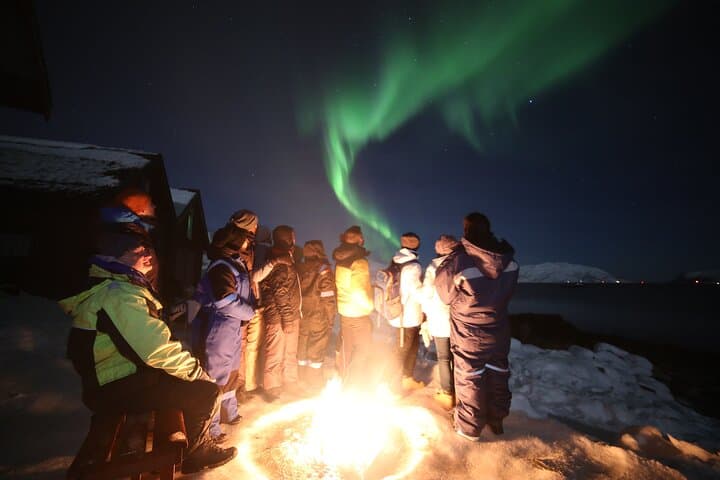
The bus slides out of Tromsø under a lid of stars so thick it seems to press you into the window. Breath fogs the glass, and the highway lights peel away into a darker palette the farther north you go. Our guide, a taciturn photographer who speaks fluent aurora and Norwegian, watches the sky like a conductor listening for a note. He points at a narrow green smear above the horizon—an early promise. When the curtain finally rises, it moves like slow-currented silk, folding and unfolding, green and sometimes violet, as if the polar sky itself were breathing. Cameras click; the cold bites; everyone holds a private, elastic kind of silence. For four to eight hours you become a witness to the magnetosphere at work and, if you’re lucky, you come away with images that feel like proof that the world still surprises us.
Tromsø sits at 69.65°N—comfortably above the Arctic Circle—and has been both a jumping-off point for polar exploration and a modern base for aurora tourism. The science behind the show is clean: charged solar particles streaming into Earth’s magnetic field collide with atoms in the upper atmosphere and release light. But the cultural layers matter here, too. Sami reindeer herders have long read the sky; during World War II, the fjords around Tromsø sheltered convoys and resistance efforts. That past—of survival, navigation, and reading the elements—turns every aurora hunt into a small continuation of an old northern tradition.
Geology shapes the show. Fjords, islands, and mountain ridgelines frame the horizon, creating compositions for photography and places where the aurora seems to pour down into the landscape. The coast’s relatively mild Arctic climate (thanks to the Gulf Stream) and frequent clear skies in certain weather windows make Tromsø one of Europe’s most reliable aurora gateways. Yet it’s weather and darkness—cloud cover, full moon, light pollution, and the solar cycle—that ultimately decide the night.
Culturally, this tour is also a glimpse into contemporary northern Norway: local guides who grew up under these skies, small fishing villages that double as artist colonies in summer, and a food scene that resurrects robust Arctic ingredients—cod, king crab, and reindeer—into warm, uncomplicated plates. Many guides will share quick lessons on lighting and composition, serve hot drinks on the roadside, and hand out the kind of practical comfort only someone who spends winters in the Arctic would think to bring.
Practically: this is a 4–8 hour evening experience that requires minimal hiking but a lot of patience. You’ll travel by van or minibus to areas of lower light pollution—sometimes 30–90 minutes from Tromsø—scouting clear skies and auroral activity. There can be multiple stops; expect to stand in the cold for 5–30 minute stretches while cameras are set up and exposures are taken. There’s no steep terrain or long elevations, but the cold is real: wind, wet snow, and hours of stillness mean you need serious thermal layering and a reliable tripod. Photography instruction ranges from basic to hands-on; the guides often provide sample photos of you under the aurora.
Timing is everything. The best months are in the heart of the dark season—late September through early April—when nights are long enough for repeated viewing windows. March and late autumn can be particularly kind: clearer skies, longer nights, and temperatures just a touch less brutal than mid-winter. Solar activity is cyclical, so higher sunspot seasons increase the odds of spectacular displays.
For camera-minded travelers: use a wide-angle lens (14–24mm on full-frame; 10–18mm on crop sensors), set aperture to its widest viable opening (f/2.8 is ideal), ISO between 800–3200 depending on your sensor and lens speed, and start with shutter speeds between 5–15 seconds—adjust as the aurora intensifies. A sturdy tripod and remote shutter are non-negotiable. Learn to switch to manual focus and pre-focus on a distant light or the moon.
Safety and comfort are simple logistics that reward preplanning. Bring an insulated parka, waterproof winter boots, hand warmers, and spare batteries (cold kills battery life fast). Hydration and calories matter: some tours include thermoses of hot chocolate or reindeer stew at a roadside stop, but having high-calorie snacks is smart if you’re out several hours. Most tours provide photos; small-group options can give more coaching time.
Why take this tour? The aurora is the headline, but the experience is the whole story: traveling across Arctic night with a small, skilled crew; learning small, practical tricks to capture the phenomenon; hearing local stories, and returning to town with images that keep opening conversations. Because no two displays are the same, returning guests find themselves chasing not a destination but a condition: the right combination of solar weather, clear skies, and patience.
If you go: manage expectations (no operator can guarantee a sighting), plan buffer nights in Tromsø for multiple attempts, and treat the aurora like weather-dependent wildlife watching—respect the environment, avoid loud flash photography that interferes with others’ images, and follow guides’ instructions for leaving minimal trace. The reward is elemental: a sky that feels alive and an image that will always remind you that the planet still moves in ways human schedules rarely match.
Trail wisdom
Small choices, better day.
Layer for stillness
Wear insulating layers and a windproof outer shell—standing still for long exposures makes you feel colder than a brisk hike.
Bring spare batteries
Cold drains battery life quickly—carry at least two spares and keep them warm in an inner pocket.
Use a sturdy tripod
A solid tripod and remote shutter dramatically improve sharpness on long exposures.
Trust your guide on location
Guides read local microclimates and know which fjord or ridge will clear—follow their scouting decisions.
Local knowledge
Read the place, not just the route.
Watch for native species including Reindeer, White-tailed sea eagle.
Keep an eye out for wildlife during the transition between areas and habitats. Respect distance guidelines.
Respect dark-sky practices—minimize artificial light, follow guide instructions to avoid trampling vegetation, and pack out all trash to limit impact on fragile Arctic ecosystems.
Follow the guide's instructions on size limits, ethical handling, and leave-no-trace practices.
Ersfjordbotn beach for dramatic fjord silhouettes. Sommarøy island for coastal compositions and low light pollution
Locally recommended viewpoints and quiet spots known best to local operators.
Tromsø has long been a center for Arctic exploration and Sámi culture, and the surrounding fjords were strategic during WWII convoys.
Maritime roots and regional tradition shape the waterways and working coasts.
Seasonal guide
Four versions of the same landscape.
Spring
Best forLonger windows between storms · Milder temperatures late season
ChallengesUnpredictable cloud cover · Shortening nights after April
Late winter into early spring (March–April) often brings clearer skies and slightly warmer temps, but nights shorten as spring advances.
Summer
Best forMidnight sun photography · Coastal wildlife
ChallengesNo true darkness for aurora viewing · Unpredictable coastal weather
Summer offers dramatic daylight experiences but is not suitable for aurora hunting due to the midnight sun.
Fall
Best forEarly dark nights for aurora · Crisp air and vivid landscapes
ChallengesStormier weather windows · Rapid temperature swings
Autumn (September–October) ushers in long nights and often sharp, clear conditions ideal for early aurora season tours.
Winter
Best forPeak aurora season · Polar night experience
ChallengesSevere cold and wind chill · Short daylight hours for daytime activities
Mid-winter provides the most reliable darkness and dramatic auroras but requires serious cold-weather gear and planning.
Operator details
What the booking data adds.
Included
- ✓Snacks and hot drinks
- ✓Snow suit rental
- ✓Photo portraits
- ✓Guide
Not included
- —We do not supply warm shoes or gloves. Please be sure to bring this
Good to know
- ✓Public transportation options are available nearby
- ✓Not recommended for travelers with spinal injuries
- ✓Travelers should have at least a moderate level of physical fitness
Pack with intention
What to bring.
Good to know
Common questions.
No operator can guarantee a sighting, but the tour maximizes your odds by traveling to clear skies based on local forecasts and offering tours during peak aurora months—typical success rates are high in active solar seasons.
Plan the edges
The details that make the day easier.
Tromsø lies north of the Arctic Circle and experiences the Polar Night (continuous darkness) roughly from late November to mid-January, creating extended night-sky viewing windows.
After a night under the aurora, warm up at a local bistro: Fiskekompaniet serves fresh Arctic seafood, Mathallen offers contemporary Northern cuisine, and Ølhallen is the oldest pub in Tromsø for a local beer and conversation.
- Closest airport
- Tromsø Airport (TOS); Typical drive from Tromsø city center to meeting point: 10–20 minutes; Tour drives to dark-sky locations: 30–90 minutes; Cell service: good in town, patchy in remote spots; Permits: none usually required—check operator policies for private land access
Support small local guides, avoid spotlighting wildlife, minimize light pollution by using headlamps sparingly, and pack out everything—fragile Arctic habitats recover slowly.
Explore by topic
Follow the threads.
Keep exploring
Make the story part of the trip.
Set out from Bass Harbor for a private, customizable day on Blue Hill Bay — lighthouses, puffins, seals, and the chance to feel Acadia from the water. Small groups, local captains, unforgettable views.
In four hours you can move from shaded canyon ferns to wind-scoured coastal ridgelines, guided by someone who knows where the light—and the hidden views—live. This private half-day hike on the Monterey Peninsula or Big Sur is compact, curated, and perfect for travelers who want depth without a multiday commitment.
 Related story
Beneath a sky of shifting light, Skaftafell’s ice reads like a map of time. This three-hour guided glacier hike mixes technical instruction with geology and culture: compact, safe, and unforgettable.