
What the day feels like
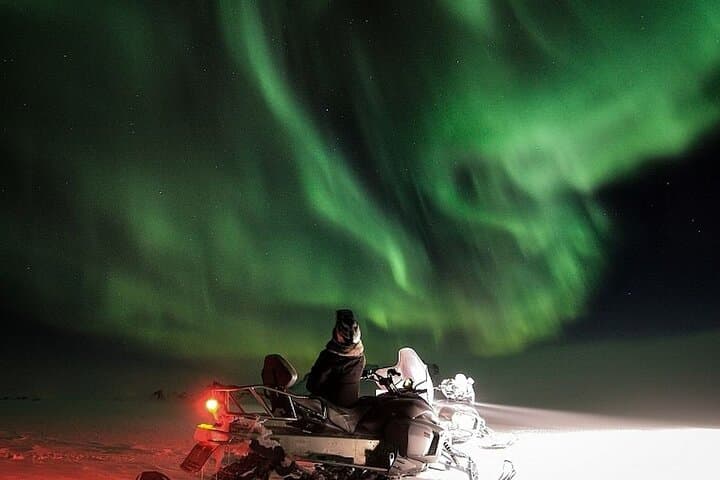
The engine clicks to life like a sleeping animal roused; a rush of warm air fogs the visor and the snow yawns open ahead. Under a cathedral of stars, a convoy of snowmobiles threads across a blank, moonlit expanse—frozen lakes, scrubbed birch, the flat, satisfying hush of Arctic tundra. The cold here has an honesty to it: it doesn’t pretend to be anything other than a probe that tests boots, gloves and nerve. And when the sky finally bends and tears a ribbon of green and violet into the black, the cold is suddenly merciful, the motor’s rumble a small witness to something enormous and ancient.
This is Rovaniemi—Lapland’s low-slung capital and one of the most reliable launch points for aurora hunts. For travelers who want more than a parked-tripod shot from a hotel parking lot, a snowmobile ride turns the chase into motion: you follow clearings and lakes that are dark and remote by design, away from the sodium glare of towns, with the flexibility to stop when the sky opens. The trip is not just adrenaline; it’s a tactile way to read the Arctic night—how the wind sits on a ridge, where the clouds gather, which lake will mirror the aurora.
Geology and light conspire to make this place sing. The aurora borealis is a direct consequence of charged particles from the sun meeting Earth’s magnetic field—the geomagnetic pole near Scandinavia funnels more activity into these northern latitudes, so on clear nights the sky often performs. The terrain you ride across is glacial in origin: lakes carved and deposited by ice, thin layers of moraine, and the slow, patient birchland that marks the tree line. Culturally, the region belongs to the Sámi people—reindeer herders whose seasonal rhythms and practical knowledge of the land still guide how modern tours operate. Many operators keep to designated trails to avoid disturbing herds and sacred sites.
Practicalities are straightforward but essential. The Northern Lights Snowmobile Hunt runs roughly 3–4 hours, long enough to travel out of urban glow and spend meaningful time under the sky. In that window you’ll cover frozen lakes and trails—expect steady, flat terrain rather than steep climbs; speeds are moderated for safety and to make frequent stops. Operators typically provide thermal overalls, helmets and instruction on handling the machine; a valid photo ID and driver’s license are often required if you plan to drive. Guides know how to read aurora forecasts and microclimates; the benefit of a guided hunt is not just logistics but the local intuition about where to find clear skies.
What to expect physically: this isn’t a technical climb or a multi-day expedition, but it does demand respect for cold weather. Your hands, face and feet take the brunt of Arctic nights, so layers and good footwear matter more than base speed. Bring a camera, but also bring patience: auroras can appear suddenly, linger and then vanish. Battery life collapses in cold, so keep spares warm against your body.
Safety and etiquette matter. Snowmobiling is motorized—stay on marked routes, follow the guide, and avoid approaching or startling reindeer. Nighttime driving requires different attention: reduce speed in poor visibility and always ride sober. The tours are intentionally small-group experiences to minimize environmental impact and preserve the quality of the night.
For photographers: aim for manual exposure (10–20 seconds, f/2.8–f/4, ISO 800–3200 depending on your lens), a tripod, and a headlamp with a red mode for setup. Use pre-focus in daylight or focus to infinity on a distant light. If you’re on a snowmobile as driver or passenger, consider a small, stable tabletop tripod and remote trigger—the fewer times you remove gloves, the better.
Why do this rather than a shorter shuttle? Motion matters. A snowmobile conveys you across landscape with intention: you’re not just viewing the aurora, you’re tracing the land that makes it legible. The ride adds context—frozen waterways that mirror the sky, birch edges that frame a burst of green like a stage. And when the sky really shows off, the combination of movement, cold and that sharp Arctic light feels unconditional, like the planet communicating directly with you.
Who will love it: curious travelers who want an active night, photographers who want mobility, small groups looking for a dramatic, time-boxed adventure and anyone who appreciates combining speed with silence—the machine moves fast but the sky always steals the scene. For families with older kids, it’s a memorable way to introduce Arctic nights that’s safer and more controlled than solo exploration.
If you go, leave the traces you brought. Stick to trails, respect reindeer herding areas and follow your guide’s instructions about stopping and staging for photos. Bring spare batteries, a small thermos of warm drink, and a willingness to wait—sometimes the aurora’s best move is patient, deliberate, and worth every shiver.
In the end, it’s the simple, unequivocal pleasure of being somewhere that feels both wild and organized: you are fast, warm under a suit, guided, and then the sky begins to move. The green folds and unravels like a living thing, daring you to stay awake and watch it happen.
Trail wisdom
Small choices, better day.
Dress in Layers
Wear a moisture-wicking base, insulating mid-layers and a windproof outer shell—your extremities will feel the cold first.
Protect Camera Batteries
Keep spares warm inside inner pockets; cold can halve battery life in minutes.
Follow the Guide
Trail etiquette and safety depend on staying with the group and heeding route changes to protect wildlife and avoid thin ice.
Balance Speed With Views
Ride steady—guides will stop at likely viewing spots; slowing down early is better than scrambling to stop when the sky flares.
Local knowledge
Read the place, not just the route.
Watch for native species including Reindeer, Moose (Elk).
Keep an eye out for wildlife during the transition between areas and habitats. Respect distance guidelines.
Operators typically stick to designated trails to reduce disturbance to reindeer herding routes and sensitive tundra; follow guides to minimize impact.
Follow the guide's instructions on size limits, ethical handling, and leave-no-trace practices.
Crossing smaller, frozen lakes for mirror-like aurora reflections. Birch-tree clearings that shelter from wind and frame the sky for photos
Locally recommended viewpoints and quiet spots known best to local operators.
Rovaniemi sits on the Arctic Circle and was rebuilt after World War II—its postwar city plan was designed by architect Alvar Aalto.
Maritime roots and regional tradition shape the waterways and working coasts.
Seasonal guide
Four versions of the same landscape.
Spring
Best forLonger daylight windows · Stable snowpack for riding · Fading nights with late aurora chances
ChallengesVariable snow conditions · Thawing surfaces near lakes
Late winter into early spring can still offer good snowmobile conditions and auroras, but expect warmer nights and changing ice.
Summer
Best forMidnight sun landscapes · Hiking and forest activities · Cultural festivals
ChallengesNo snow for snowmobiles · No aurora during bright nights
Summer is excellent for other Lapland experiences but not for snowmobile aurora hunts—plan different activities instead.
Fall
Best forEarly aurora season · Fewer tourists · Crisp, clear nights
ChallengesUnpredictable snow cover · Shorter nights affect tour timing
Autumn offers the first aurora opportunities; snowmobile tours typically start once snowpack is reliable.
Winter
Best forConsistent snowmobile access · Peak aurora season · Classic Arctic nights
ChallengesExtreme cold · Short daylight hours
Winter is the ideal season for this activity—snow, dark skies and high aurora chances make it the core season.
Operator details
What the booking data adds.
Included
- ✓Winter clothes (overall, boots, gloves, balaclava and helmet)
- ✓Snowmobile ride approximately 1 hour
- ✓Guide in English (other languages available on request: German, French, Italian, Spanish, Chinese)
- ✓Campfire BBQ: pork sausages and hot blueberry juice (vegetarian/vegan alternative upon request)
- ✓Guided Snowmobile trip to Northern lights viewing location
- ✓Departure time may vary. Please check the email the local provider sends for the exact pick-up time.
Good to know
- ✓Specialized infant seats are available
- ✓Not recommended for travelers with spinal injuries
- ✓Not recommended for pregnant travelers
- ✓Not recommended for travelers with poor cardiovascular health
- ✓Suitable for all physical fitness levels
- ✓Northern Lights sightings cannot be guaranteed due to they are subject to weather conditions and the solar activity
- ✓Children under 3 years old are not recommended to attend this tour
- ✓Please be advised the price is per person - twin driving: means that the person has to share the snowmobile
- ✓Remember to take your driving license (or a copy of it) with you on the day of the trip
- ✓The tour will start any time between 18:00 and 20:00. Departure time may vary depending on the seasons and availability, please double-check with the local partner
- ✓At least 2 people are required for this tour to take place on weekdays and Saturdays
- ✓At least 4 people are required for this tour to take place on Sundays and public holidays
- ✓Children under 12 year old must be accompanied by adults paying the full price
- ✓Please be ready and wait in your hotel lobby 10 minutes prior to your scheduled pickup time
- ✓Please advise any specific dietary requirements at time of booking
- ✓If the child is 150 cm or taller, he/she can be seated on the snowmobile paying the adult's price
- ✓If the child is lower than 150 cm, he/she can be seated on the sleigh
- ✓Drivers must have valid driving licenses and be at least 18 years old.
Pack with intention
What to bring.
Good to know
Common questions.
The guided snowmobile hunt lasts approximately 3–4 hours, including transfers to remote viewing areas and time for photographing the aurora.
Plan the edges
The details that make the day easier.
Rovaniemi sits almost exactly on the Arctic Circle and is the administrative capital of Finnish Lapland—its postwar city center was redesigned by Alvar Aalto.
After the ride head back to Rovaniemi for poronkäristys (sautéed reindeer) at a local restaurant like Nili or Roka, pair it with a local beer and warm cloudberry dessert—these meals ground the night in Lapland’s flavors.
- Closest airport
- Rovaniemi Airport (RVN). Pickup: most tours include hotel pickup in central Rovaniemi; transfer to start ~20–40 minutes. Cell service: generally good near town but patchy in remote areas. Permits: no special permits; bring photo ID and driver’s license if driving.
Stay on designated trails to avoid damaging fragile tundra and to respect reindeer herding areas; pack out all waste and limit idling to reduce emissions and noise in wild spaces.
Explore by topic
Follow the threads.
Keep exploring
Make the story part of the trip.
Set out from Bass Harbor for a private, customizable day on Blue Hill Bay — lighthouses, puffins, seals, and the chance to feel Acadia from the water. Small groups, local captains, unforgettable views.
In four hours you can move from shaded canyon ferns to wind-scoured coastal ridgelines, guided by someone who knows where the light—and the hidden views—live. This private half-day hike on the Monterey Peninsula or Big Sur is compact, curated, and perfect for travelers who want depth without a multiday commitment.
 Related story
Beneath a sky of shifting light, Skaftafell’s ice reads like a map of time. This three-hour guided glacier hike mixes technical instruction with geology and culture: compact, safe, and unforgettable.