
What the day feels like
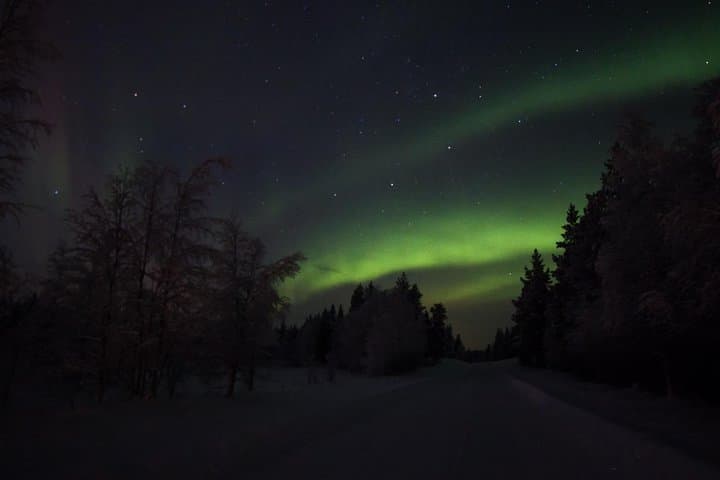
The first sky I remember was a black pool shot through with silver — not stars so much as shards of cold light. In Rovaniemi, that sky is less a backdrop than a player; it breathes, unfurls, and at its best unfetters curtains of green and violet that sweep low enough to make you feel watched by the heavens. On a Northern Lights hunting-by-car tour, the hunt is a rhythm: a brief ride into the dark, a hop out into the hush, a campfire that smells of wood smoke and boiling metal cups, and the patient, hopeful silence as the sky decides whether tonight will be generous.
The tour’s structure is compact and precise. For three to four hours you and a small group follow a local guide who reads the weather and the sky like someone reading a map. The vehicle is a practical emissary between town and open country, ferrying you to pockets of true darkness — away from sodium streetlights and the halo of civilization. When the aurora appears, the group moves like a single organism: cameras out, tripods clicking into place, the guide suggesting camera settings and framing, then stepping back to watch the show.
Lapland’s wildness is written in its history. The landscape was scoured and sculpted by the ice sheets of the last Ice Age, leaving behind low ridges, bogs, and lacework rivers that reflect northern light in winter. The human story here runs parallel: the Sámi have lived with these skies for millennia, reading the aurora’s moods and weaving them into folklore — a sky that can be both omen and wonder. Rovaniemi itself sits on the Arctic Circle and has pivoted over the last century from logging and natural-resource work to northern tourism, partly because of its proximity to Santa Claus Village and partly because the night sky here is unusually cooperative.
Geologically simple, the region gains its drama from light and weather. In winter the air is often dry and cold — the kind that sharpens detail and makes headlights star in the distance — and these conditions are good for aurora visibility. But the aurora is a planetary performance: solar wind collides with Earth’s magnetic field and excites atoms high in the atmosphere. When oxygen returns to its ground state it emits the green you’re waiting for; nitrogen can add purple and blue. No two shows are the same.
Culturally, a good tour is more than a chase; it’s a small social ritual. Guides tend to arrive with stories and practical care — hot drinks, thermal blankets, and a small, safe campfire that gives the evening its human scale. Expect to roast sausages over embers and to stand in a ring of quiet conversation, each person alternating between looking through a viewfinder and simply letting the sky move across the periphery.
Practicalities matter. The tour runs 3–4 hours and departs from Rovaniemi in the evening. The guide’s local knowledge is the value proposition: they’ll pick the darkest accessible sites and shift plans if a forecast changes. You won’t be trekking or climbing; the physical demand is low, but the cold is real. Dress like you plan to be outside for several hours in temperatures that can sink well below freezing — a high‑quality insulated jacket, warm boots, layers, and a windproof outer shell are non-negotiable. Bring a camera with manual settings and a tripod if you want usable photos; the guide will help with exposure settings, but a steady platform is essential.
Logistics are straightforward: Rovaniemi Airport is the regional hub, and most hotels in town offer easy pickup. Drives to dark-sky areas typically take 20–45 minutes depending on conditions. Cell service is generally fine near roads but drops off in truly remote spots — plan accordingly. And know this: aurora tours can’t guarantee a sighting. Guides increase your odds by chasing clear skies and using real-time data, but the lights are a natural phenomenon and sometimes choose to be modest.
What you’ll likely take home is at once a set of photos and a memory of scale. The aurora's movement is not dramatic like lightning; it’s deliberate, like a living calligraphy. When it lifts and folds, the hush deepens, and even the most restless traveler finds a kind of reverence.
For planning: book between late September and early April for the best odds; the darkest months give you longer windows of visible skies. Shoulder seasons can offer milder nights and still-good activity. If photography is a priority, schedule tours around the new moon and try to go with small groups — fewer headlamps and less movement keeps the darkness pure. Respect local guidance regarding campfires and flora, and always leave no trace; Lapland’s tundra and forests take a long time to recover.
In practical terms, this tour is ideal for travelers who want a short, curated aurora experience without committing to multi-night field expeditions. It’s an efficient, deeply human way to meet one of the Arctic’s great spectacles: pragmatic, warm in its hospitality, and, when the sky obliges, staggeringly beautiful.
Trail wisdom
Small choices, better day.
Dress in Layers
Temperatures can plummet — base layers, an insulating midlayer, and a windproof shell keep you comfortable during long stands.
Bring a Tripod
Long exposures are the name of the game for aurora photography; a steady tripod makes the difference between blurred streaks and dramatic prints.
Keep a Headlamp Handy
A dim red light preserves night vision and helps with gear adjustments without spoiling the darkness.
Trust the Guide
Guides read cloud cover and aurora forecasts; they’ll move you to better vantage points when needed.
Local knowledge
Read the place, not just the route.
Watch for native species including Reindeer, Snowy owls (seasonal).
Keep an eye out for wildlife during the transition between areas and habitats. Respect distance guidelines.
Light pollution and careless campfires can harm northern habitats; follow Leave No Trace, keep fires small and in designated areas, and minimize artificial light during viewings.
Follow the guide's instructions on size limits, ethical handling, and leave-no-trace practices.
Small roadside clearings away from popular viewpoints often offer better dark-sky conditions. Local frozen rivers and lakes can reflect aurora light for dramatic photos
Locally recommended viewpoints and quiet spots known best to local operators.
Rovaniemi sits at the Arctic Circle and grew from a small Lapland trading post into the regional capital; post-WWII rebuilding shaped much of the town’s modern layout.
Maritime roots and regional tradition shape the waterways and working coasts.
Seasonal guide
Four versions of the same landscape.
Spring
Best forLonger nights early in season · Crisp skies · Milder temperatures than mid-winter
ChallengesVariable cloud and melt
Early spring still offers strong aurora chances with gradually milder nights — bring warm layers and waterproof boots for thaw cycles.
Summer
Best forMidnight sun views (not auroras) · Hiking and long daylight activities
ChallengesAuroras are invisible during continuous daylight
Summer in Lapland brings almost continuous daylight, which makes aurora viewing impractical; use this season for daytime exploration.
Fall
Best forClear nights as temperatures drop · Fewer tourists · Good aurora probability
ChallengesUnpredictable weather swings
Autumn brings long nights and crisp air that can provide excellent aurora viewing windows — be ready for rapidly changing conditions.
Winter
Best forPeak aurora season · Snow-covered landscapes · Night photography
ChallengesExtreme cold, short daylight · Roads may be icy
Winter is the prime aurora season with long, dark nights; prepare for deep cold and plan for longer dressing and equipment prep times.
Operator details
What the booking data adds.
Included
- ✓Light refreshments
- ✓Hotel pickup and drop-off
- ✓Local guide
- ✓Snacks
- ✓Beverages
- ✓Pictures
- ✓Coffee and/or Tea
- ✓All activities
Not included
- —Lunch
Good to know
- ✓Wheelchair accessible
- ✓Specialized infant seats are available
- ✓Suitable for all physical fitness levels
- ✓Please advise any specific dietary requirements at time of booking
Pack with intention
What to bring.
Good to know
Common questions.
No—sightings cannot be guaranteed. Guides maximize your chances by chasing clear skies and using aurora forecasts, but the aurora is a natural phenomenon and depends on solar activity and local weather.
Plan the edges
The details that make the day easier.
Rovaniemi sits on the Arctic Circle and is internationally recognized as the capital of Finnish Lapland—its location makes it one of Europe’s most reliable spots for aurora sightings.
After your viewing, warm up in Rovaniemi with Lappish fare: try reindeer stew or smoked salmon at Restaurant Nili, or grab a beer and local conversation at the hotel bar in the town center—both are good ways to cap an Arctic night.
- Closest airport
- Rovaniemi Airport (RVN)
- Typical drive to dark-sky site
- 20–45 minutes from town center
- Cell service
- reliable near roads, spotty in remote clearings
- Permits
- none required for guided tours, but follow guide rules for campfires and private land.
This region is sensitive to light pollution and fragile tundra; keep to roads and established clearings, minimize artificial light, pack out all waste, and follow your guide’s instructions for campfires.
Explore by topic
Follow the threads.
Keep exploring
Make the story part of the trip.
Set out from Bass Harbor for a private, customizable day on Blue Hill Bay — lighthouses, puffins, seals, and the chance to feel Acadia from the water. Small groups, local captains, unforgettable views.
In four hours you can move from shaded canyon ferns to wind-scoured coastal ridgelines, guided by someone who knows where the light—and the hidden views—live. This private half-day hike on the Monterey Peninsula or Big Sur is compact, curated, and perfect for travelers who want depth without a multiday commitment.
 Related story
Beneath a sky of shifting light, Skaftafell’s ice reads like a map of time. This three-hour guided glacier hike mixes technical instruction with geology and culture: compact, safe, and unforgettable.