
What the day feels like
The harbor at dusk is a study in patient light: orange sodium lamps pool on wet cobblestones, fishing boats yaw gently at their moorings, and for a moment the city seems to hold its breath. You step onto the deck and feel the harbor tug at you—the sea already doing the work that land can’t: widening perspective, thinning the noise. As the ferry slips away from Reykjavík’s coastline, the city shrinks into a necklace of lights and the sky takes command. Somewhere overhead the auroral oval is attentive; the ocean, with its low, constant conversation, dares you to look up.
A Northern Lights cruise from Reykjavík is a compact, democratic way to meet the aurora. In roughly two and a half hours you swap streetlamps for starfields, watch the skyline recede, and let the cold sharpen your attention. The tour described here outfits riders in warm overalls, offers snacks and refreshments, and treats the light show as a public performance—equal parts patience and luck. The cruise’s route hugs the coastline for city views before pushing out into darker water, the one place around Reykjavík where the skies behave more honestly.
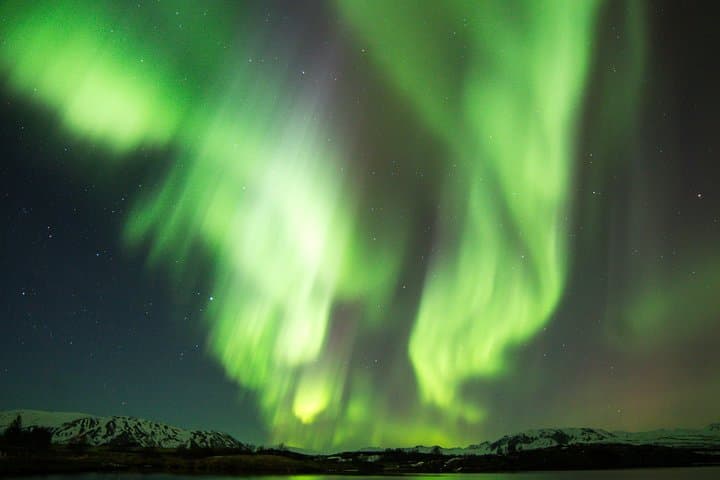
Iceland sits under the auroral oval—an invisible band where charged solar particles meet Earth’s magnetic field—and the vibrant greens, occasional reds, and ribbons of violet you hope to see are the atmosphere’s reaction to that encounter. From the vantage of the water, the lights feel freer; there are no buildings to interrupt the curtain, no cars to scatter the darkness. The island’s geology—hot, young, and restless—feeds the mood: coastal cliffs, volcanic ridges, and the distant silhouette of Esjan (a local mountain off the city’s eastern flank) are a reminder that you’re watching a planetary conversation framed by fire-born rock.
Reykjavík’s harbor has always been a transit point. For centuries it was a working waterfront where fishermen launched for cod and herring; tonight the economy is different, but the rhythm is the same: the sea calls, and people answer. Locally, tours like this are part of a larger cultural embrace of winter’s extremes—sauna culture, geothermal pools, and the “go outside” attitude that keeps Icelanders moving even when the mercury drops. Onboard, guides will share natural history, aurora science, and practical tips for photographing the show.
Why book the cruise instead of staying on land? The short answer: contrast. Light pollution falls away at sea and cloud cover can be patchy; a coastal route lets guides chase openings along the horizon. It’s also pragmatic—no frozen parking lots, no jostling at known viewing points. For photographers, the frame expands: city lights reflected on the water, a distant silhouette, and aurora arcs that sometimes appear lower and more dramatic than land vantage points allow.
That said, the cruise is weather-conditioned. Sea spray can make the night bite, and rougher water will translate into a bumpier experience (and an increased chance of seasickness). Bring layered insulation, a windproof shell, and prepare your camera for long exposures. The trip is short, priced from about $93, is confirmed instantly at booking, and offers free cancellation—useful when a last-minute forecast forces a change of plans.
Practical notes: this is a low-effort activity physically—standing and short walks on deck—but the conditions are winter-cold and sometimes wet. Tours typically provide thermal overalls; still, warm base layers, a hat, gloves, and waterproof footwear make the difference between an anecdote and a memory. Guides will advise when to head inside for warmth and how to stabilize a camera on railings if you don’t carry a tripod.
If the aurora cooperates, you’ll return to harbor after about 2.5 hours with a head full of color and a handful of images—some sharp, some blurred, all honest. If the lights don’t show, the captain’s discretion, local knowledge, and the option to rebook on clear nights mean your odds improve with flexibility.
Beyond the spectacle, consider the after: Reykjavík’s Old Harbour scene is compact and welcoming. Warm up with hearty lamb soup or fish stew at a nearby restaurant, or head to a local brewery for a craft beer. Many travelers pair a lights cruise with a soak in a geothermal pool—there’s hardly a better way to let cold seep out of your bones.
This cruise is for travelers who value efficiency and a high likelihood of seeing the aurora without the logistical complexity of driving to remote dark-sky sites. It’s also for people who want Reykjavík’s skyline as part of the frame—where city and sky meet and make, for a moment, something larger than both.
Trail wisdom
Small choices, better day.
Dress in layers
Thermal base layers, an insulating mid-layer, and a windproof outer shell keep you comfortable on deck; overalls are provided but bring your own warm socks.
Bring seasickness prevention
If you’re prone to motion sickness, take medication ahead of time and choose a seat near the boat’s center for less motion.
Protect your camera
Cold drains batteries fast—carry spares in inner pockets and use a small tripod or railing clamp for long exposures.
Watch the forecast and rebook policy
Tours run weather-dependently; note the free cancellation policy and pick a flexible night window for better odds.
Local knowledge
Read the place, not just the route.
Watch for native species including Common seals near the harbor, Coastal seabirds (gulls, auks; puffins in summer).
Keep an eye out for wildlife during the transition between areas and habitats. Respect distance guidelines.
Operators follow wildlife guidelines—avoid approaching marine mammals, minimize light pollution, and pack out all waste to protect coastal habitats.
Follow the guide's instructions on size limits, ethical handling, and leave-no-trace practices.
Grótta Lighthouse on Seltjarnarnes for quiet coastal views. Viðey Island for short hikes and modern art installations
Locally recommended viewpoints and quiet spots known best to local operators.
Reykjavík’s Old Harbour grew from a small fishing outpost into the city’s commercial center; today it blends maritime industry with tourism and culture.
Maritime roots and regional tradition shape the waterways and working coasts.
Seasonal guide
Four versions of the same landscape.
Spring
Best forLonger daylight for daytime sightseeing · Fewer tourists in town
ChallengesUnstable weather · Aurora season winding down
Spring can still produce aurora shows early in the season; nights shorten, so timing is critical.
Summer
Best forMidnight sun activities (aurora unlikely) · Warm daytime sightseeing
ChallengesNear-constant daylight makes aurora sightings rare · Boat tours shift to whale watching
Summer is great for coastal tours, but the midnight sun means aurora viewing is not practical.
Fall
Best forDark nights returning · Often clearer skies than mid-winter
ChallengesRapidly changing weather · Cool temperatures on deck
Autumn nights are longer and the aurora season resumes—watch forecasts and book early.
Winter
Best forPeak aurora season · Atmospheric clarity on cold nights
ChallengesShort daylight, cold and wind, sea spray
Winter offers the best odds for bright aurora displays but requires solid cold-weather gear.
Operator details
What the booking data adds.
Included
- ✓Free WiFi on board
- ✓2-3 hours Northern lights tour
- ✓Free ticket to join again in case of no sightings
- ✓Heated indoor cabins with toilet facilities
- ✓Experienced and professional guides
- ✓Hot chocolate included to keep you warm during the cruise
- ✓Complimentary seasickness tablets available
- ✓Warm flotation overalls
Not included
- —Snacks and beverages sold on board
- —Pickup is available for extra charge
Good to know
- ✓Wheelchair accessible
- ✓Infants and small children can ride in a pram or stroller
- ✓Public transportation options are available nearby
- ✓Suitable for all physical fitness levels
- ✓NOTE: You should schedule to be at our departure point at least 30 minutes before scheduled departure.
- ✓Please, check our DAILY DIARY before you come for the tour, all the important daily information of all our tours will be notified on our website.
- ✓If you have a boat tour booked, please check your email before the tour as all important daily information will be notified via email.
- ✓We recommend wearing good footwear and warm clothing. Don´t forget to bring your camera to take amazing photos!
- ✓Kindly notify us if you require wheelchair access, as not all of our boats are equipped for accessibility.
Pack with intention
What to bring.
Good to know
Common questions.
The tour runs approximately 150 minutes (about 2.5 hours).
Plan the edges
The details that make the day easier.
Iceland lies under the auroral oval, a ring-shaped region around the geomagnetic poles that produces the highest probability of auroras; Reykjavik’s latitude (~64°N) puts it inside this zone.
After the cruise, warm up at the Old Harbour’s seafood restaurants—try lobster soup at Sægreifinn or Arctic char at a harbor-side bistro. Finish the night with a local craft beer at a Reykjavík pub or a soak at a nearby geothermal pool.
- Closest airport
- Keflavík (KEF); Harbor
- trailhead
- Reykjavík Old Harbour, a 10–15 minute drive from downtown; Driving: short urban drives; Cell service: reliable near harbor, diminished at sea; Permits: none; Free cancellation policy applies.
Boats operate under local wildlife and coastal regulations—minimize light use during viewing, pack out all trash, and avoid disturbing marine life to protect sensitive coastal ecosystems.
Explore by topic
Follow the threads.
Keep exploring
Make the story part of the trip.
Set out from Bass Harbor for a private, customizable day on Blue Hill Bay — lighthouses, puffins, seals, and the chance to feel Acadia from the water. Small groups, local captains, unforgettable views.
In four hours you can move from shaded canyon ferns to wind-scoured coastal ridgelines, guided by someone who knows where the light—and the hidden views—live. This private half-day hike on the Monterey Peninsula or Big Sur is compact, curated, and perfect for travelers who want depth without a multiday commitment.
 Related story
Beneath a sky of shifting light, Skaftafell’s ice reads like a map of time. This three-hour guided glacier hike mixes technical instruction with geology and culture: compact, safe, and unforgettable.