
What the day feels like
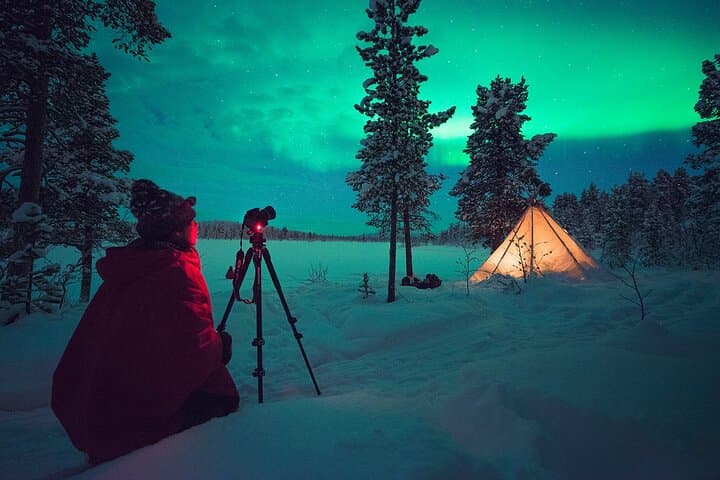
There’s a particular hush that falls over the boreal forest at midnight in northern Sweden — a hush that’s both cold and expectant, as if the pines themselves are holding their breath. On a clear night the sky above Kiruna behaves like an old storyteller, opening curtains of black and letting curtains of green, violet and pulse-like white unfurl with a slow, deliberate grace. On the Northern Light Photo tour, locals who grew up reading those stories — Sami guides who know this land and its weather by gut and instinct — will put you where the aurora looks best and teach you how to translate that show into a frame.
You meet in Kiruna and drive out past gas-lit hamlets and frozen lakes. The van’s heater hums, but the real warmth is the guide’s reconnaissance: a dozen small decisions made from decades of stargazing. They’ll borrow you a camera and a tripod if you need one, but what they’re really lending is terrain knowledge — which ridge holds clearer sky tonight, which valley keeps the fog at bay, where the road opens onto a good foreground. By the time you click your first long exposure, you’ve already learned to listen to the night as much as look at it.
History and geology are folded into the light show here. Kiruna sits above the Arctic Circle on the Fennoscandian Shield, a landscape carved by ice and time. The town’s economy rose from iron ore mined from the mountain nearby and its people include Sami families whose reindeer herding rhythms have synced with these seasons for centuries. That human and geological story informs each night’s hunt: local microclimates, the angle of the horizon, and decades of observed auroral patterns help the guides pick vantage points where the interplay of sky and foreground matters.
Culturally, the aurora has always been more than spectacle. Sami elders tell of spirits and ancestors; modern photographers and scientists translate it into physics and pixels. The phenomena you’re chasing — charged particles from the sun colliding with Earth’s magnetic field — are universal, but the way they appear depends on weather, solar activity and your latitude. Kiruna is high enough that the aurora often brightens into dramatic curtains here, yet accessible enough that a four-hour evening tour can deliver memorable images without turning into an expedition.
Practically, this is a night out optimized for photographers and curious travelers. The tour lasts roughly four hours and is designed to be comfortable and focused: small groups, expert instruction, and multiple take-your-own-camera opportunities. Guides advise on exposure settings, white balance, and composition so you come home with viable shots instead of blurry regrets. They’ll also share quick troubleshooting when conditions shift; sometimes the aurora is faint and diffuse, and you’ll learn to find contrast using silhouetted pine lines or frozen lakes as reflective foregrounds.
The experience rewards both patience and planning. Timing matters — clear nights around the equinoxes tend to be active, but there are good displays most winter nights. A moonless sky helps; so does being away from village lights. Dress for lengthy stillness: nights in the Arctic will test insulation, and moving slowly while composing will chill you faster than you expect. Footwear with good traction is essential because the best vantage points often sit on packed snow, glare ice, or near river edges that can refreeze into surprising rime.
For photographers, the technical brief is succinct: wide lens (14–35mm), sturdy tripod, remote shutter or two-second delay, and the willingness to experiment between ISO 800 and 3200 depending on lens speed and ambient conditions. Guides will show you how to balance exposure length to capture movement without turning the aurora into an overexposed smear. For non-photographers, the reward is simpler and immediate: to stand beneath a sky that moves like an organism and to feel how small and connected you are in the best way.
This isn’t a bloodless tourism product. It’s an invitation to slow down and tune in — to northern weather, to Sami knowledge, and to the odd physics of charged particles. The guides take sustainability seriously: low-impact parking, leave-no-trace behavior around campfires, and an emphasis on local partner businesses for additional experiences like a visit to the Icehotel in Jukkasjärvi or a reindeer sled ride. If you want technical instruction and a high likelihood of seeing the aurora with competent guidance, this tour gives you both.
If the lights cooperate, you’ll come back with images and an altered sense of scale. If they don’t, you’ll still have stories: of a glassy lake under a starfield, of a conversation about Sami reindeer calendars, of a night spent learning how to coax an ephemeral sky into a photograph. Either way, the Northern Light Photo tour is less about conquest and more about respectful witnessing — guided, educated, and tuned for people who want to bring the aurora home in their memories and on their memory cards.
Book it when you can carve out an evening and a little patience, and go prepared. The Arctic rewards those who arrive equipped with curiosity, warm clothing and an appetite to learn from people who have been out in the forest since childhood. The lights do the rest.
Trail wisdom
Small choices, better day.
Dress in insulating layers
Temperatures can drop quickly; use a moisture-wicking base, insulated mid-layer, and a windproof outer shell.
Use a sturdy tripod
Long exposures require a stable base — even small vibrations ruin aurora shots.
Bring spare batteries
Cold drains batteries faster — keep spares warm in an inner pocket.
Listen to the guides
Local microclimate knowledge improves your odds more than guessing at clear skies from town.
Local knowledge
Read the place, not just the route.
Watch for native species including Reindeer, Arctic fox (rare).
Keep an eye out for wildlife during the transition between areas and habitats. Respect distance guidelines.
Guides emphasize minimal impact practices: avoid trampling sensitive tundra plants, minimize light pollution at stops, and pack out all trash to protect fragile Arctic ecosystems.
Follow the guide's instructions on size limits, ethical handling, and leave-no-trace practices.
Frozen Lake Reflection Point near Jukkasjärvi (excellent aurora reflections). Small pine ridgelines east of Kiruna with minimal light pollution and interesting silhouettes
Locally recommended viewpoints and quiet spots known best to local operators.
Kiruna developed as a mining town in the late 19th century; its location above the Arctic Circle has shaped local livelihoods, including Sami reindeer herding traditions.
Maritime roots and regional tradition shape the waterways and working coasts.
Seasonal guide
Four versions of the same landscape.
Spring
Best forEquinox aurora activity · Longer daylight for travel · Slightly warmer nights
ChallengesUnpredictable storms · Variable snowpack · Late-season melt on trails
Spring (March–April) offers strong geomagnetic activity around the equinox and slightly milder nights, but weather can still shift rapidly.
Summer
Best forMidnight sun landscapes · Hiking and fishing · Long daylight photography
ChallengesNocturnal aurora visibility due to sunlight · Road restrictions in some areas · Fewer winter services
Summer brings the midnight sun, which makes aurora tours impractical; use the season for other outdoor pursuits.
Fall
Best forClear, crisp nights · Autumn color in the tundra · Increasing aurora chances
ChallengesEarly snow and icy roads · Shortening daylight hours · Unpredictable temperatures
Fall transitions into aurora season quickly; clear, cold nights can produce vivid displays but nights are shorter early on.
Winter
Best forPrime aurora viewing · Snow-based activities · Extended night hours
ChallengesExtreme cold · Limited daylight for other activities · Road closures in heavy storms
Winter is the optimal season to chase auroras with long, dark nights and reliable snow cover — dress warmly and plan for short daylight windows.
Operator details
What the booking data adds.
Included
- ✓Tripod for camera or mobile phone
- ✓Booster seats for children
- ✓Headlamp
- ✓Camera with wide-angle lens
- ✓Cover clothes and shoes
Not included
- —SD memory card for the camera, can be purchased from the guide SEK 250
Good to know
- ✓Wheelchair accessible
- ✓Public transportation options are available nearby
- ✓Suitable for all physical fitness levels
- ✓A wheelchair must be notified when booking
Pack with intention
What to bring.
Good to know
Common questions.
The Northern Light Photo tour lasts approximately four hours, typically in the evening to late-night window.
Plan the edges
The details that make the day easier.
Kiruna is the northernmost town in Sweden and lies above the Arctic Circle (approximately 67.85° N), making it a prime location for aurora sightings.
After the tour, head to Jukkasjärvi’s Icehotel for a Nordic dinner or return to Kiruna town for traditional Swedish fare — try local reindeer dishes and juniper-flavored spirits; meet Sami artisans at local shops to learn about handicrafts and reindeer leatherwork.
- trailhead
- Kiruna Airport (KRN); Driving distance from Kiruna city center: typically 10–40 minutes depending on chosen vantage point; Cell service: reliable near roads, variable in remote stops; Permits or passes: none required for this guided tour (free cancellation available).
This tour emphasizes low-impact viewing: avoid using powerful spotlights, pack out all waste, and follow guides’ instructions to protect fragile tundra and reduce light pollution that disrupts both wildlife and aurora viewing.
Explore by topic
Follow the threads.
Keep exploring
Make the story part of the trip.
Set out from Bass Harbor for a private, customizable day on Blue Hill Bay — lighthouses, puffins, seals, and the chance to feel Acadia from the water. Small groups, local captains, unforgettable views.
In four hours you can move from shaded canyon ferns to wind-scoured coastal ridgelines, guided by someone who knows where the light—and the hidden views—live. This private half-day hike on the Monterey Peninsula or Big Sur is compact, curated, and perfect for travelers who want depth without a multiday commitment.
 Related story
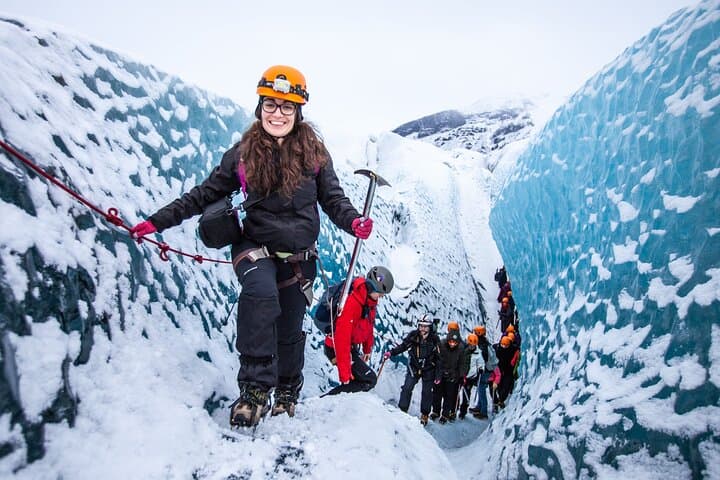
Beneath a sky of shifting light, Skaftafell’s ice reads like a map of time. This three-hour guided glacier hike mixes technical instruction with geology and culture: compact, safe, and unforgettable.