
What the day feels like
The bus grows quiet as Tromsø recedes in the taillights. Inside, steam fogs the window and the hummed conversation falls to a respectful hush. It’s not silence that makes the air feel charged—it’s the expectation. The guide checks the sky again, scanning screens and forecasts, then points toward a strip of darker horizon. We drive. Two and a half hours is the limit the operator gives to outrun light pollution; tonight it feels like a compact, deliberate escape, an expedition by road instead of by boot.
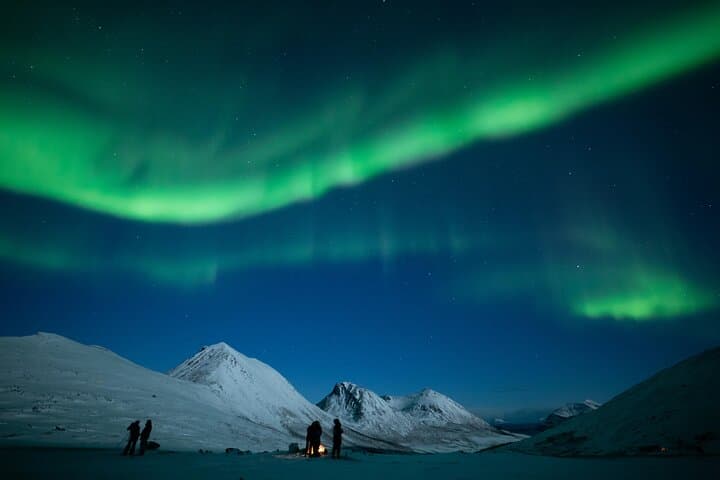
This is not a mountaintop pilgrimage or a photography workshop, but it is carefully engineered for the thing that matters most: seeing the aurora. The Northern Lights Chase by Bus in Tromsø is an eight-hour budget-friendly tour that trades a private lodge and luxury transport for accessibility and mobility. Guides with years of local experience read the weather and the geomagnetic forecasts like sailors read wind. When clouds choke one valley, they point the bus down a different road. When the sky clears, the group piles out—hot drinks and biscuits in hand—to wait, toes warming on rubber mats and breath hanging like smoke as the sky performs.
Tromsø, a compact city north of the Arctic Circle, has shaped itself around winter’s two extremes: the endless day of the midnight sun and the long, dark months that produce aurora season. The islands, fjords, and mountain ridgelines around Tromsø are a kind of theater for the sky—low light, clean northern air, and long nights. The lights themselves are not weather but space-weather: charged particles from the sun collide with Earth’s magnetosphere and paint the upper atmosphere in greens, pinks, and purples. The best observers here learn to watch the whole horizon, because the aurora can flicker like a curtain right overhead or curl into long bands that slice the sky.
Culturally, Tromsø is pragmatic about the aurora. Local Sámi heritage and coastal fishing traditions are woven into the town’s identity, but tourism around the lights is also an exercise in humility and respect for nature’s unpredictability. Guides emphasize low-impact practices—sticking to roads and pullouts, respecting private property, and minimizing flash photography that can distract other guests. The company providing this tour includes portrait photos in the price, a small but meaningful touch that frees travelers from worrying about perfect camera setup while still leaving room for serious photographers to do their own work.
Practically: the tour lasts about eight hours and can include drives up to 2.5 hours away from the city center to find clear skies. Expect a mix of roadside stops and short walks to vantage points. The price point is accessible—starting around $96.78 USD—and groups are designed to be manageable, so you don’t lose the shared thrill of a sudden auroral surge.
What to expect physically: you’ll stand in the cold for extended periods. Temperatures can plunge well below freezing, and wind over open fjords bites through insufficient clothing. Guides bring hot drinks and biscuits; they’ll also take portrait photos for you. Bring spare batteries for cameras (cold drains them fast), a sturdy tripod if you’re shooting long exposures, and footwear with good insulation and grip. Layering is not optional; it’s part of the strategy.
Timing matters. The core aurora season in Tromsø runs from late September to early April, with the darkest months offering the most potential hours of night. But there are trade-offs: shoulder seasons tend to have milder nights and still-good aurora probability. The company’s free cancellation flag and manual confirmation policy mean you’ll get a sense of likely conditions before committing, and they often pivot routes to chase clearer skies.
For photographers, the bus setup is forgiving. Guides often help with camera settings or take their own portrait shots so everyone gets a keepsake. For casual travelers, the experience is social: strangers knit into a group around shared wonder, warmed by the practical comforts of a guide who knows when to wait and when to move.
If you go, build the night around patience. The aurora doesn’t adhere to schedules. Bring snacks and a thermos, charge everything, and be prepared for sudden euphoria when a faint arc becomes a luminous curtain. Respect the environment—avoid trampling fragile tundra when stepping off a pullout, and follow instructions about where to stand. The spectacle is a natural phenomenon and a communal story: you’ll leave with new photos, colder toes, and a memory that feels almost ceremonial.
The practical edge of this tour—mobility, knowledgeable guides, and included photographs—makes it an excellent option for first-timers and budget-minded travelers who want a strong chance to see the aurora without hiring a private vehicle. It’s also a reminder that sometimes the best adventures are the ones that combine simple comforts with maximal access to wild moments. The Northern Lights don’t belong to any one person; they arrive in their own time. The bus simply gets you there and keeps you warm while you wait.
Trail wisdom
Small choices, better day.
Dress in layers
Base layers, an insulating mid-layer, and a windproof outer shell will keep you comfortable during long roadside waits.
Bring spare batteries
Cold drains camera and phone batteries quickly—carry spares in an inner pocket close to your body.
Use a tripod for photos
A sturdy tripod is the single most important piece of gear for aurora photography to avoid motion blur.
Stay flexible with expectations
Guides will move to find clear skies; be prepared for long drives and sudden stops.
Local knowledge
Read the place, not just the route.
Watch for native species including Reindeer, Sea eagles.
Keep an eye out for wildlife during the transition between areas and habitats. Respect distance guidelines.
Visitors should minimize light pollution and stick to roads and designated pullouts to protect fragile tundra and breeding habitats.
Follow the guide's instructions on size limits, ethical handling, and leave-no-trace practices.
Coastal pullouts facing Kvaløya for dramatic foregrounds. Small roadside hamlets where cloud cover often breaks
Locally recommended viewpoints and quiet spots known best to local operators.
Tromsø has long been a winter harbor and Arctic exploration hub; its location above the Arctic Circle made it a staging ground for 19th- and 20th-century polar expeditions.
Maritime roots and regional tradition shape the waterways and working coasts.
Seasonal guide
Four versions of the same landscape.
Spring
Best forLate-season aurora chances · Milder nights · Fewer tourists
ChallengesShortening nights · Variable weather
Early spring can still deliver strong auroras with slightly warmer conditions, but nights are shorter than mid-winter.
Summer
Best forMidnight sun experiences · Boat trips and hiking
ChallengesNo aurora due to continuous daylight · Closed winter roads
Summer offers long days and different Arctic experiences, but auroras are not visible during the midnight sun.
Fall
Best forOnset of aurora season · Crisp, clear nights
ChallengesUnpredictable weather · Early snow can affect roads
Fall brings long dark nights and good aurora probabilities as the season ramps up, with fluctuating weather.
Winter
Best forPeak aurora viewing · Snow-covered landscapes · Polar night ambience
ChallengesExtreme cold · Potential road closures
Winter is peak season for aurora chasing, offering the longest nights and the highest odds but requiring serious cold-weather prep.
Pack with intention
What to bring.
Good to know
Common questions.
The tour lasts approximately eight hours, usually starting in the evening and returning late at night.
Plan the edges
The details that make the day easier.
Tromsø sits above the Arctic Circle and is one of the largest cities within the Arctic—its latitude gives it long polar nights ideal for aurora viewing.
After a night of cold and light, warm up in Tromsø with local Arctic cuisine—think cured salmon or reindeer dishes—and a cozy bar serving craft beers; the city’s compact center makes it easy to find hearty meals and nightlife post-chase.
- Closest airport
- Tromsø Airport (TOS)
- Typical pickup
- central Tromsø or designated meeting point
- Driving distance
- up to 2.5 hours from city center
- Cell service
- generally good on major roads but can be spotty in remote pullouts
- Permits
- none required
To protect fragile Arctic habitats and reduce light pollution, stay on roads and pullouts, avoid spotlighting wildlife, and pack out all trash.
Explore by topic
Follow the threads.
Keep exploring
Make the story part of the trip.
Set out from Bass Harbor for a private, customizable day on Blue Hill Bay — lighthouses, puffins, seals, and the chance to feel Acadia from the water. Small groups, local captains, unforgettable views.
In four hours you can move from shaded canyon ferns to wind-scoured coastal ridgelines, guided by someone who knows where the light—and the hidden views—live. This private half-day hike on the Monterey Peninsula or Big Sur is compact, curated, and perfect for travelers who want depth without a multiday commitment.
 Related story
Beneath a sky of shifting light, Skaftafell’s ice reads like a map of time. This three-hour guided glacier hike mixes technical instruction with geology and culture: compact, safe, and unforgettable.