
What the day feels like
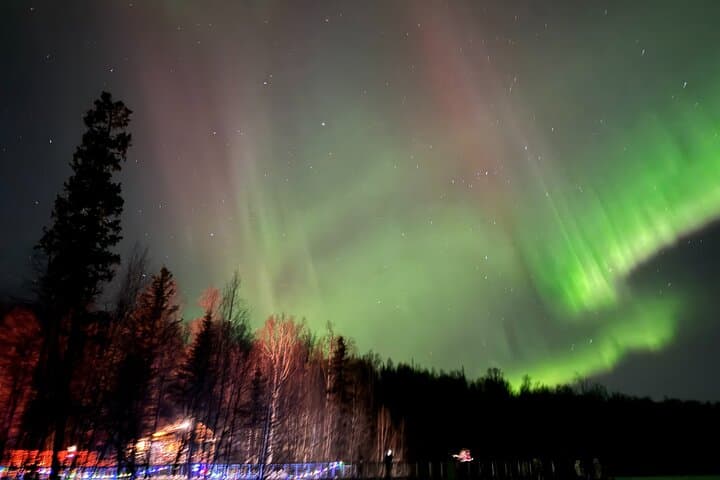
The van eases out of Anchorage under a sky so dark it feels like someone pulled the plug on the world. Above, the stars are sharp as pinpricks; ahead, the road melts into a ribbon of black. We stop where pavement gives up: a shoulder framed by spruce, and the air hits like the clean edge of an ocean. The guide checks the Kp index, squints up at the dome, and grins. “If it goes tonight, it’ll tell us,” she says. Then the waiting begins—quiet, anticipatory, like crowd hush before an athlete breaks the tape. Moments later the sky answers: a thin veil of green unfurls, folding and refolding as if the world has learned to breathe light.
This is not a guaranteed spectacle. The tour—A Quest for Northern Lights Sightseeing Tour—doesn’t promise an aurora; it promises the best possible conditions, patience, and expertise. Guides read geomagnetic whispers, cross-reference cloud cover, and slide a flexible ticket across multiple evenings in hopes of picking the right night. What they sell is probability and proximity: the chance to stand outside the city, beneath a remote sky, when the auroral oval decides to show off.
Alaska’s northern light story is geological and celestial. The aurora borealis is the product of charged solar particles colliding with oxygen and nitrogen high above the planet, and Anchorage sits at the southern margin of the auroral oval. That latitude makes it an unusual place—close enough to civilization to be practical for travelers, yet under the right conditions it gives rare, cinematic displays. Historically, indigenous Athabaskan and Yup’ik people read the lights as living things: omens, messages, and in many stories, relatives. Today, local guides blend that cultural context with modern science—Kp-index forecasts, cloud modeling, and a fleet of vehicles ready to drive to darker horizons.
The geology around Anchorage helps, too. Drop below the Chugach foothills and the sky expands; fewer lights and less moisture produce clear windows to the upper atmosphere. On clear nights your guide can take you 30–90 minutes from town—if clouds or a low Kp push the chase farther. It’s part logistics, part improvisation. The tour’s sliding, multi-night ticket is pragmatic: rather than booking your one hope into a single evening, you build a small hedge against fickle weather.
Practicality here matters. Expect roughly three hours on the standard outing (the operator lists a duration of 179 minutes), but that time is elastic. Dress as if you intend to sleep outside: Arctic nights chew through heat. Layers, a windproof shell, insulated boots, and a secondary heat source (hand warmers, insulated flask) make the wait bearable. Photographers should bring a tripod and spare batteries; cold drains cells and camera LCDs fast. Guides will coach you on camera settings—long exposure, wide aperture, and careful ISO management—but they’ll also stress the other work of aurora-chasing: patience and minimalist footprint. Flash or city lights ruin images and other travelers’ moments.
Book the tour in winter’s heart—late fall through early spring—when nights are long. The operators supply nightly research and narration, which turns the ride into a lesson in upper-atmosphere physics and local lore. When the lights do come, they are almost theatrical: waves of green or crimson that fold and snap as if the sky itself had seams. The sensation is equal parts science and theater—an ephemeral loop you feel more than see.
What to expect on the ground: vehicle-based chases that place you at vantage points away from light pollution, brief hikes if a composition calls for it, and plenty of stops to let the sky do the talking. Guides will monitor the Kp and cloud models, explain why a solar wind spike matters, and keep the group warm and engaged while the aurora decides whether to perform. For travelers staying in Anchorage, pick an evening based on forecasted Kp and cloud cover; the tour’s flexible program helps you concentrate your chances over multiple nights instead of burning one.
Why go? Because the aurora is an experience that feels older than travel itself: elemental, unpredictable, and generous. The trip is suited to people willing to sit in the cold and trust in expertise. It’s approachable for first-timers but rewarding for photographers and seasoned aurora-chasers who value the efficiency of local knowledge. The tour’s rating and the multi-night coverage make it a practical choice for those who want to tilt the odds in their favor without renting a car and driving alone into unknown backroads.
If you go, a few ground rules: respect guides’ directions about where to stand and how to use light; keep red lights low during set-up; protect your batteries from the cold; and be ready to move if the sky or weather shifts. And bring a quiet curiosity. When the lights arrive, they ask for nothing more than presence.
For more on local guides and to reserve a spot on this multi-night chase, check out this Anchorage Northern Lights Quest guided aurora chase with multi-night coverage and learn how guides combine Kp-index monitoring and real-time cloud modeling to find the best vantage points. If you want to know what a guide looks at before making a call to move, this page breaks down their nightly workflow and storytelling approach. When you’re choosing dates, consider linking your travel windows to long-dark nights and local cloud patterns via that same guide resource so you’re stacking probability in your favor.
Trail wisdom
Small choices, better day.
Dress in layers
Temperatures can plummet quickly—base layer, insulated mid-layer, and windproof outer shell are essential.
Bring a tripod and spare batteries
Long exposures and cold drain power fast; keep batteries warm in an inner pocket until use.
Use red lights
Carry a red headlamp to preserve night vision and avoid ruining photos for others.
Book flexible nights
Opt for multi-evening coverage to increase your odds when clouds or low Kp show up.
Local knowledge
Read the place, not just the route.
Watch for native species including Moose, Snowshoe Hare.
Keep an eye out for wildlife during the transition between areas and habitats. Respect distance guidelines.
Minimize light pollution by using red lights and keeping flash to a minimum; support local guides who follow Leave No Trace practices when stopping at sensitive roadside sites.
Follow the guide's instructions on size limits, ethical handling, and leave-no-trace practices.
Little-used pullouts along Turnagain Arm for reflections. Small, frozen lakes near the Chugach foothills for mirror-like aurora photos
Locally recommended viewpoints and quiet spots known best to local operators.
Indigenous Athabaskan and Yup’ik communities have long woven the aurora into stories and seasonal calendars; modern aurora tourism blends these narratives with scientific interpretation.
Maritime roots and regional tradition shape the waterways and working coasts.
Seasonal guide
Four versions of the same landscape.
Spring
Best forLonger nights at higher latitudes · Aurora photography during clear windows
ChallengesUnstable weather · Variable temperatures near freezing
Late winter into spring presents strong geomagnetic activity, but variable spring storms can bring clouds—monitor forecasts closely.
Summer
Best forMidnight sun photography (not aurora) · Complementary outdoor activities
ChallengesContinuous daylight eliminates aurora viewing · Limited opportunities for Northern Lights
Summer’s midnight sun makes aurora chases impractical; focus on other Alaskan experiences during these months.
Fall
Best forClear nights around equinox · Strong geomagnetic activity potential
ChallengesCold nights and early-season storms · Shorter, but unpredictable weather windows
Fall (September–October) is a prime time as nights lengthen and equinox activity often boosts chances of strong displays.
Winter
Best forHighest likelihood of aurora displays · Long, dark nights for extended viewing
ChallengesExtreme cold and icy roads · Short daylight for other activities
Winter offers the best aurora probability—dress for Arctic temperatures and expect scenic winter driving to dark sites.
Operator details
What the booking data adds.
Included
- ✓Private transportation
- ✓bottled water
Not included
- —No refunds or credits should the aurora lights not be viewed or insufficient illumination.
Good to know
- ✓Infants are required to sit on an adult’s lap
- ✓Suitable for all physical fitness levels
- ✓Participant Waiver & Release of Liability and Terms & Conditions. By purchasing ticket(s) and/or by participating on a tour, by PicTours Alaska, Inc. you affirm that you and tour attendees accompanying you fully understand and agree to the following Participant Waiver & Release of Liability and Terms & Conditions. I acknowledge, attest, agree and represent that I, and those accompanying me, fully understand and accept, without limitation, sole responsibility for all of the risks associated with my participation while on the tour, including injury and death whether through my own actions or those of other participants, tour guides, pedestrians, automobiles, public transportation, acts of nature or any other external parties. This further includes approval for complimentary photography for your use and possible demonstration of excursion experience in promotions or presentations.
Pack with intention
What to bring.
Good to know
Common questions.
There is no guarantee, but the multi-night coverage and guides’ use of Kp-index and cloud modeling significantly increase your chances compared with a single-night, unguided attempt.
Plan the edges
The details that make the day easier.
Anchorage lies near the southern edge of the auroral oval, making it a reliable staging point for aurora chases because strong solar storms can push the oval southward over the city.
After a chase, warm up with a local meal at Glacier Brewhouse or Moose’s Tooth Pub & Pizzeria, or grab a coffee at Snow City Cafe; these Anchorage spots blend Alaskan seafood, hearty fare, and community buzz after long nights outdoors.
- Closest airport
- Ted Stevens Anchorage International Airport (ANC)
- Typical driving from downtown Anchorage to dark sites
- 30–90 minutes
- Cell service
- Good in town, variable outside city
- Permits
- Generally none, but follow guide directions and private property restrictions
The area is sensitive to light pollution and roadside disturbance—use red lights, pack out waste, and follow guides who minimize stops in fragile habitats.
Explore by topic
Follow the threads.
Keep exploring
Make the story part of the trip.
Set out from Bass Harbor for a private, customizable day on Blue Hill Bay — lighthouses, puffins, seals, and the chance to feel Acadia from the water. Small groups, local captains, unforgettable views.
In four hours you can move from shaded canyon ferns to wind-scoured coastal ridgelines, guided by someone who knows where the light—and the hidden views—live. This private half-day hike on the Monterey Peninsula or Big Sur is compact, curated, and perfect for travelers who want depth without a multiday commitment.
 Related story
Beneath a sky of shifting light, Skaftafell’s ice reads like a map of time. This three-hour guided glacier hike mixes technical instruction with geology and culture: compact, safe, and unforgettable.