
What the day feels like
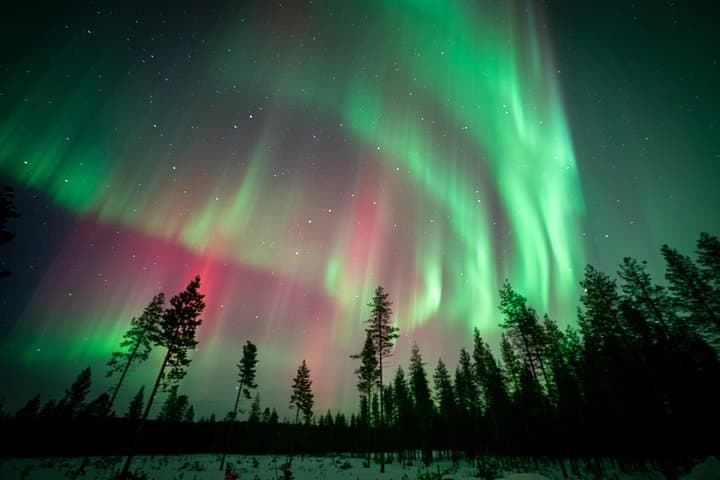
The van slides away from the sodium-lit streets of Rovaniemi and into a hush that belongs to the Arctic night. Snow softens the world to a matte flannel, and the air feels like a promise—sharp, cold, full of potential. Our guide parks where the last hamlet lights die and points to the sky. At first there’s only black, the kind that makes your breath visible. Then a pale green ribbon unravels across the heavens, slow at first, like a curtain pulled by an invisible hand. It thickens, folds, and unfurls again, arcing over pines that seem to lean in to see. A professional photographer by my side adjusts a tripod and smiles: “Wait for the show.”
This is the shape of a Northern Lights photography tour in Rovaniemi: short, concentrated bursts of wonder framed by practical know-how. You don't climb a mountain or kayak across jagged ice; you ride a short distance out of town to where light pollution is negligible, where the sky dares to perform. Guides read weather models and aurora forecasts the way sailors read tides. You learn to read them, too—how clear, cold nights and a high KP index stack the odds in your favor. For travelers who want proof—beautiful, shareable proof—this is not a passive watch party. It’s a coaching session under the poles.
Rovaniemi sits on the edge of the Arctic Circle and serves as the practical and cultural hub of Finnish Lapland. The town’s connection to the North is both literal and mythic: Santa Claus Village and reindeer farms speak to tourist-friendly folklore, while the broader landscape is shaped by the last ice age—low rolling moraines, peatlands, and black spruce stands that become silhouettes against auroral curtains. The aurora itself is older than culture: charged particles from the sun, magnetically funneled toward the poles, collide with atmospheric gases and set the sky on fire—green when oxygen at the right altitude is involved, violet and red in rarer conditions.
Sámi heritage threads through this place. While most Northern Lights tours focus on skycraft and photography, they also often include cultural touches: hot berry juice or a small Lappish BBQ snack over an open flame, the warmth of an old-fashioned kota (a Sami hut) where stories are swapped and freezing fingers are thawed. Respect for the land—staying on designated trails when required, not leaving behind litter, minimizing light at night—is part of the unwritten agreement between visitors and hosts here.
Practicalities: this Viator-listed tour runs roughly 3–4 hours and leaves from central Rovaniemi. Small groups pile into a minivan and are whisked 20–60 minutes into darker territory depending on cloud cover. Guides monitor the aurora forecast and local weather to pick the best vantage; there’s no guarantee the lights will dance every night, but guides maximize the odds. The tour price includes guiding and photography assistance; many operators also provide a Lappish BBQ snack and, in some cases, digital photos taken by the guide.
For photographers—amateur or semi-pro—the value is twofold. First: composition. Guides point out uncluttered foregrounds—frozen lakes, clean snow drifts, stacks of conifers—that anchor shots and give the aurora scale. Second: technique. You’ll be coached on shutter speed (usually 5–20 seconds depending on activity), aperture (wide), ISO (as low as possible while avoiding noise), and the pros and cons of manual focus in the cold. Bring a sturdy tripod, a remote shutter or cable, and plenty of spare batteries (cold drains them quickly). Many guests are satisfied with the images they capture, and a handful come away with portfolio-worthy frames.
Safety and comfort are simple but essential. Dress in layers: a windproof shell, down mid-layer, thermal base layers, insulated boots, mittens, and a hat. Carry snacks and thermos with a hot drink—lapses in body heat are the easiest way for a great night to curdle into misery. Cell service is usually fine near Rovaniemi and along major snow roads, but expect drops when you venture into more remote viewing spots.
Timing matters. The aurora season in Finnish Lapland runs broadly from late August to mid-April, but the heart of it—long, dark nights with stable cold air—is December through March. Statistically, February and March offer a good balance of clearer skies and comfortable cold; November and December are darker but cloudier. Bookings fill quickly around holidays and the darkest months, and some nights sell out, so plan early. The tour’s flexibility—often with instant booking and a free cancellation window—helps, but patience is part of the bargain; sometimes you wait for an hour in awe, other times you return with a photo or two and a story about the sky’s near-miss.
The rhythm of a Northern Lights night is purposeful: a short ride out, a patient vigil, a quick burst of activity when the sky decides to perform. That pattern is why this tour attracts a wide cross-section of travelers—people who want a big natural show without the logistical drag of multi-day winter expeditions. It’s accessible to curious first-timers and useful for shutter-happy pros chasing better foregrounds and coaching from someone who knows when to open the shutter.
When the lights drop and the van turns back toward town, there’s a particular silence that feels like a benediction; the guide inspects cameras, hands out thumbs-ups for good frames, and someone unwraps a Lappish snack that tastes all the better because of the cold. If you come for the ghostlike curtains of green, you’ll get that. If you stay for the small, human touches—the warmth of a fire, a guide who helps your exposure, the quiet notes of a Sámi story—you’ll take home something more than a photograph. You’ll carry a night that reorients how you think about the sky.
Trail wisdom
Small choices, better day.
Charge spare batteries
Cold drains camera and phone batteries quickly—carry at least two spares in an inner pocket to keep them warm.
Use a tripod and remote
Long exposures need stability—no tripod, no crisp aurora images; a remote prevents camera shake.
Dress for stationary cold
Bring insulated boots, mittens, and a windproof outer layer—you’ll be standing still while the sky moves.
Trust the guide
Guides know microclimates and forecast nuances—follow their lead on where to stop and how long to wait.
Local knowledge
Read the place, not just the route.
Watch for native species including Reindeer, Arctic hare.
Keep an eye out for wildlife during the transition between areas and habitats. Respect distance guidelines.
Local operators emphasize minimizing light pollution and adhering to Leave No Trace principles—stick to designated pullouts and avoid disturbing fragile tundra vegetation.
Follow the guide's instructions on size limits, ethical handling, and leave-no-trace practices.
A frozen-lake viewpoint a short drive from town with minimal light pollution. A small kota camp where guides serve Lappish BBQ snacks and share Sámi stories
Locally recommended viewpoints and quiet spots known best to local operators.
Rovaniemi was rebuilt after World War II with the help of Alvar Aalto’s urban plan; its position on the Arctic Circle has long made it a crossroads for Sámi people and winter travel routes.
Maritime roots and regional tradition shape the waterways and working coasts.
Seasonal guide
Four versions of the same landscape.
Spring
Best forLater-season aurora · Longer daylight activities · Combination trips with snowmelt landscapes
ChallengesUnpredictable cloud cover · Melting snow and sticky access roads
Late winter to early spring still offers aurora opportunities, with milder temperatures and increasing daylight—good for trips that combine night hunts with daytime exploration.
Summer
Best forMidnight sun photography · Hiking and lake activities · Cultural festivals
ChallengesMidnight sun eliminates dark skies—aurora sightings are extremely unlikely · Tour availability limited
Summer’s long daylight hours make aurora tours impractical; use summer for other Arctic experiences instead.
Fall
Best forEarly aurora season · Crisp nights with color in the landscape · Lower tourist density
ChallengesUnstable weather and variable cloud cover · Shorter nights than winter
Autumn can be a stealthy season for aurora hunters—darker nights return, but cloudiness can be a wildcard.
Winter
Best forPeak aurora season · Snow-covered foregrounds for composition · Traditional winter activities
ChallengesExtreme cold, especially Dec–Jan · High demand and sell-outs around holidays
Winter is the prime time for reliable dark skies and snow-draped scenes—book early and prepare for serious cold.
Operator details
What the booking data adds.
Included
- ✓Hunting Northern Lights with professional photographer
- ✓Guide in English (other languages available on request: French, Italian, Spanish, Chinese)
- ✓Professional photos emailed to you
- ✓Campfire BBQ : Reindeer sausage, marshmallow and hot blueberry juice (vegetarian/vegan alternative upon request)
- ✓Winter clothes: overall and boots
- ✓Pick-up and drop-off to selected hotels from Rovaniemi city center.
- ✓Departure time may vary. Please check the email the local provider sends for the exact pick-up time.
Good to know
- ✓Specialized infant seats are available
- ✓Suitable for all physical fitness levels
- ✓Customer MUST provides reachable phone number
- ✓Northern Lights sightings cannot be guaranteed due to they are subject to weather conditions and the solar activity
- ✓Departure time may vary depending on the seasons and availability, please double-check with the local partner
- ✓At least 2 people are required for this tour to take place on weekdays and Saturdays
- ✓At least 4 people are required for this tour to take place on Sundays and public holidays
- ✓Children under 12 year old must be accompanied by adults paying the full price
- ✓Please be ready and wait in your hotel lobby 10 minutes prior to your scheduled pickup time
- ✓Please advise any specific dietary requirements at time of booking
- ✓From December to the end of January, Rovaniemi experiences a very high level of tourist traffic, which is why we often have to form exceptionally large groups for this activity. For a more private experience, we recommend that you book the Northern Lights Photography Tour - Small Group instead.
Pack with intention
What to bring.
Good to know
Common questions.
Guides pick nights with favorable KP and cloud forecasts to maximize odds, but the aurora is a natural phenomenon and sightings aren’t guaranteed—operators often offer flexibility or photo assistance if activity is low.
Plan the edges
The details that make the day easier.
Rovaniemi is the administrative capital of Finnish Lapland and lies on the Arctic Circle (approximately 66°33′N), making it a hub for Arctic tourism and Aurora viewing.
After the tour, warm up with a reindeer stew or smoked salmon at a local kota or try craft beers at a microbrewery in Rovaniemi; visit the small Sámi cultural displays in town for context on local traditions.
- Closest airport
- Rovaniemi Airport (RVN)
- Typical pickup
- central Rovaniemi
- Driving to viewing spots
- 20–60 minutes
- Cell service
- generally good near roads, spotty in very remote locations
- Permits
- none for guided tours
Minimize light pollution by using red headlamps and avoid shining bright lights during the tour; stick to designated parking areas to protect delicate Arctic vegetation.
Explore by topic
Follow the threads.
Keep exploring
Make the story part of the trip.
Set out from Bass Harbor for a private, customizable day on Blue Hill Bay — lighthouses, puffins, seals, and the chance to feel Acadia from the water. Small groups, local captains, unforgettable views.
In four hours you can move from shaded canyon ferns to wind-scoured coastal ridgelines, guided by someone who knows where the light—and the hidden views—live. This private half-day hike on the Monterey Peninsula or Big Sur is compact, curated, and perfect for travelers who want depth without a multiday commitment.
 Related story
Beneath a sky of shifting light, Skaftafell’s ice reads like a map of time. This three-hour guided glacier hike mixes technical instruction with geology and culture: compact, safe, and unforgettable.