
What the day feels like
By late evening the sea has already cooled the air to a clean, metallic taste. Our van pulls away from Bodø’s harbor with a soft rumble and headlights carving brief islands of light into the low Arctic dark. The city’s sodium lamps drop behind us and the road narrows; a wash of oil-dark fjords and serrated islands unfurl to either side. The guide, from Rampen Adventure Hub, checks the aurora forecast one last time and smiles—conditions look promising. You feel it immediately: the quiet that lives beyond streetlamps, the hush that makes distant waves sound like someone lifting a breath. This is the space the Northern Lights like to visit.
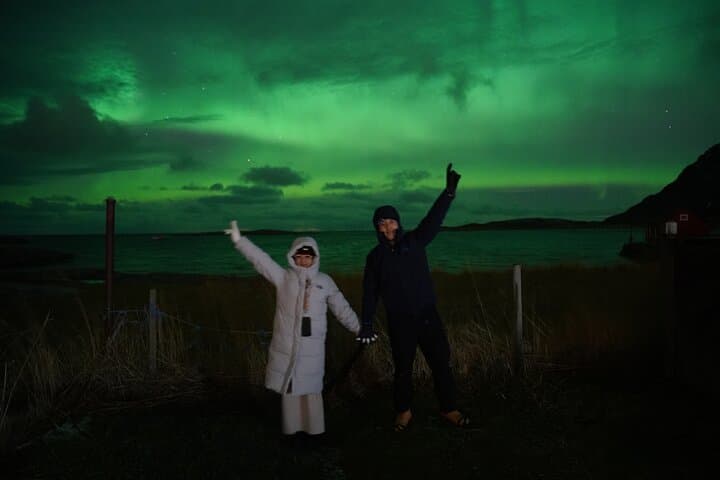
Chasing the aurora from Bodø is not a static exercise in sky-watching; it’s an adaptive, weather-literate hunt. Guides read cloud cover, geomagnetic indices, and local microclimates the way fishermen read swells. On this 3–4 hour safari you move with the forecast, slipping along coastal roads and into pockets of rural darkness, stepping out where the sky opens. Sometimes the show begins as a pale smear and folds into life. Other nights the aurora burns with sudden intensity—ribbons of green, occasionally edged with violet, rolling and tearing across a vault of stars. Nature behaves like a living audience; it applauds at its own pace.
Bodø’s location—just north of the Arctic Circle—makes it a practical jumping-off point for aurora hunting. The city itself is a compact blend of postwar architecture and fishing-port grit, but head a few minutes beyond its lights and you’re in the raw geography of Nordland: fjords with cliff teeth, low treelines, and tidal currents that push light into the sky’s dark canvas. Geologically, this region is carved from ancient bedrock and scoured by glaciation; the fjords and skerries form a serrated coastline that frames aurora displays with dramatic silhouettes. Culturally, locals treat the aurora with easy respect—part myth, part weather report—woven into winter rhythms and a long history of subsistence on sea and mountain.
The safari begins at Rampen Adventure Hub in Bodø, where guides brief the small group on safety, clothing, and camera basics. From there, you travel by vehicle to where the forecast and cloud cover intersect into opportunity. If conditions allow, guides will bring you out of the van into open spaces, hand you a warm drink and a brief primer on photographing low-light skies—how to balance shutter speed, aperture and ISO when the bands start to writhe. The experience is short by design: three to four hours is enough to give you multiple chances without lingering in deep cold. It’s a focused, efficient way to connect with one of the Arctic’s most elemental spectacles.
Why go here, not farther north? Bodø offers a sweet spot: frequent aurora activity, easier accessibility from Norway’s transport network, and a coastline that produces varied foregrounds for photography—frozen shorelines, wooden boathouses, and open water that reflects faint curtains of light. The trip is also immediately practical for travelers who want a single-night commitment rather than a multi-day expedition. Tour operators like Rampen generally tailor the route to the night, balancing the best aurora angles with safe, dark sites away from highway glare.
Practical edge: dress in intentional layers (merino base, insulating midlayer, waterproof shell), choose footwear with traction for icy surfaces, and bring a thermos. Charge your camera and phone; battery performance drops quickly in subzero temperatures. Guides often carry tripods or rent them; if you plan on photographing the aurora, bring a sturdy tripod, a fast wide-angle lens, and a remote shutter or intervalometer. Pay attention to the forecast: aurora forecasts (KP index) give a general sense of geomagnetic activity, but local cloud is the dealbreaker—the guides chase clear sky more than high KP alone.
On my night the sky answered. A faint haze at first, then a cleaving band that thickened and rolled like smoke turned alive. Colors were mainly green, pooling then slicing into arcs that seemed to breathe. The group fell into a rare public quiet; phones lowered and people watched, committed in a way travel rarely allows. When the lights fetched their brightest notes they reflected off black water, doubling the effect and making the scene feel larger than the sky itself. It was one of those moments where the landscape feels like a partner—rivers daring you to look deeper, trees leaning in to frame the show.
The trip’s logistics are intentionally simple: a short briefing, a guided drive to dark sky sites, and a return to Bodø within the same evening. That makes the excursion ideal for travelers short on time or those who prefer a guided experience with an experienced local reading the weather and terrain. Expect small-group dynamics; the best nights are intimate rather than crowded, and guides prioritize positioning and comfort over spectacle for spectacle’s sake.
For photographers, the aurora offers both challenge and reward. Capture it with a wide lens and long exposures; be prepared to adjust settings quickly as intensity changes. For the more casual traveler, it’s a lesson in patience and humility—lighting is ephemeral and sometimes modest, but when it arrives, it transforms ordinary Arctic night into an encounter you won’t forget.
If you go, remember your manners: the Arctic night is fragile. Stay on roads or designated pullouts, take your trash with you, and respect private property and farm animals. Tours like this represent a low-impact way to enjoy a high-impact phenomenon—short drives, local guides, and an emphasis on leaving no trace.
The aurora is not something you can command. It is something you earn a view of by reading weather, timing your visit to longer nights, and choosing guides who know where to look. In Bodø, that knowledge turns the unpredictable into a well-managed adventure: purposeful, local, and quietly transformative.
Trail wisdom
Small choices, better day.
Layer Strategically
Wear moisture-wicking base layers, an insulating midlayer, and a windproof, waterproof outer shell to stay comfortable during long, still watches.
Protect Camera Batteries
Keep spare batteries in an inner pocket close to your body—cold drains battery life fast.
Watch Footing on Shorelines
Bring traction devices or boots with good grip; frozen beaches and pullouts can be deceptively slippery.
Listen to the Guide
Guides monitor cloud, wind and aurora activity—follow their positioning advice for the best and safest vantage points.
Local knowledge
Read the place, not just the route.
Watch for native species including Sea eagles, Reindeer.
Keep an eye out for wildlife during the transition between areas and habitats. Respect distance guidelines.
Light pollution is a growing issue; local operators emphasize dark-sky respect—minimize headlamp use, stay off fragile shoreline vegetation, and pack out all trash.
Follow the guide's instructions on size limits, ethical handling, and leave-no-trace practices.
Saltstraumen tidal current viewpoint (short drive east of Bodø). Sjøgata historic wooden houses and harborfront for daytime shore photography
Locally recommended viewpoints and quiet spots known best to local operators.
Bodø was heavily rebuilt after World War II and has long been a fishing and coastal hub; its position just north of the Arctic Circle made it a navigational and cultural gateway to northern Norway.
Maritime roots and regional tradition shape the waterways and working coasts.
Seasonal guide
Four versions of the same landscape.
Spring
Best forLonger nights early in season · Milder Arctic temperatures · Fewer tourists than peak winter
ChallengesUnpredictable weather · Variable daylight hours
Late winter into March offers long nights with improving temperatures and still-good aurora chances, though cloud can be changeable.
Summer
Best forMidnight sun photography (not aurora) · Long coastal hikes · Boat excursions
ChallengesNo true dark skies during midnight sun · Aurora visibility is extremely low
Summer brings the midnight sun—great for coastal exploration but unsuitable for reliable aurora viewing.
Fall
Best forSeasonal transition with clear nights · Falling leaves and coastal color · Early aurora season starting September
ChallengesChanging weather patterns · Shortening daylight complicates logistics
Autumn provides the start of aurora season with often-clear nights, but weather can switch quickly as temperatures drop.
Winter
Best forPeak aurora likelihood · Snowy landscapes for dramatic foregrounds · Clear, cold nights with dark skies
ChallengesExtreme cold and limited daylight · Icy roads and travel delays
Winter is prime aurora season—cold, long nights increase visibility but require careful layering and timing.
Operator details
What the booking data adds.
Included
- ✓We bring hot chocolate, tea and coffee
- ✓Cookies
Good to know
- ✓Public transportation options are available nearby
- ✓Suitable for all physical fitness levels
Pack with intention
What to bring.
Good to know
Common questions.
Typical tours run 3–4 hours, departing in the evening from Rampen Adventure Hub and returning the same night.
Plan the edges
The details that make the day easier.
Bodø sits just north of the Arctic Circle (approximately 67.28°N), which places it inside the auroral oval and gives it strong aurora potential during winter months.
After a night under the aurora, warm up in Bodø’s harbor district—sample fresh cod or Arctic char at a local café, stroll Sjøgata’s wooden houses, and look for local breweries or pubs for a beer that feels earned after the cold.
- Closest airport
- Bodø Airport (BOO) — ~10-minute drive to city center; Meeting point: Rampen Adventure Hub in Bodø; Driving distance from Bodø center to viewing sites: typically 10–60 minutes; Cell service: solid in town, patchy on rural coast; Permits: none usually required for standard tours.
Tours emphasize low-impact viewing—avoid bright lights, stay on roads or designated pullouts, and pack out all rubbish to protect delicate Arctic shoreline ecosystems.
Explore by topic
Follow the threads.
Keep exploring
Make the story part of the trip.
Set out from Bass Harbor for a private, customizable day on Blue Hill Bay — lighthouses, puffins, seals, and the chance to feel Acadia from the water. Small groups, local captains, unforgettable views.
In four hours you can move from shaded canyon ferns to wind-scoured coastal ridgelines, guided by someone who knows where the light—and the hidden views—live. This private half-day hike on the Monterey Peninsula or Big Sur is compact, curated, and perfect for travelers who want depth without a multiday commitment.
 Related story
Beneath a sky of shifting light, Skaftafell’s ice reads like a map of time. This three-hour guided glacier hike mixes technical instruction with geology and culture: compact, safe, and unforgettable.