
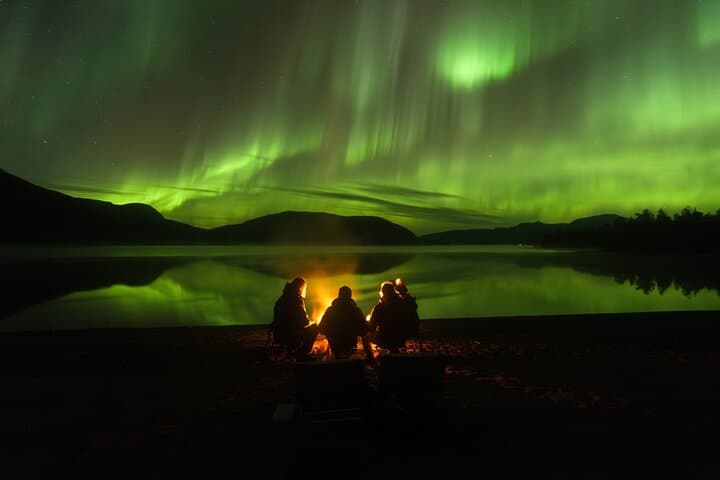
What the day feels like
The van pulls away from Tromsø’s sodium-lit streets and the city’s hum becomes something softer, like a held breath. Outside, the Arctic night stretches—black velvet stitched with distant fjords and the skeletal silhouettes of birch and pine. The guide turns down the music, points at where the road cleaves through long snowfields, and the group leans forward as if to catch the first hint of a story. This is not a passive spectacle; the Aurora is a performer, sometimes coy, sometimes extravagant, and tonight the chase is part of the ritual.
Small-group tours like this reward patience and a practiced eye. Guides in the Mercedes 4x4 scout weather models and local microclimate conditions before the van even leaves Tromsø, choosing vantage points where cloud cover, light pollution, and accessibility line up. A crackling fire, hot chocolate, and pølser i brød (Norwegian grilled sausages) anchor the human comforts while the sky stages something older than any town or tradition.
Geologically, the scene is simpler than it feels. The lights are the sky’s response to a stream of charged particles from the sun colliding with Earth’s magnetosphere—physics rendered as color. But culturally the aurora has long been woven into northern life: Sámi stories speak of the lights as spirits, fishermen considered them omens, and modern Norway treats them as both natural wonder and seasonal economy. In Tromsø, the aurora season supports guides, photographers, and small businesses that have built a winter tourism rhythm around nights like these.
The magic is partly unpredictable and partly engineered. Guides will move—sometimes an hour, sometimes three—until skies clear. That mobility is the advantage of a van-based hunt: you’re not bound to one fixed viewing platform. It’s also why small groups matter; fewer people mean quicker moves, less noise, and better odds of a quiet, immersive experience when the curtain opens.
What an aurora night really feels like: the air close and clear, a sting of cold that wakes your face, and then a motion—first a pale smear, then a band, finally folds and curtains of light that pulse and sweep like slow breathing. The lights seem to reach down and tease the horizon, daring you to trace the movement with your eyes or camera. Guides often set up a tripod and hand you a spot for portrait shots under the glow, or capture a timelapse so the entire arc of the evening is preserved even if the aurora sputters to life and dies.
Practical realities matter. Tours run 6–10 hours, and a night like this is a logistical operation: scouting roads, reading live satellite and cloud maps, and knowing where to park for clear horizons. You’ll spend chunks of the evening waiting—buoyed by the fire and snacks—so layer for long, still periods as well as short bursts of activity when the aurora peaks. Good footwear and warm mittens are not optional; they determine whether you remember the night fondly or as a numb-toed blur.
For photographers, the aurora is both gift and test. Long exposures reveal color and motion that the eye sometimes misses; yet capturing human faces beneath the glow requires a delicate balance of ambient exposure and fill light. Guides who double as photographers can make the difference between a handful of shaky phone snaps and a set of portfolio-ready images. They’ll also advise camera settings: wide aperture, ISO dialed up depending on brightness, and shutter speeds from 5–20 seconds for luminous bands.
Beyond the lights, the landscape teaches restraint. The Arctic environment is fragile; small groups, local operators, and adherence to leave-no-trace values keep it that way. Support local purveyors—buy a hot dog from the guide’s grill, or later, a meal in Tromsø—and you’re keeping winter communities resilient.
Who should book this? Casual travelers curious about the aurora, night photographers hunting their next canvas, and anyone who wants an accessible wilderness evening without the technical complications of a multi-day trek. Physical demands are low, but mental patience and respect for cold weather are essential. The payoff is elemental: quiet conversation around a fire and an incandescent sky that refuses to be fully explained.
If the idea of standing under a living sky appeals, plan for flexibility. Choose small-group operations that offer hot drinks, dignity in toilets (as much as an Arctic road tour allows), and guides who can both read a weather chart and soothe anxious excitement. Then let the night do what it wants to do—unfurl, vanish, and sometimes, against every prediction, explode into a choreography you’ll tell people about for years.
Trail wisdom
Small choices, better day.
Dress in layers
Temperatures drop fast while you wait—use base, insulating, and windproof layers to stay comfortable for hours.
Bring a tripod
A stable tripod is the difference between a blur and a sharp aurora image during 5–20s exposures.
Charge batteries and carry spares
Cold drains battery life quickly—keep spares warm in an inner pocket and swap as needed.
Follow guide instructions for safety
Guides know safe pullouts and wildlife risks—stay nearby and avoid wandering into fields or shoreline after dark.
Local knowledge
Read the place, not just the route.
Watch for native species including Arctic fox, Sea eagles.
Keep an eye out for wildlife during the transition between areas and habitats. Respect distance guidelines.
Operators keep group sizes small to reduce disturbance; guests are asked to pack out trash, avoid embedded vegetation, and respect private land near viewing sites.
Follow the guide's instructions on size limits, ethical handling, and leave-no-trace practices.
Drive past the main fjord viewpoints to smaller headlands for darker skies and better horizons. Small coastal settlements east of Tromsø offer quieter pullouts and dramatic reflections on still nights
Locally recommended viewpoints and quiet spots known best to local operators.
Tromsø grew as a whaling and Arctic exploration hub in the 19th century and now serves as a cultural doorway to Sámi traditions and northern fishing communities.
Maritime roots and regional tradition shape the waterways and working coasts.
Seasonal guide
Four versions of the same landscape.
Spring
Best forLonger nights · Stable cold spells · Less extreme winds
ChallengesUnpredictable cloud cover · Variable snow conditions
Late winter into early spring (February–March) often offers clearer skies and slightly milder temperatures—prime for aurora viewing and late-night timelapses.
Summer
Best forMidnight sun photography · Hiking and fjord activities
ChallengesNo aurora during midnight sun period · Shorter nights
Auroras are effectively absent during summer’s midnight sun; use this season for other Arctic experiences rather than northern lights hunting.
Fall
Best forAurora season begins · Balanced daylight for activities · Fewer tourists
ChallengesUnstable weather · Early snowfall can make roads tricky
Autumn (September–November) is the season’s start—chances improve after equinox, but cloud cover can be intermittent.
Winter
Best forPeak aurora viewing · Snow-covered landscapes · Night photography
ChallengesExtreme cold and shorter daylight · Potential road closures
Winter offers the most reliable aurora visibility; expect long nights and plan for the cold with proper clothing and timing.
Operator details
What the booking data adds.
Included
- ✓Timelapse photography
- ✓Thermal suits
- ✓Beverages and snacks
- ✓We will grill hot dogs over the fire. Vegetarian hot dogs can be provided.
- ✓Photography
- ✓All Fees and Taxes
- ✓Air-conditioned vehicle
- ✓Driver and guide
Not included
- —Gratuities
Good to know
- ✓Not recommended for travelers with poor cardiovascular health
- ✓Suitable for all physical fitness levels
Pack with intention
What to bring.
Good to know
Common questions.
Tours run approximately 6 to 10 hours, depending on scouting time and driving to clear sky locations.
Plan the edges
The details that make the day easier.
Tromsø sits at roughly 69.65°N—about 350 kilometers north of the Arctic Circle—giving it long winter nights ideal for aurora viewing.
After the tour, warm up in Tromsø’s compact center: Fiskekompaniet serves Arctic seafood with waterfront views, Ølhallen brewery offers local beer and history, and cozy cafés like Smørtorget are good for late-night hot drinks—try a local seafood soup or a glass of cloudberry jam on toast.
- Closest airport
- Tromsø Airport (TOS)
- Pickup
- central Tromsø (varies by operator)
- Typical driving
- 20–120 km roundtrip depending on sky conditions
- Cell service
- reliable in town, variable in remote pullouts
- Permits
- none required for commercial guided viewing
Choose local guides and small groups, stay on roads and designated pullouts to protect tundra, pack out all trash, and avoid using drones over private land or wildlife to minimize disturbance.
Explore by topic
Follow the threads.
Keep exploring
Make the story part of the trip.
In four hours you can move from shaded canyon ferns to wind-scoured coastal ridgelines, guided by someone who knows where the light—and the hidden views—live. This private half-day hike on the Monterey Peninsula or Big Sur is compact, curated, and perfect for travelers who want depth without a multiday commitment.
 Related story
Beneath a sky of shifting light, Skaftafell’s ice reads like a map of time. This three-hour guided glacier hike mixes technical instruction with geology and culture: compact, safe, and unforgettable.
 Related story
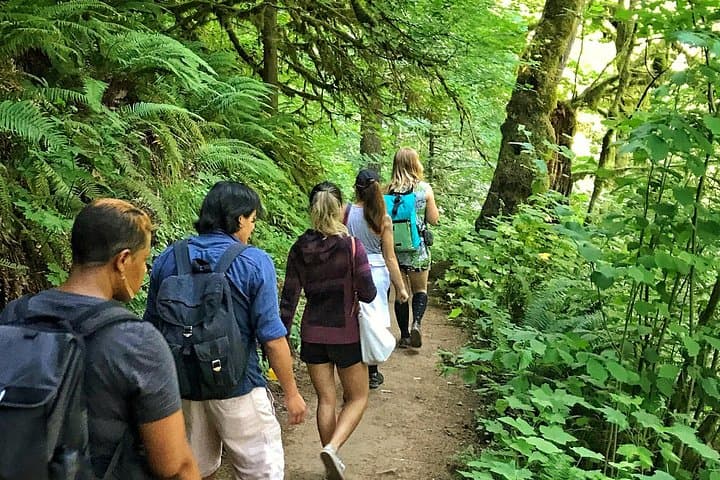
Lose the city for a few hours without leaving it: this 5-mile, 900-foot-gain Forest Park loop threads old-growth pockets, city viewpoints, and cultural landmarks for a compact taste of Portland’s wild side. Expect moss, roots, and stories.