
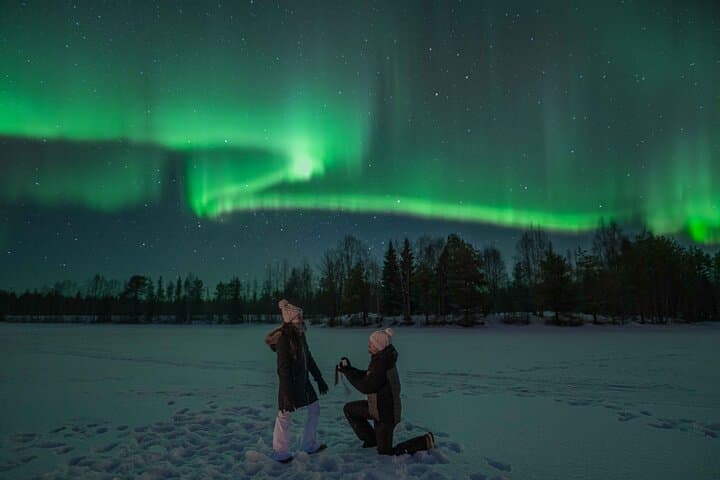
What the day feels like
You leave Rovaniemi at dusk and the town’s sodium glow shrinks behind you, swallowed by black spruce and a horizon that flatlines into tundra. The guide kills the engine on the side of a single-lane road and the silence arrives like a hand—thick, sharp, immediate. The sky is a deep, cold black, and then, at the edge of sight, the first ribbon unfurls: a pale, green breath that shivers and pulses like something alive. It doesn’t feel like you are watching the Northern Lights so much as being invited to keep pace with them.
This private Northern Lights photography hunt is less about rigid itineraries and more about reading the sky. Operated from the gateway town of Rovaniemi, the tour promises a high-probability Aurora chase: guides drive into the wide dark of Lapland, following weather models, cloud forecasts and geomagnetic alerts until the sky cooperates. The tour’s selling point is twofold—distance from light pollution and the expertise of a professional aurora hunter with a camera and a practiced eye. You’re not left to guess exposure or chase vague rumors of “seeing something”; you’re positioned, educated and photographed.
Lapland’s skies are a product of geology and magnetism. Charged particles emitted by the sun ride the Earth’s magnetic field lines and collide with the upper atmosphere, creating bands of ionized light that dance above these high latitudes. Indigenous Sámi knowledge and modern science both share a reverence for these phenomena; Sámi stories speak of the lights as living presences, and the modern guides translate that reverence into practical know-how—predicting clear windows, reading thermal inversions and timing drives to avoid clouds.
The cultural texture of the experience matters. Rovaniemi is the commercial heart of Finnish Lapland, a place where tourism, reindeer husbandry and deep winters intersect. Guides will often weave short lessons in local lifestyle—how the Arctic day shrinks into a long night and how communities adapt—giving a human dimension to the luminous sky. Meals served as part of the tour, when included, are typically straightforward northern fare: stews, rye bread and hot berries—comfort food to warm fingers and eyes between exposures.
Practicality anchors the romance. Expect a six-hour window; the tour price reflects a private experience with a dedicated aurora photographer who will both teach camera settings and take your long-exposure portraits. Vehicles can travel well beyond the town’s light dome—sometimes 60–120 kilometers—so dress as if you’ll be standing still in deep cold for long stretches. Guides will advise on batteries and lenses: camera batteries die quickly in sub-zero air and condensation can be a sneaky enemy when shifting between car and open sky.
Why choose a private hunt? For beginners, the guided camera instruction turns a bewildering technology into usable technique: shutter speeds, ISO trade-offs, focusing in the dark and composing under moving light. For more experienced shooters, a private tour means flexibility—stop where the arc is brightest, linger for a specific formation, or switch locations when clouds build. For anyone who’s serious about images, having the guide shoot alongside you with pro kit is a bonus; they often share high-quality images after the trip.
A few realities to keep in mind: the Aurora is probabilistic, not guaranteed. Guides maximize odds via weather models and the expertise built from seasons in the field, but solar activity, local cloud cover and timing all play a role. The best practical strategy is to book multiple nights if your schedule allows and to plan other daytime activities—snowshoeing, a visit to the Arktikum museum, or a reindeer farm—so the trip feels rich even if the skies remain coy.
Preparation tips extend beyond clothing. Bring a sturdy tripod, extra camera batteries stored close to your body, and a headlamp with a red mode for preserving night vision. If you prefer to leave photography to the guide, come with flexible expectations and an appetite for quiet—part of the hunt’s reward is the rare chance to inhabit a vast, silent landscape while the sky performs.
This is an experience that balances spectacle and craft: the aurora itself is the show, but the structure of the tour—the guided drives, the photo coaching, the off-grid patience—turns skies into images you can take home. Whether you want a frame-worthy shot or simply the memory of green bands rolling overhead, the private Northern Lights hunt out of Rovaniemi is a direct, intimate way to meet the Arctic night.
Trail wisdom
Small choices, better day.
Warm layers win
Dress in insulating layers with a windproof outer shell—you’ll be standing still for long exposures in sub-zero air.
Protect camera batteries
Store spare batteries inside your jacket; cold drains charge quickly and warm spares last much longer.
Bring a tripod
Long exposures require a stable tripod—no steady hands will compensate for 10–30 second shutter speeds.
Plan for late nights
Tours can run several hours into the night; eat beforehand and bring thermos drinks to stay comfortable.
Local knowledge
Read the place, not just the route.
Watch for native species including Reindeer, Owls (e.g., Great Grey Owl).
Keep an eye out for wildlife during the transition between areas and habitats. Respect distance guidelines.
Guides typically follow low-impact practices—staying on roads, avoiding trampling vegetation and briefing guests on minimizing noise and light pollution to protect wildlife.
Follow the guide's instructions on size limits, ethical handling, and leave-no-trace practices.
Small frozen river clearings where reflections can double aurora visibility. Secluded lichen-covered ridgelines that reduce light contamination
Locally recommended viewpoints and quiet spots known best to local operators.
Rovaniemi grew from a small trading post on the Arctic Circle to the administrative center of Finnish Lapland, evolving as tourism and Sámi culture became linked with northern travel.
Maritime roots and regional tradition shape the waterways and working coasts.
Seasonal guide
Four versions of the same landscape.
Spring
Best forLonger daylight for daytime activities · Late-season aurora opportunities
ChallengesUnpredictable cloud cover · Variable snow conditions
Early spring can provide stable cold spells and clear nights, but weather can swing quickly as daylight returns.
Summer
Best forMidnight sun experiences · Outdoor excursions
ChallengesImpossible to see auroras during midnight sun · Very short nights
Summer’s near-continuous daylight rules out aurora hunts; use summer for other Lapland adventures instead.
Fall
Best forEarly aurora season with crisp nights · Fewer tourists than peak winter
ChallengesUnsettled weather and increasing cloudiness · Shorter daylight for daytime plans
Autumn offers the first reliable aurora windows and vivid tundra colors—best later in the season.
Winter
Best forPeak aurora visibility · Snowy landscapes and full Arctic experience
ChallengesExtreme cold and shorter daylight · Heavier clothing and battery management required
Winter is the optimal season for aurora hunts—long nights, frequent displays, and iconic snowy scenery.
Operator details
What the booking data adds.
Included
- ✓Private transportation
- ✓Pictures taken with a professional camera
- ✓All Fees and Taxes
- ✓Air-conditioned vehicle
- ✓Professional Aurora hunter guiding
- ✓Typical Finnish snacks to grill over the open fire (please inform us about dietary restrictions)
- ✓Coffee and/or Tea
- ✓Overalls & winter boots
Good to know
- ✓Specialized infant seats are available
- ✓Public transportation options are available nearby
- ✓Suitable for all physical fitness levels
Pack with intention
What to bring.
Good to know
Common questions.
Guides maximize your odds by chasing clear skies and geomagnetic activity, but the aurora is never guaranteed—probability is improved by going multiple nights or choosing private, flexible hunts.
Plan the edges
The details that make the day easier.
Rovaniemi sits on the Arctic Circle and is commonly called the gateway to Finnish Lapland—its location gives it high seasonal aurora visibility.
After the hunt, head back to Rovaniemi for hearty Lappish fare—Restaurant Nili offers reindeer and local game; the Pilke Science Centre and Santa Claus Village make easy daytime excursions to round out the Arctic experience.
- Closest airport
- Rovaniemi Airport (RVN); Typical drive from city: 60–120 km depending on conditions; Cell service: variable once far from town; Permits: none required for standard tours; Tour duration: ~6 hours; Private pickup usually included.
Operators aim to minimize disturbance by driving to established pullouts, avoiding off-road travel, and instructing guests on low-light practices—pack out waste and follow your guide’s leave-no-trace brief.
Explore by topic
Follow the threads.
Keep exploring
Make the story part of the trip.
In four hours you can move from shaded canyon ferns to wind-scoured coastal ridgelines, guided by someone who knows where the light—and the hidden views—live. This private half-day hike on the Monterey Peninsula or Big Sur is compact, curated, and perfect for travelers who want depth without a multiday commitment.
 Related story
Beneath a sky of shifting light, Skaftafell’s ice reads like a map of time. This three-hour guided glacier hike mixes technical instruction with geology and culture: compact, safe, and unforgettable.
 Related story
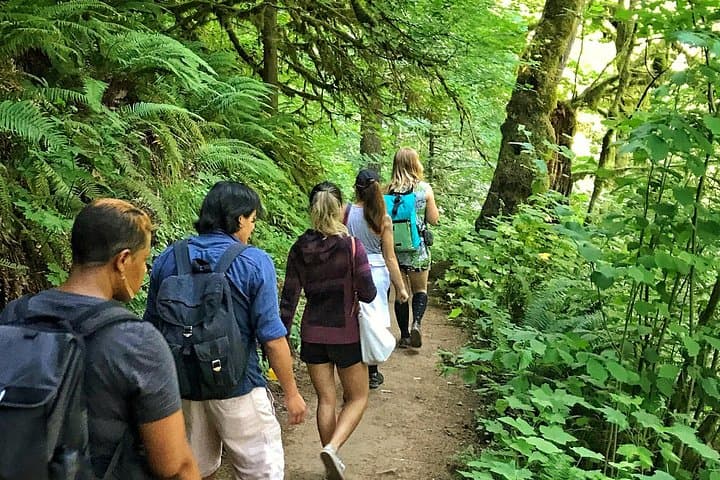
Lose the city for a few hours without leaving it: this 5-mile, 900-foot-gain Forest Park loop threads old-growth pockets, city viewpoints, and cultural landmarks for a compact taste of Portland’s wild side. Expect moss, roots, and stories.