
What the day feels like
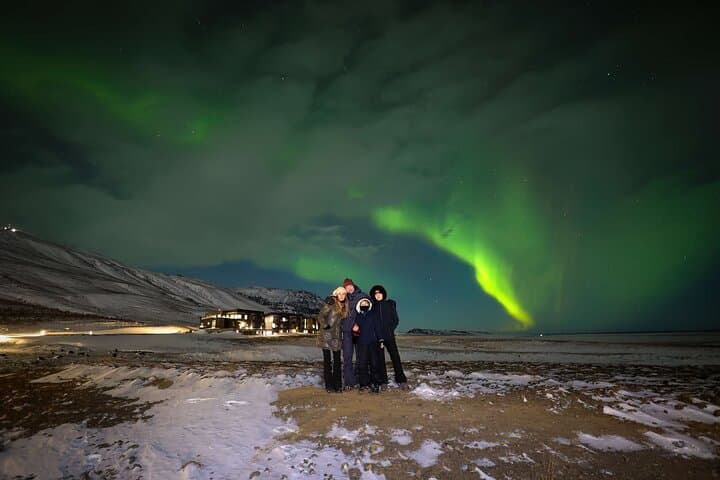
You step out of the van into a black so complete it seems to pull at your collar. The air bites, but it’s a clean, bright cold—one that sharpens the world and throws the sky into relief. Ahead, the guide gestures toward a band of smudged green that at first looks like a smear of paint across the heavens. Then it unfurls: curtains, waves, a slow, breathing ribbon of light. The aurora dares you to blink. You don’t.
This is the economy of awe. The Northern Lights Hunt from Reykjavík condenses an ancient, planetary phenomenon into a five-hour, rigorously curated evening that maximizes viewing chance and minimizes the guesswork. Your guide doubles as photographer; while you stand with your breath fogging the air, they adjust shutter speeds and tripod legs, then hand you ten edited images after the tour—proof that the moment existed and you were in it.
Iceland sits on the edge of the auroral oval, and Reykjavík is the practical launch point for most hunts. The city is bright and compact, but its proximity to dark, coastal plains and sheltered bays means you can be in perfect darkness within 30 to 90 minutes of leaving town. The lights themselves are the result of solar wind—charged particles striking the atmosphere and exciting oxygen and nitrogen atoms into light. In Icelandic folklore auroras carried meanings—omens, messages, the dance of spirits—so the spectacle is as cultural as it is scientific.
Geologically, Iceland is an island of contrasts. Volcanic rifts and glaciers underlay the landscape, and those features influence where guides choose to wait for the lights. Wide, dark skies over coastal lava fields and frozen lakes provide the negative space the aurora needs to pop. On a clear night, the lights look like another dimension of the landscape, draping familiar features in an impossible glow.
What the organized Northern Lights Hunt buys you is efficiency and local knowledge. Guides read cloud cover and wind, know which coastal promontories and estuary flats hold the least light pollution, and—crucially—know how to get you warmed up when the waiting grows long. The tour’s promise to deliver ten edited photos is more than a bonus; for many visitors, it’s the reason to go. The aurora is fast, and your hands may be too cold or your settings wrong. A guide-photographer makes sure you leave with images that don’t look like evidence of a dream.
Practical matters matter here. The tour is five hours long, usually starting late in the evening. Most groups depart Reykjavík and head out of the city toward darker coasts, islands, or inland plains depending on cloud forecasts. Dress like you plan to be outside for hours: insulated layers, windproof shell, thermal socks, and sturdy boots. Expect standing, short walks on uneven ground, and long stretches of looking up. The physical challenge is low, but managing cold and patience is essential.
Timing improves your odds. Aurora season runs from late September through mid-April, when nights are long and dark. Peak viewing windows are usually around midnight, but auroras can ignite any time after dusk. Solar activity cycles mean no guarantees—sometimes the sky is empty, other nights it bursts into motion. The tour’s cancellation policy and flexible rebooking are worth noting; many companies offer free cancellation if conditions are poor.
For photographers this is an education in low-light technique: manual focus, long exposures (5–15 seconds depending on intensity), wide apertures, and attention to composition that includes a foreground—an ice-encrusted fence, a lone rock, a silhouette of distant hills—to give scale to the sky. Tripods and remote shutters are essential; gloves that allow finger dexterity help keep your hands working without sacrificing warmth.
Culture and creature comforts matter after the cold. Back in Reykjavík, gratitude looks like hot soup and a bowl of lamb stew or a strong, dark beer. There’s a satisfying ritual in capping a night of stargazing with a local plate and talking with your guide about folklore, volcanic history, and how the aurora has threaded through Icelandic life.
This northern lights hunt is not an adrenaline sport but it is an orchestrated wilderness experience. It requires few technical skills and returns an elemental, restorative thrill: the sudden rearrangement of the sky. If you want a high-probability, low-friction way to see the aurora and leave with professional photos, this tour is a straightforward, well-executed option. If you prefer to chase lights solo in a rental car, that’s possible too—but you’ll trade convenience and photographic expertise for independence.
If you go, bring patience and warm layers, accept that weather is the boss, and let the guides do the navigation and framing. The aurora rewards the prepared and the persistent. When the sky finally arrives, it will not be a photographable postcard alone—it will be a live, moving thing, and that is worth the wait.
Trail wisdom
Small choices, better day.
Dress in layers
Temperatures can plummet at night; use a base layer, insulating midlayer, and windproof outer shell.
Bring a tripod
Long exposures are needed for aurora shots—tripods stabilize your camera and improve image quality.
Charge spare batteries
Cold drains batteries quickly; bring spares in an inside pocket to keep them warm.
Trust the guide
Guides read weather and aurora forecasts—follow their lead on where to stop and how long to wait.
Local knowledge
Read the place, not just the route.
Watch for native species including Seals along sheltered coasts, Arctic seabirds in winter months.
Keep an eye out for wildlife during the transition between areas and habitats. Respect distance guidelines.
Minimize light pollution by using small red lights, follow guides’ instructions about fragile habitats, and pack out all waste to protect dark-sky sites.
Follow the guide's instructions on size limits, ethical handling, and leave-no-trace practices.
Grótta Lighthouse headland on Seltjarnarnes for accessible dark skies. Coastal lava flats west of Reykjavík with open horizons for dramatic foregrounds
Locally recommended viewpoints and quiet spots known best to local operators.
Icelandic sagas and folklore often reference celestial phenomena; the aurora has been read as omens or messages throughout local culture.
Maritime roots and regional tradition shape the waterways and working coasts.
Seasonal guide
Four versions of the same landscape.
Spring
Best forLate-season aurora displays · Fewer tourists
ChallengesLonger daylight reducing viewing window · Unpredictable weather
Early spring can still produce strong auroras, but brighter nights and variable weather shorten viewing opportunities.
Summer
Best forMidnight sun photography (no aurora) · Daytime exploration
ChallengesMidnight sun eliminates dark skies for aurora · High tourism in daylight months
Summer is poor for aurora viewing; use this season for Iceland’s long days and other outdoor adventures.
Fall
Best forClear evenings · Increasing auroral activity
ChallengesVariable weather · Shortening daylight affects daytime plans
Autumn balances long nights with generally stable weather—an excellent time to hunt the lights as darkness returns.
Winter
Best forPeak aurora season · Snowy landscapes for foregrounds
ChallengesSevere cold, icy roads · Short daylight hours
Winter offers the best odds for strong displays, but dress for subzero conditions and expect occasional weather cancellations.
Operator details
What the booking data adds.
Included
- ✓Certified Driver Photographer Guide
- ✓Pick up & Drop Off
- ✓Small Groups (6 Person Max)
- ✓2 Shot Photo Package Per Person
Not included
- —Warm Clothing
- —We do not provide hot drinks during the tour also. We recommend you bring a flack of hot chocolate or similar.
Good to know
- ✓Infants and small children can ride in a pram or stroller
- ✓Public transportation options are available nearby
- ✓Suitable for all physical fitness levels
- ✓Your epic guide will take night shots no matter the conditions, so there is not an automatic refund or rebooking if the Northern Lights are not there.
- ✓Photos are edited and sent approximately 14 days after your tour.
Pack with intention
What to bring.
Good to know
Common questions.
The best window is late September through mid-April when nights are long and dark; peak displays often occur around midnight but can appear any time after dusk.
Plan the edges
The details that make the day easier.
The aurora borealis is caused by charged particles from the sun colliding with Earth’s atmosphere, producing emissions in oxygen and nitrogen that create green and red lights — a process studied since the 19th century.
After the tour, warm up in Reykjavík’s Laugavegur district with lamb stew or seafood, a stop at the classic Bæjarins Beztu hot dog stand for a late-night snack, and a pint at a local microbrewery to cap the evening.
- Closest airport
- Keflavík (KEF) ~45 km from Reykjavík; typical drive to viewing sites: 30–90 minutes; cell service: reliable in Reykjavík, patchy at remote stops; permits: none required for standard tours; meeting point: central Reykjavík
Respect dark-sky etiquette—minimize flash and bright lights, stay on designated access routes, and follow guides to avoid fragile habitats.
Explore by topic
Follow the threads.
Keep exploring
Make the story part of the trip.
Set out from Bass Harbor for a private, customizable day on Blue Hill Bay — lighthouses, puffins, seals, and the chance to feel Acadia from the water. Small groups, local captains, unforgettable views.
In four hours you can move from shaded canyon ferns to wind-scoured coastal ridgelines, guided by someone who knows where the light—and the hidden views—live. This private half-day hike on the Monterey Peninsula or Big Sur is compact, curated, and perfect for travelers who want depth without a multiday commitment.
 Related story
Beneath a sky of shifting light, Skaftafell’s ice reads like a map of time. This three-hour guided glacier hike mixes technical instruction with geology and culture: compact, safe, and unforgettable.