
What the day feels like
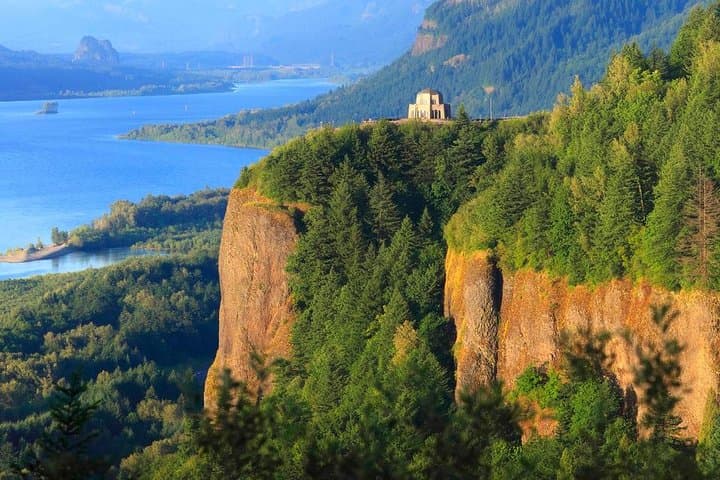
You step out of the van and the Gorge greets you like an old friend with a new mood—mist feathering across basalt, a cold current of air that carries the scent of cedar and wet stone. In the span of a four-hour loop from Portland you’ll stand beneath Multnomah Falls’ twin curtains, angle toward the basalt throat of Latourell Falls, and look out from Vista House as the Columbia River stretches like a silver ribbon between cliffs. The day moves at a practical, deliberate pace—enough time to walk, to listen, and to understand why this canyon has anchored so many stories. For a traveler who wants both drama and efficiency, this is a perfect half-day trip.
Geology here reads like a slow-motion disaster film. During the last ice age, the Missoula Floods—a sequence of cataclysmic outbursts—rushed through this corridor, scouring the land down to columnar basalt and leaving the sheer cliffs that frame the river today. Look for the dark, stacked faces of volcanic rock and the telltale potholes where water once whirled pebbles into stone. The Gorge is a living classroom: waterfalls are not just pretty—they’re active sculptors, daring you to watch the landscape change.
Culturally, the Columbia River Gorge has long been a meeting place. The Multnomah and other Chinookan-speaking peoples used the river and canyons for trade and salmon runs for millennia; later, the Historic Columbia River Highway—America’s first scenic highway—made these vistas accessible to a growing automobile culture in the early 20th century. Today, small family-run guide companies knit together the modern visitor experience, striking a balance between accessibility and stewardship. For a well-paced, locally grounded half-day, this <a href="https://app.advcollective.com/local-experts/columbia-river-gorge-waterfall-tour-multnomah-latourell-vista-house-portland">Columbia River Gorge Waterfall Tour from Portland</a> is an efficient way to see the highlights without feeling rushed.
What you actually do on the tour is straightforward: a short, comfortable drive from Portland deposits you at the trailheads for a handful of iconic stops. Multnomah Falls, the Gorge’s most famous cascade, is a staged experience—arched bridge, historic lodge, and an easy up-and-back trail that rewards most visitors with two viewpoints. Latourell Falls offers a quieter, more immediate encounter: the plunge pool meets you near the trail and you can walk closer to the basalt face. Crown Point’s Vista House reads like a lookout designed for contemplation; from its rim you can watch barges crawl along the river and the cliffs unravel into distant ridge-lines.
Timing matters. Water flow is a mood-shaper: peak runoff in late spring turns falls into thunder; by late summer some falls thin to ribbons but wildflowers and warmer weather make the walks more pleasant. Crowds cluster at Multnomah Falls between 10 a.m. and 3 p.m., so this itinerary often schedules an early or late stop to preserve a quieter moment. Your guide handles parking and navigation—useful, because parking at the most popular pullouts is scarce and shuttle systems can change by season.
Practical edge: this is not a technical climb, but you should be steady on your feet. Trails are mostly paved or well-maintained dirt with brief stair sections; expect short elevation gain at viewpoints. Bring a light waterproof shell—the spray from the falls and microclimates in the Gorge can surprise you—and a refillable water bottle. For photographers, the Gorge is generous: slow shutter speeds make mist into silk; wide lenses capture the canyon’s scale; early morning is best for soft light and fewer people. You can book the tour online and have instant confirmation; the tour length is 240 minutes, making it an easy add-on to a Portland itinerary.
This half-day is ideal for people who want a high-impact sample of the Gorge without overnight logistics. It pairs well with a drive to Hood River if you want to extend the day with breweries, orchards, and a longer riverside loop. But within the four hours you get geology, history, and the simple physical joy of watching water fall, peel back layers of basalt, and vanish into the river’s ongoing story. The landscape has agency here: cliffs hold their breath, waterfalls dare you to stand beneath them, and the Columbia itself insists on movement. That interplay—of human-scale paths and geological grandeur—is what makes a short trip feel like a meaningful journey.
Trail wisdom
Small choices, better day.
Start Early or Late
Visit the busiest viewpoints outside the 10 a.m.–3 p.m. window to avoid crowds and capture better light.
Waterproof Layers
A light waterproof shell keeps you comfortable near spray zones and during surprise Gorge microshowers.
Bring a Refillable Bottle
Refill stations are limited—pack a filtered or reusable bottle to stay hydrated on the short walks.
Mind the Trails
Stay on designated paths to protect fragile mosses and salmon spawning streams; veering off-trail damages habitat.
Local knowledge
Read the place, not just the route.
Watch for native species including Wintering bald eagles along the river, Seasonal salmon runs in tributary creeks.
Keep an eye out for wildlife during the transition between areas and habitats. Respect distance guidelines.
The Gorge is managed as a National Scenic Area; visitors are asked to stay on trails, pack out trash, and avoid disturbing salmon spawning habitat.
Follow the guide's instructions on size limits, ethical handling, and leave-no-trace practices.
Latourell Falls’ less-crowded plunge pool viewpoint. The switchback viewpoints along the Historic Columbia River Highway
Locally recommended viewpoints and quiet spots known best to local operators.
The Historic Columbia River Highway, constructed in the early 20th century, made scenic access possible and set an early model for parkway design.
Maritime roots and regional tradition shape the waterways and working coasts.
Seasonal guide
Four versions of the same landscape.
Spring
Best forHigh waterfall flows · Wildflowers · Photographic mist and soft light
ChallengesMuddy trails · Cool, changeable weather
Spring brings full-throated waterfalls and blooming understory—expect wet ground and pack waterproofs.
Summer
Best forWarmer weather · Longer daylight · Clear road access
ChallengesLower flows late season · Bigger crowds
Summer is warm and accessible; visit early to avoid crowds and watch some falls thin to ribbons.
Fall
Best forAutumn colors · Salmon viewing at select creeks · Crisp air
ChallengesShorter days · Cooler mornings
Fall offers color and quieter trails; check salmon-run timing if that’s a draw for you.
Winter
Best forIcy beauty and solitude · Unique frozen formations · Low visitor numbers
ChallengesIcy trails and closures · Limited daylight
Winters can create striking ice near falls—microspikes and caution are necessary; some roads may close.
Operator details
What the booking data adds.
Included
- ✓Hotel pickup and drop-off
- ✓We are a small, family-run tour company with father and son as guides
- ✓Local driver/guide
Good to know
- ✓Infants and small children can ride in a pram or stroller
- ✓Service animals allowed
- ✓Public transportation options are available nearby
- ✓Suitable for all physical fitness levels
- ✓A maximum of 14 people per booking
Pack with intention
What to bring.
Good to know
Common questions.
The tour runs about 4 hours (240 minutes) and includes multiple short stops at key viewpoints and short walks.
Plan the edges
The details that make the day easier.
The Columbia River Gorge was largely carved by the cataclysmic Missoula Floods about 15,000–13,000 years ago, which exposed the basalt cliffs visible today.
After your trip, grab a meal at the Multnomah Falls Lodge for Pacific Northwest comfort food, or drive east to Hood River for craft breweries, farm-to-table dining, and local fruit stands—perfect ways to extend the Gorge experience.
- Closest airport
- Portland International Airport (PDX)
- Trailhead access
- Historic Columbia River Highway near Multnomah Falls (≈30–40 minutes from central Portland)
- Driving distance from Portland
- ~30–40 miles depending on start point
- Cell service
- intermittent in narrow canyon sections
- Permits
- no permit for day visits but parking is limited and some state park day-use fees may apply
This area is a National Scenic Area—pack out all trash, stick to trails to protect fragile moss and salmon habitat, and observe wildlife from a distance to minimize disturbance.
Explore by topic
Follow the threads.
Keep exploring
Make the story part of the trip.
Set out from Bass Harbor for a private, customizable day on Blue Hill Bay — lighthouses, puffins, seals, and the chance to feel Acadia from the water. Small groups, local captains, unforgettable views.
In four hours you can move from shaded canyon ferns to wind-scoured coastal ridgelines, guided by someone who knows where the light—and the hidden views—live. This private half-day hike on the Monterey Peninsula or Big Sur is compact, curated, and perfect for travelers who want depth without a multiday commitment.
 Related story
Beneath a sky of shifting light, Skaftafell’s ice reads like a map of time. This three-hour guided glacier hike mixes technical instruction with geology and culture: compact, safe, and unforgettable.