
What the day feels like
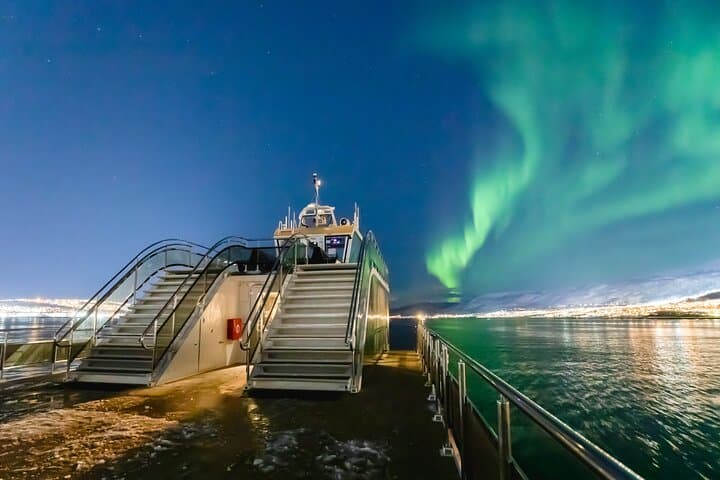
You step off the quay and the harbor breathes cold, salt-laced air onto your face. The hybrid-electric vessel hums almost politely against the dark water, lights dimmed to let the sky speak. Above, the auroral oval is patient—an invisible river of charged particles waiting for the right push from the sun. On nights like this, Bodø feels like it exists to hold that conversation between ocean and sky.
On a three-hour Northern Lights cruise out of Bodø, you live in the pause between expectation and revelation. The boat glides beyond the breakwater into the Vestfjord, past lit rocky outcrops and the low profiles of islets that dare the sea. Guides fold quiet scientific notes into approachable stories: how solar wind meets Earth’s magnetic field, why the aurora favors green and red, and the cultural threads that tie local communities to these lights. If the aurora appears, the crew invites you out to the upper deck, where the chill is worth the view and camera shutters click like a collective heartbeat.
This is not a spectacle that can be summoned, and that’s part of the thrill. Bodø sits just north of the Arctic Circle; its long winter nights make it a reliable place to chase displays that are fleeting and fickle. But the trip is designed to stack the odds in your favor: hybrid-electric vessels with large viewing windows, open-air deck access for cold-weather photographers, and onboard cafés pouring hot drinks to warm the hands between bursts of observation. The atmosphere onboard is a mix of hushed anticipation and the comfortable cadence of people who know to dress warmly.
Geology and geography shape the experience. Vestfjord’s deep waters and the jagged silhouettes of nearby islands—outposts carved by glacial action—add a dramatic foreground to the sky show. The lights themselves are planetary weather, charged particles colliding with oxygen and nitrogen high in the atmosphere; the result is a living ceiling that seems to breathe and shift. That interplay—sea, rock, and sky—feels almost choreographed: the ocean below, the aurora above, and the boat between them like a small theater seating for nature’s performance.
There’s a cultural undercurrent to these voyages. Northern Norway’s coastal communities have relied on the sea for centuries—fishing, stockfish trade, and a stubborn, practical relationship with weather and light that shapes life here. Guides often weave in local history: how Bodø was largely rebuilt after heavy bombing in World War II, how the landscape influenced settlement patterns, and how modern residents balance tradition and tourism. Expect a few local tips—best cafés, where to taste fresh cod, and how to catch a northern sky on your own terms.
Practicality matters on nights like these. The cruise lasts roughly three hours, and the best windows are typically between late autumn and early spring when nights are long and skies dark. Bookings are instant and often refundable, so you can plan around forecasted clear skies and geomagnetic activity. Wear insulated mid- or outer-layers, waterproof boots, and bring batteries that won’t die in sub-zero air; cameras and phones love the cold a little too much.
For photographers, the vessel’s design helps: large panoramic windows for sheltered viewing and an upper deck for star-tracking lenses. Guides know where to pull the boat to minimize light interference and maximize horizon space, but remember that the aurora’s best compositions include a human element—a silhouette, a shoreline, or a boat attending to the sky.
Why choose this experience? It compresses logistics: no solo driving into the dark, no hunting for a remote launch point, and the benefit of local guides who read weather, sea, and sky. It’s approachable for people who want a serious chance at seeing the aurora without committing to a multi-day, equipment-heavy expedition. The trip balances comfort with authenticity: you’re out on the ocean, exposed to the elements, but wrapped in the support of a professional crew and a warm café within reach.
If you go, plan for flexibility. Northern Lights outings are weather-dependent and pay attention to cloud cover and geomagnetic forecasts. Bring curiosity; the guides’ knowledge and the vessel’s quiet energy often turn a slow night into a memorable one when the sky decides to show up.
When the curtains part and green ribbons unfurl across the Arctic black, you’ll understand the appeal. The lights don’t demand a speech—only witness. In Bodø, for a handful of hours, you’ll be part of that witness: warmed by a mug of coffee, chilled by the sea air, and held under one of Earth’s most generous natural shows.
Trail wisdom
Small choices, better day.
Dress in layers
Temperatures drop fast on open water—base layers, an insulated midlayer, and a windproof shell will keep you comfortable when you’re on deck.
Bring spare batteries
Cold drains batteries quickly—carry extras for cameras and phones in an inside pocket to keep them warm.
Book flexible dates
Choose a refundable or changeable slot so you can move to a clearer night if forecasts change.
Use a tripod or stabilize
If you plan to shoot the aurora, a compact tripod or steady railing placement will dramatically improve long-exposure results.
Local knowledge
Read the place, not just the route.
Watch for native species including White-tailed eagle (sea eagle), Harbor seals.
Keep an eye out for wildlife during the transition between areas and habitats. Respect distance guidelines.
The vessel is hybrid-electric to reduce emissions and operators emphasize minimizing light pollution and keeping shorelines free of litter—please follow crew guidance to protect coastal habitats.
Follow the guide's instructions on size limits, ethical handling, and leave-no-trace practices.
Walk the Bodø harbor promenade for coastal views and local seafood stalls. Visit the nearby coastal islets if the operator offers extended routes for quieter horizons
Locally recommended viewpoints and quiet spots known best to local operators.
Bodø was heavily damaged during World War II and largely rebuilt in the post-war period; its modern layout and port reflect that mid-20th-century reconstruction.
Maritime roots and regional tradition shape the waterways and working coasts.
Seasonal guide
Four versions of the same landscape.
Spring
Best forLate-season aurora sightings · Fewer tourists
ChallengesVariable weather · Shorter nights than mid-winter
Early spring still offers dark skies for aurora viewing, but nights shorten and weather can be changeable—aim for early spring months for the best balance.
Summer
Best forMidnight sun experiences nearby · Long daylight activities
ChallengesNo true darkness for aurora · Limited aurora visibility
Summer’s midnight sun means aurora is effectively invisible; use this season for coastal day trips rather than aurora cruises.
Fall
Best forOnset of dark nights · Crisp, clear skies
ChallengesUnpredictable storms · Early-season cold
Fall brings long nights back and often clear, crisp air—one of the calmer windows for aurora watching before deep winter storms set in.
Winter
Best forPeak aurora season · Longest observing windows
ChallengesExtreme cold · Stormy sea conditions occasionally
Winter is the prime season for aurora chases with long, dark nights—dress warmly and watch forecasts for clear-sky opportunities.
Pack with intention
What to bring.
Good to know
Common questions.
The standard tour runs approximately three hours.
Plan the edges
The details that make the day easier.
Bodø lies just north of the Arctic Circle at about 67.28° N, giving the town extended winter nights suited for aurora viewing.
After your cruise, head to Bodø’s harbor cafés and seafood restaurants for fresh cod or stockfish; warm up with a coffee at a waterfront café, then explore the Stormen Kulturhus for local exhibitions and performances.
- Closest airport
- Bodø Airport (BOO). Meeting point: Bodø harbor (short walk from city center). Typical driving
- walking distance
- 5–15 minutes from central lodging. Cell service: reliable in town, intermittent at sea. Permits: none required. Duration: ~3 hours.
This operator uses hybrid-electric vessels to cut emissions and minimizes on-deck lighting to reduce light pollution—respect crew requests about lights and waste to protect fragile coastal ecosystems.
Explore by topic
Follow the threads.
Keep exploring
Make the story part of the trip.
Set out from Bass Harbor for a private, customizable day on Blue Hill Bay — lighthouses, puffins, seals, and the chance to feel Acadia from the water. Small groups, local captains, unforgettable views.
In four hours you can move from shaded canyon ferns to wind-scoured coastal ridgelines, guided by someone who knows where the light—and the hidden views—live. This private half-day hike on the Monterey Peninsula or Big Sur is compact, curated, and perfect for travelers who want depth without a multiday commitment.
 Related story
Beneath a sky of shifting light, Skaftafell’s ice reads like a map of time. This three-hour guided glacier hike mixes technical instruction with geology and culture: compact, safe, and unforgettable.