
What the day feels like
The night opens like a velvet curtain, and the cold takes a quick bite to let you know it means business. Snow squeaks under your boots, a sound that only happens at subzero, and the breath you exhale turns into a brief constellation of its own. Then, out across the dark spruce and frozen river valleys north of Fairbanks, a faint smudge ripples across the sky. The aurora doesn’t arrive so much as it tests you—hovering, teasing, gathering itself. Your guide kills the headlights. Silence sharpens. And in one slow sweep, the sky wakes up. Green bands unfurl from horizon to zenith, flowing like tidewater, then splashing into pink. It’s an ancient language, and tonight it’s speaking clearly.
This is the promise of a private, eight-hour northern lights chase in Alaska’s auroral capital: time and attention tuned entirely to the dance in the heavens. On the Private Fairbanks Northern Lights Tour, a small, private group rides warm and unhurried, following real-time forecasts rather than fixed stops. Hot drinks anchor the long winter night. The vehicle doubles as shelter between viewing bursts. And when the aurora surges, the team is ready with cameras to capture web-quality portraits—proof you stood under a ceiling of charged particles and listened to the wind’s electric whisper. For details on how to book and what’s included, see the guide’s page for the <a href="https://app.advcollective.com/local-experts/private-fairbanks-northern-lights-tour" target="_blank" rel="noopener">Private Fairbanks Northern Lights Tour</a>.
Fairbanks sits directly beneath the auroral oval, the doughnut-shaped band of geomagnetic activity that rings the poles. Here, long, dry winters and broad, clear skies offer a statistically excellent chance of seeing the lights—especially around the equinox months when solar wind streams are lively. The University of Alaska Fairbanks’ Geophysical Institute has studied the aurora since 1946, and local guides tap into a suite of tools—cloud models, KP indices, ground magnetometers—to decide where to go each night. Your route might thread up to Murphy Dome’s broad views, out toward the Chena River valley for reflections on frozen water, or east into country where spruce trees huddle and the horizon runs clean. Location is flexible; the mission is simple: find dark, clear sky.
Science explains the show: charged particles from the sun collide with Earth’s atmosphere tens to hundreds of miles up, energizing oxygen into lime greens and rare crimson, and nitrogen into purples and blues. But the local stories add another layer. Athabascan traditions speak of spirits at play in the sky; other Alaska Native tales describe the aurora as ancestors’ fires or the crackle of voices carried on winter air. Stand outside long enough and the stories feel as valid as any textbook. The lights arc, fold, and sprint; they stall, then erupt. They aren’t just above you—they’re with you, pulling at your attention, daring you to stay a little longer in the cold.
Timing matters. Tours typically depart between 8–11 p.m. and return between 3–6 a.m., which captures the darkest window and the most likely hours for auroral activity. It’s not a march down a trail; it’s a stakeout with purpose. Dress smarter than the weather: insulated boots, windproof layers, a warm hat that covers ears, and mitts over liners so you can change camera settings without freezing your fingers. The privacy of this experience is an advantage—you set the rhythm, warming up between bursts of sky action and taking breaks for snacks and tea. When the forecast says “go,” you move; when the sky wanes, you wait. Patience is part of the itinerary.
The road between culture and practicality runs both ways here. The pipeline-era city hums quietly through winter, yet feels utterly focused on the night sky. You catch it in small details: local weather chats that talk in percent cloud cover, diners open late for night-shift workers and aurora watchers alike, and a community that understands the value of darkness. Clear nights are treasure; headlights go off quickly at viewing pullouts to preserve everyone’s night vision. And while you can hunt on your own, a private tour gives you something precious in the subarctic: a skilled driver who knows where to go, when to wait, and where the wind scours fog from ridgelines.
If you’re a photographer, this is as good as it gets: low, fast-moving curtains for wide angles; slow arcs for long exposures; planetary alignments and Orion rising along the cold horizon line. Your guide will coach you through the trifecta—tripod, manual focus to infinity, and the sweet spot of high ISO plus a fast lens—to balance color and clarity without too much noise. And if you’re not a photographer, no problem; the web-quality images and portraits included with the tour give you keepsakes that look as luminous as the moment felt.
While winter is the long, obvious season—the nights are longest, the cold clearest—fall (September–October) is an underrated window. It brings crisp air, yellow birch, and still-unfrozen rivers that mirror the sky’s neon wash. Spring (March–April) trades deep cold for longer twilight and typically steady aurora action. Even late summer has a shot in the tail end of August when true darkness returns to the Interior. Whatever month you choose, plan at least two or three nights in town to play the odds. Explore Fairbanks famously notes that if you stay three nights in the prime season, your chance of seeing the lights approaches 80 percent.
Nights in the Interior are honest. The cold pushes forward; the sky answers back. And that’s the essence of this tour: a clean, focused pursuit of color and motion with the comfort and safety net of local expertise. Keep the layers close, the cocoa warm, and your expectations calibrated to the rhythm of the subarctic—unhurried, patient, ready for a sprint when the sky decides to run. To plan your own chase, connect with the aurora experts and reserve your <a href="https://app.advcollective.com/local-experts/private-fairbanks-northern-lights-tour" target="_blank" rel="noopener">Fairbanks Northern Lights tour</a> well ahead of peak season.
Trail wisdom
Small choices, better day.
Layer Like a Local
Wear moisture-wicking base layers, an insulating mid-layer, and a windproof outer shell; add insulated boots and mitts over liners for camera work.
Battery Management
Cold drains power fast—keep phone and camera batteries warm in an inner pocket and bring spares.
Eyes on the Forecast
Aurora activity often pulses; be ready for sudden bursts even on quiet nights and trust your guide’s real-time route changes.
Mind the Light
Use a headlamp with red mode and turn off vehicle lights at viewing stops to preserve night vision for everyone.
Local knowledge
Read the place, not just the route.
Watch for native species including Moose, Red fox.
Keep an eye out for wildlife during the transition between areas and habitats. Respect distance guidelines.
Use established pullouts, minimize headlights and light pollution, pack out all trash, and respect private property to keep the Interior’s dark sky pristine.
Follow the guide's instructions on size limits, ethical handling, and leave-no-trace practices.
Ester Dome pullouts for broad horizons and minimal light pollution. Chena Lakes Recreation Area for open sky and reflective ice
Locally recommended viewpoints and quiet spots known best to local operators.
Fairbanks has been a hub for aurora science since 1946 through the Geophysical Institute at the University of Alaska Fairbanks, and Alaska Native cultures hold long-standing stories about the lights’ meaning and movement.
Maritime roots and regional tradition shape the waterways and working coasts.
Seasonal guide
Four versions of the same landscape.
Spring
Best forStable viewing around equinox · Slightly warmer temps
ChallengesIcy roads · Late-season storms
March–April brings longer twilights and strong aurora potential, with clearer skies and manageable cold.
Summer
Best forLate August dark nights · Combining with daytime adventures
ChallengesMidnight sun limits viewing in June–July · Mosquitoes early season
True darkness returns in late August; plan for very late starts and fewer viewing windows earlier in summer.
Fall
Best forColorful landscapes for foregrounds · Reflections on unfrozen water
ChallengesRapid weather shifts · Early freeze-ups
September–October can be excellent: crisp air, foliage, and active aurora as the Interior shifts into winter.
Winter
Best forLongest nights · Highest odds of clear, cold skies
ChallengesExtreme cold · Icy road conditions
November–February is prime: dress for deep cold and embrace the stillness for dramatic auroral shows.
Pack with intention
What to bring.
Good to know
Common questions.
Peak viewing runs from late August through mid-April, with excellent odds from September–March; around the equinoxes is often very active.
Plan the edges
The details that make the day easier.
Fairbanks lies beneath the Auroral Oval, and visitors who stay at least three nights during peak season have roughly an 80% chance of seeing the northern lights (source: Explore Fairbanks).
Warm up after your chase with a pint at HooDoo Brewing Co., or settle into a classic Alaskan supper at The Pump House on the Chena River. For a quick pre-tour bite, The Crepery downtown serves hearty, handheld fuel. If you’re extending your stay, a soak at Chena Hot Springs pairs nicely with a daytime visit to the Aurora Ice Museum.
- Closest airport
- Fairbanks International (FAI). Pickup: Hotel or rental in Fairbanks is included. Typical drive time to viewing areas: 30–90 minutes depending on conditions. Cell service: Reliable in town, spotty to none at remote pullouts. Permits: None required for aurora viewing; follow guide instructions and local road advisories.
Dark skies are a shared resource—limit light use, keep vehicles’ lights off at pullouts, pack out all trash, and avoid trampling sensitive tundra or trespassing on private land. Drones are discouraged during aurora viewing to protect the night experience and wildlife.
Explore by topic
Follow the threads.
Keep exploring
Make the story part of the trip.
In four hours you can move from shaded canyon ferns to wind-scoured coastal ridgelines, guided by someone who knows where the light—and the hidden views—live. This private half-day hike on the Monterey Peninsula or Big Sur is compact, curated, and perfect for travelers who want depth without a multiday commitment.
 Related story
Beneath a sky of shifting light, Skaftafell’s ice reads like a map of time. This three-hour guided glacier hike mixes technical instruction with geology and culture: compact, safe, and unforgettable.
 Related story
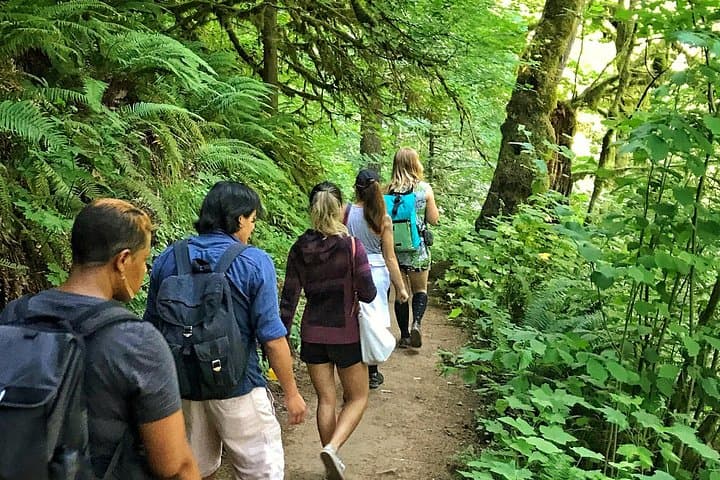
Lose the city for a few hours without leaving it: this 5-mile, 900-foot-gain Forest Park loop threads old-growth pockets, city viewpoints, and cultural landmarks for a compact taste of Portland’s wild side. Expect moss, roots, and stories.