
What the day feels like
You reach the Blue Hole by way of a road that tightens and climbs into the green ribs of St. Ann, the island’s ‘Garden Parish.’ The van drops you at a narrow parking ledge and the world changes pitch: the distant hum of traffic is replaced by birdsong and the steady, patient recommendation of water. A guide hands out life vests and with a smile that’s both welcome and warning says, “It’s nice, but the water will make you feel alive.” Then the path drops away into limestone steps, and the river does the rest.
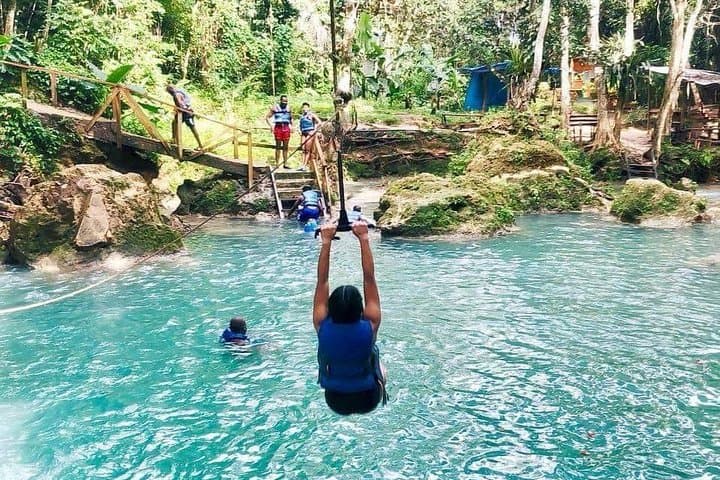
The Irie Blue Hole—sometimes called Secret Falls or Island Gully Falls—is a cluster of jade pools and small cascades hewn where mountain runoff meets exposed rock. Sun slices through the canopy and makes the pools look curated: turquoise bowls edged in fern and boulder. The waterfalls don’t roar; they insist. You can climb up the rock face with a guide’s hand, jump into a deep pool, or thread a narrow ridge that feels like a secret passage. Everything here nudges you forward—feet, breath, the current daring you to try the next scramble.
Geology explains the color and the play: limestone and bauxite beds sliced by streams have created plunge pools and caverns that collect mineral-clear water. Culturally, the falls are woven into St. Ann’s identity alongside sugar-era towns, small-scale agriculture, and a proud musical heritage—this is the parish where Bob Marley was born in nearby Nine Mile. The Blue Hole’s popularity has grown over recent decades as travelers trade crowded coastal attractions for the intimacy of inland swimming holes.
History lives quietly here. The hills were once traversed by Maroons and early colonial roads; later, inland rivers fed plantations and the small villages that supported them. Today, local guides—often born and raised in surrounding communities—run the falls, ferrying visitors across slick rock and teaching a fast, informal curriculum of knots, slips, and safe jumps. Choosing a locally operated tour helps ensure that earnings stay within the community and that delicate riparian edges are respected.
Practicalities matter. The tour from Kingston is a full-day commitment—expect roughly 7 hours total, with true time in the gorge of around 1–2 hours, depending on your group. Terrain is uneven and wet: sturdy water-friendly shoes with good tread will make climbing the rocks safer and more fun. Life vests are commonly provided; wear one if you plan to jump.
Timing is tactical. Morning light makes the pools glow and crowds are smaller; late afternoon can be more atmospheric but slicker after rainfall. During the wet season some paths become hazardous and entrances may close briefly after heavy storms. Guides know when to cancel for safety—follow their lead.
On the ground, you’ll move at the pace of the place. Walkable steps and carved footholds meet raw rock and shallow reef-like shelves. The water asks you to slow, then rewards the effort: the plunge of a jump, the cold wash of river-fed pools, and the small, private triumph of climbing a slippery band of stone to a quieter pool upstream.
For sustainment and comfort: bring a dry bag for your phone and cash for tips and entrance fees (tours often include transport but check). Stay hydrated—tropical heat can be relentless—and reapply reef-safe sunscreen after each swim. Respect the guides’ instructions on where to jump; the depth can vary wildly in natural pools.
Why go? The Irie Blue Hole blends three things most travelers are after: immersion in a place that still feels intimate, a dose of physical movement that’s rewarding more than punishing, and the kind of luminous water that makes you forget the day’s rush. It’s not only a dip; it’s a choreography of rock, current, and human curiosity.
If you’re planning, pair the excursion with a broader look at St. Ann: a visit to Nine Mile for reggae history, a late lunch of jerk fish at a local spot in Ocho Rios, and an evening stroll through a craft market. This tour, departing from Kingston, takes you far enough from the city to feel away without the fuss of overnight packing. In short: come ready, move mindfully, and let the river set the tempo.
Trail wisdom
Small choices, better day.
Wear water shoes
Closed-toe, grippy water shoes protect your feet on slick limestone and make climbing rocks manageable.
Bring cash for entrance/tips
Small, local operators often expect entrance fees or guide tips in cash—have small bills ready.
Use a dry bag
Protect your phone, wallet, and camera from spray and submersion while you swim or scramble.
Follow your guide
Guides know safe jump spots and slip zones—listen to preserve safety and local access.
Local knowledge
Read the place, not just the route.
Watch for native species including Red-billed Streamertail (Doctor Bird) – Jamaica’s hummingbird, Green Heron and coastal kingfishers near river mouths.
Keep an eye out for wildlife during the transition between areas and habitats. Respect distance guidelines.
The gorge’s fragile riparian zones are sensitive to erosion and trash—use local guides, avoid trampling vegetation, and pack out everything you bring in.
Follow the guide's instructions on size limits, ethical handling, and leave-no-trace practices.
White River tubing (short drive from Ocho Rios). Nine Mile (Bob Marley’s birthplace) for a cultural detour
Locally recommended viewpoints and quiet spots known best to local operators.
St. Ann, the ‘Garden Parish,’ has deep colonial and Maroon histories and is also the birthplace of reggae icon Bob Marley in nearby Nine Mile.
Maritime roots and regional tradition shape the waterways and working coasts.
Seasonal guide
Four versions of the same landscape.
Spring
Best forModerate crowds · Warm water swims · Waterfall photography
ChallengesOccasional showers · Variable trail slickness
Spring offers warm days and fewer tourists than winter; brief showers can make rock sections slippery—watch your step.
Summer
Best forLush foliage · Long daylight · Fewer bus tours
ChallengesHeat and humidity · Afternoon thunderstorms
Summer brings peak vegetation and extended daylight—go early to avoid afternoon storms and high humidity.
Fall
Best forQuieter pools · Comfortable temperatures · Good light for photos
ChallengesResidual wet-season run-off · Unstable weather windows
Fall can be a sweet-spot for crowds and temperature, but check rainfall forecasts—heavy rains can temporarily close access.
Winter
Best forDry weather · Clearer skies · Island high season
ChallengesHigher tourist numbers · Higher prices
Winter is the driest, most predictable season for water clarity but expect more visitors—book in advance.
Operator details
What the booking data adds.
Included
- ✓All Local Taxes
- ✓Private Hotel Pick-up and Drop-off
- ✓Well Appointed Air-conditioned Vehicle
Not included
- —Meals and Drinks
- —Gratuities
Good to know
- ✓Specialized infant seats are available
- ✓Not recommended for travelers with spinal injuries
- ✓Not recommended for pregnant travelers
- ✓Not recommended for travelers with poor cardiovascular health
- ✓Travelers should have at least a moderate level of physical fitness
- ✓Children under 3 years free
- ✓Children must be accompanied by an adult
- ✓Not suitable for pregnant women or persons with back problems
- ✓Dress code is smart casual, wear swimwear under your clothes, bring water shoes and a towel
Pack with intention
What to bring.
Good to know
Common questions.
By road the Blue Hole area near Ocho Rios is roughly 1.5–2.5 hours from Kingston depending on traffic; tours typically include round-trip transport.
Plan the edges
The details that make the day easier.
St. Ann Parish is the birthplace of reggae legend Bob Marley—Nine Mile, his childhood home and mausoleum, is located in St. Ann and open to visitors.
After the falls, head to Ocho Rios for fresh jerk fish or chicken—local favorites include small cookshops and family-run eateries; Scotchies (nearby) offers classic jerk, and a stop at a craft market adds local flavor and artisanal souvenirs.
- Closest airport
- Ian Fleming International (OCJ) for Ocho Rios or Norman Manley (KIN) in Kingston; Driving distance from Kingston: ~1.5–2.5 hours; Cell service: good in town, intermittent in river gorges; Permits
- fees
- entrance fee often charged on-site—confirm inclusion with your booking.
This area’s freshwater pools and riparian corridors are sensitive—use local guides, avoid single-use plastics, and choose reef-safe sunscreen to reduce chemical runoff.
Explore by topic
Follow the threads.
Keep exploring
Make the story part of the trip.
Set out from Bass Harbor for a private, customizable day on Blue Hill Bay — lighthouses, puffins, seals, and the chance to feel Acadia from the water. Small groups, local captains, unforgettable views.
In four hours you can move from shaded canyon ferns to wind-scoured coastal ridgelines, guided by someone who knows where the light—and the hidden views—live. This private half-day hike on the Monterey Peninsula or Big Sur is compact, curated, and perfect for travelers who want depth without a multiday commitment.
 Related story
Beneath a sky of shifting light, Skaftafell’s ice reads like a map of time. This three-hour guided glacier hike mixes technical instruction with geology and culture: compact, safe, and unforgettable.