
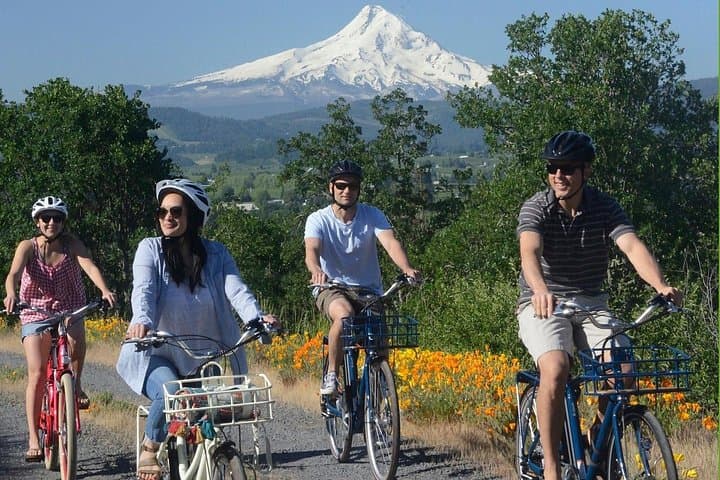
What the day feels like
You roll out of town before the sun has finished warming the valley. The first pedal stroke is a curiosity—how much of this day will the motor do for you? By the time the road threads into fir-shadowed ravines and the first silver curtain of a waterfall appears, the e-bike has already rewritten what it means to explore. You’re moving with intention and ease, the Gorge expanding around you: basalt walls scarred by ice, the river daring you to look away, vineyards finding purchase on improbable slopes.
This is the rhythm of the Columbia River Gorge on two electric wheels. The tour—led by a guide with years of bike-touring experience—stitches together geology and hydrology, small-town food culture and patchwork farms. Over several days you’ll ride quiet backroads and historic paved paths, drop into old-growth pockets and cross bridges that frame the river like a photograph. You’ll chase waterfalls with minimal strain, linger at viewpoints that reward small climbs, and finish afternoons at wineries where the cider and Pinot feel like earned luxuries.
The Gorge is an argument in stone. The cliffs that flank the Columbia were carved by cataclysmic ice-age floods and then softened by rain and moss. Basalt columns rise like the ribs of the landscape; seasonal streams cut narrow ladders through that rock. That geology dictates everything—why there are mossy pockets that hold orchards, why vineyards find unique microclimates, and why waterfalls appear where they do. Riders on an e-bike get to sample those microclimates quickly: cool cedar groves at dawn, sun-baked ridgelines at noon, and the louche, grape-sweet air of orchard country in the evenings.
There’s a cultural arc to match. Hood River and neighboring towns grew up as river and rail hubs, and today the Gorge bridges outdoor culture and small-scale agriculture. Local chefs and winemakers are responsive to the land: seasonal menus, farm-to-table plates, and tasting rooms in converted warehouses. The guide will customize meals for dietary needs, and that flexibility makes this a tour as welcoming to a family group as to a hard-charging pair of cyclists.
Practicality is part of the pleasure. An e-bike multiplies range without flattening the workout: the assist smooths steep grades that would otherwise require a long slog, and it lets you choose moments of effort—stand and push on a steep hairpin or drift and recover in the motor. Over six days you’ll cover varied terrain: pavement and smooth gravel, brief technical sections where a wider tire helps, and stretches that call for basic bike-handling skills. Daily distances are manageable, and the guide paces the tour so you have time for side hikes to waterfalls and longer stops at vineyards.
If you’re wondering about fitness, think of this as an inclusive adventure. You still pedal, and you’ll feel your legs, but the motor keeps horizons within reach. The tour’s private format and custom pacing mean riders of mixed ability can stay together; Megan, the lead guide, has years of experience tailoring routes so everyone sees the highlights without being dropped.
Safety and comfort are part of the design. Helmets, route support, and battery management are all in the guide’s toolkit; you’ll learn basic battery care and how to get the most out of different assist modes. Hydration and timing matter—the Gorge shifts from cool mornings to surprisingly hot afternoons in summer, and shoulder seasons bring wind that can stiffen into a constant push.
Why book it? The Gorge is best experienced as a moving landscape. An e-bike tour compresses access—foliage, waterfalls, river viewpoints, and tasting rooms—into a coherent sequence that you couldn’t replicate on a single day trip by car. It’s equal parts scenery and logistics: you see more, you sweat appropriately, and you end the day in a comfortable town with good food and better stories. For multi-day travelers it’s also logistical ease; luggage moves with you, and local knowledge turns time-consuming choices—where to ride, where to stop—into curated discoveries.
If you go, plan for layering and for boots and pedals that handle varied surfaces. Bring a camera with a fast lens for low-light falls under canopies and a phone with plenty of storage for vineyard portraits. For a detailed itinerary and to secure a guided experience that includes local eats, falls, and tasting rooms, see the full booking and tour details here: <a href="https://app.advcollective.com/local-experts/e-bike-columbia-river-gorge-waterfalls-wine-hood-river-multi-day-tour">E-bike in Oregon’s Columbia River Gorges</a>. The guide customizes the trip to abilities and dietary needs, and the private format makes this a flexible, high-value option for small groups.
By dusk you’ll be leaning on a fence, glass in hand, tracing the river’s line downstream. The e-bike sits quietly beside you—battery still warm from a day of moving through the Gorge’s moods. It’s a tool and a translator: part engineering, part permission. It asks you to move at the landscape’s pace, not to outpace it.
Practical details—daily distances, elevation, and packing—are simple to manage, and the payoff is immediate: more falls, more viewpoints, and the freedom to linger where the Gorge wants you to linger. If you want an adventure with heart and purpose that doesn’t demand heroics, this is the way to ride the Columbia River Gorge.
Trail wisdom
Small choices, better day.
Charge Management
Monitor battery levels each morning and use lower assist on flats to conserve power for hill climbs.
Layer for Microclimates
Start with a lightweight fleece and a waterproof shell—temperatures swing quickly between riverbanks and ridgelines.
Tire Choice
Use wider tires (35–45mm) for comfort and traction on varied shoulder gravel and paved farm roads.
Hydration Strategy
Carry 2–3 liters and use electrolyte mixes—stops are available but can be spaced by 15–30 miles.
Local knowledge
Read the place, not just the route.
Watch for native species including Bald eagle, Black-tailed deer.
Keep an eye out for wildlife during the transition between areas and habitats. Respect distance guidelines.
The Columbia River Gorge National Scenic Area balances recreation and habitat protection—stay on designated paths, pack out waste, and respect vineyard borders.
Follow the guide's instructions on size limits, ethical handling, and leave-no-trace practices.
Latourell Falls less visited morning vantage point. Small family-run tasting rooms east of Hood River for unfussy pours
Locally recommended viewpoints and quiet spots known best to local operators.
The Gorge was carved by Pleistocene floods and later became a critical trade and transportation corridor for indigenous peoples and settlers.
Maritime roots and regional tradition shape the waterways and working coasts.
Seasonal guide
Four versions of the same landscape.
Spring
Best forWaterfall viewing · Wildflowers · Cool riding conditions
ChallengesMud on trails · Unpredictable rain · Snow on high passes early season
Spring brings peak falls and blossoms; expect wet trails and pack a waterproof jacket.
Summer
Best forLong daylight rides · Vineyard visits · Warm weather camping
ChallengesHeat on exposed ridges · Crowded viewpoints · Stronger afternoon winds
Summer yields warm, clear days—start early to avoid midday heat and afternoon gusts.
Fall
Best forFall foliage · Harvest events and tastings · Calmer winds some years
ChallengesShorter daylight · Cool mornings · Occasional rain
Autumn is ideal for color and wine-country energy; bring warm layers for cool dawns.
Winter
Best forDramatic storm-watching · Quieter trails · Low-season lodging deals
ChallengesCold, wet conditions · Possible road closures · Reduced daylight
Winter is best for experienced riders prepared for rain and cold—expect moody skies and fewer crowds.
Operator details
What the booking data adds.
Included
- ✓Lunch
- ✓Breakfast
- ✓Use of bicycle
Not included
- —Private transportation
Good to know
- ✓Service animals allowed
- ✓Public transportation options are available nearby
- ✓Travelers should have at least a moderate level of physical fitness
- ✓Family bikes for children, 1-10 years old
Pack with intention
What to bring.
Good to know
Common questions.
No—basic cycling competence is sufficient. Guides provide orientation to the e-bikes and coaching on assist modes.
Plan the edges
The details that make the day easier.
The Columbia River Gorge was designated a National Scenic Area in 1986 to protect its unique geology and ecosystems, spanning 292,500 acres.
After a day of riding, head to Hood River’s tasting rooms and farm-to-table restaurants—try a plate with local apples or chèvre and a Pinot from a nearby vineyard. For a casual post-ride beer, check out a riverside brewpub with outdoor seating and views of the Gorge.
- Closest airport
- Portland International Airport (PDX)
- Driving to Hood River
- ~1.5 hours from PDX
- Trailhead access
- multiple launch points—guide provides daily start locations
- Cell service
- intermittent outside towns
- Permits
- No special permits for public roads; check winery tasting-room policies
Follow Leave No Trace practices, stay on established roads and trails, and support local businesses to keep tourism benefits within Gorge communities.
Explore by topic
Follow the threads.
Keep exploring
Make the story part of the trip.
Set out from Bass Harbor for a private, customizable day on Blue Hill Bay — lighthouses, puffins, seals, and the chance to feel Acadia from the water. Small groups, local captains, unforgettable views.
In four hours you can move from shaded canyon ferns to wind-scoured coastal ridgelines, guided by someone who knows where the light—and the hidden views—live. This private half-day hike on the Monterey Peninsula or Big Sur is compact, curated, and perfect for travelers who want depth without a multiday commitment.
 Related story
Beneath a sky of shifting light, Skaftafell’s ice reads like a map of time. This three-hour guided glacier hike mixes technical instruction with geology and culture: compact, safe, and unforgettable.