
What the day feels like
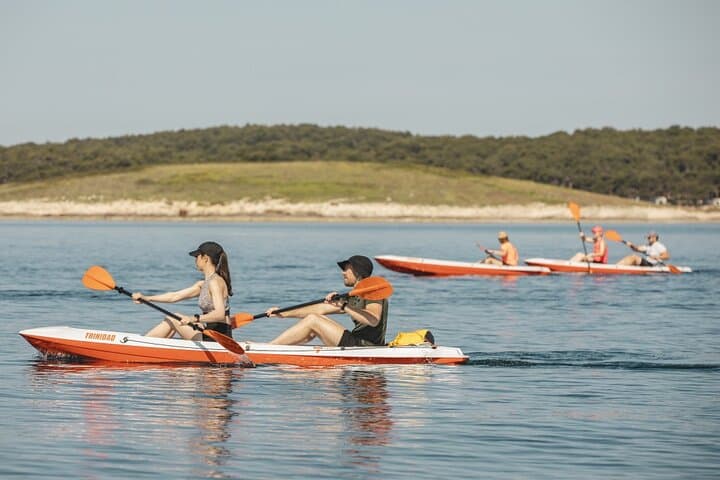
The sea meets a city in a way that humbles you: the Adriatic here is glassy, cool, and full of histories that wash like sediment beneath the kayak. You push off near Valkane—an unassuming stretch of Pula's shoreline—then the urban skyline loosens and a coastline that feels older than the stones of the amphitheater comes into focus. Seagulls wheel and test you; limestone cliffs lean in like curious neighbors. Somewhere ahead is a cave with a hidden beach inside, a small impossible pocket of sand tucked where waves and time have carved a door. That door is part of the point of this three-hour tour: to move through people-made and naturally made thresholds until the city feels like a memory behind you.
What you see while paddling this stretch of the Istrian coast is both geological primer and local theater. The headlands are predominantly karst limestone, the same rugged rock that built Pula's famous Roman amphitheater and shaped the seabed into caverns, arches, and jagged promontories. Centuries of wave action have hollowed out caves, leaving mouths that grin at low tide and swallow sea foam at high. The famed Seagulls Rocks—small islets fringed with tuff and gull colonies—are named for the birds that stake claim to the wind-blown ledges. Local fishermen and boatmen have used these coves for generations; the coastline between Valkane and Muzil reads like an edited map of human use and geological patience.
Culturally, Pula wears its past lightly. The city is Roman one moment, Austro-Hungarian the next, then knit into modern Croatia; the sea is the thread that ties those eras together. On the water you get a different angle on that continuity—stone amphitheaters recede, industrial docks give way to scrub and pine, and you begin to understand why locals still fish, swim, and cliff-jump in the same places their grandparents did. The guides who run this route know that history and read the coast like a book: they point out hidden coves, explain the shapes of the rocks, and time the approach to the cave with the tides so you stand on sand that feels like discovery.
From a practical perspective this is an accessible but invigorating outing. The advertised run time is three hours, and expect roughly 3–4 miles of paddling total with frequent stops to explore, photograph, and, on suitable days, jump from safe ledges. There is minimal elevation—your workout is in the arms, shoulders, and core—and the terrain is coastal: rocky put-ins, slip-and-grip ledges, and a shallow cave mouth you will enter in tandem with your guide. Water temperature in summer is inviting; shoulder seasons are brisk and may require a wetsuit.
Safety is pragmatic and local. Guides are experienced at reading currents that can sneak along the Muzil headland, and they brief small groups on entry and exit techniques for the cave and the controlled cliff jumps. If you are bringing children or pets, this operation is family- and pet-friendly, but make sure everyone is comfortable with open water and guided jumps. Bring a lightweight drybag for your camera and a layered approach to clothing: wind and sun both feel stronger on the water. Expect plenty of photo ops—seabirds, vertical rock faces, and a surprise beach that looks like it belongs in a secret shared among friends.
Why go? Because this tour compresses the best of Istrian coastline into a single, energetic half-day: geology you can touch, a small but cinematic cave, the adrenalin of a controlled cliff jump, and a sense of arrival at a hidden beach. It’s the sort of trip that returns you to town with sand in your shoes, a salty taste on your lips, and a batch of images that make the peninsula’s fame feel earned rather than touted.
Logistics and booking are simple: the tour is private, confirmed instantly, and typically departs from the Valkane stretch of Pula’s waterfront. It’s priced from about USD 53 per person for a three-hour session—good value when you count the guide knowledge, safety briefings, and small-group access to caves and ledges that larger boats can’t reach. For those who want to expand the day, Pula’s Forum and food scene are minutes away—seafood and Istrian Malvasia pair well with stories from the water.
For adventurous travelers of varying skill levels, this is a quintessential Istrian day. It’s not a technical expedition—there are no ropes or long portages—but it rewards physical engagement and curiosity. Whether you are a casual paddler or an experienced sea kayaker looking for a scenic morning, the coastline between Valkane and Muzil serves a compact, rewarding taste of Croatia’s Adriatic edge.
Trail wisdom
Small choices, better day.
Time with the tide
Book paddles around mid to low tide to make cave entry easier and to expose the hidden beach; guides will time the approach, but avoid high tide when the cave mouth can be narrow.
Protect your camera
Use a small drybag and a wrist strap; the best views come from close to the rocks and splash is inevitable.
Wear reef-safe sunscreen
You’ll be exposed for several hours—choose biodegradable options to protect coastal ecosystems.
Listen to your guide on jumps
Cliff jumping is optional and guided—follow instructions for safe entry points and depths to avoid hazards.
Local knowledge
Read the place, not just the route.
Watch for native species including Gull colonies, Mediterranean fish like wrasse and small groupers visible in clear shallows.
Keep an eye out for wildlife during the transition between areas and habitats. Respect distance guidelines.
This stretch of the Adriatic hosts sensitive marine life and nesting seabirds—follow guide instructions, avoid disturbing rocks and nests, and pack out all trash.
Follow the guide's instructions on size limits, ethical handling, and leave-no-trace practices.
The small crescent beach inside the main cave—visible only at certain tide windows. A pair of sea-licked arches north of Muzil that are perfect for photos during golden hour
Locally recommended viewpoints and quiet spots known best to local operators.
Pula’s coastline has long supported fishing and maritime trade; Roman stonework inland points to the area’s ancient role as a port and naval hub.
Maritime roots and regional tradition shape the waterways and working coasts.
Seasonal guide
Four versions of the same landscape.
Spring
Best forfewer crowds · wildflower coastline · cool paddling
Challengesvariable winds · cooler water temperatures
Spring offers quiet coves and flowering scrub; bring a light wetsuit layer and expect breezy mornings.
Summer
Best forwarm water · long daylight · ideal swimming
Challengespeak tourist crowds · strong midday sun
Summer is peak season for warm water and swimming off ledges—book early to secure preferred departure times.
Fall
Best forcalmer seas · warmer afternoons · photography
Challengesshorter days · occasional storms
Autumn balances warm afternoons with thinner crowds; watch forecasts for wind shifts late in the season.
Winter
Best forquiet coastline · dramatic skies
Challengescold water · limited tours
Winter paddles are rarer but atmospheric; only for seasoned paddlers with appropriate cold-water gear.
Operator details
What the booking data adds.
Included
- ✓Kayaks, lifejackets, paddles and drybags.
Good to know
- ✓Infants and small children can ride in a pram or stroller
- ✓Service animals allowed
- ✓Public transportation options are available nearby
- ✓Specialized infant seats are available
- ✓Suitable for all physical fitness levels
Pack with intention
What to bring.
Good to know
Common questions.
Expect roughly 3–4 miles (about 5–7 kilometers) of paddling total, including stops for cave exploration and a break at the hidden beach.
Plan the edges
The details that make the day easier.
Pula is home to one of the best-preserved Roman amphitheaters in the world, the Pula Arena, which still hosts performances today.
After the paddle, head to the Forum or a seafront konoba for grilled seafood or brodetto, pair it with Istrian Malvasija wine, and finish with a stroll for gelato at the harbor.
- Closest airport
- Pula Airport (PUY); Typical launch: Valkane waterfront in Pula, 5–20 minutes from central hotels; Driving distance from town center: under 15 minutes; Cell service: generally good along the coast; Permits: none required for recreational kayaking on this route.
Respect nesting seabirds and marine habitats: avoid stepping on algal or seagrass beds, pack out waste, and follow your guide’s instructions to minimize impact.
Explore by topic
Follow the threads.
Keep exploring
Make the story part of the trip.
Set out from Bass Harbor for a private, customizable day on Blue Hill Bay — lighthouses, puffins, seals, and the chance to feel Acadia from the water. Small groups, local captains, unforgettable views.
In four hours you can move from shaded canyon ferns to wind-scoured coastal ridgelines, guided by someone who knows where the light—and the hidden views—live. This private half-day hike on the Monterey Peninsula or Big Sur is compact, curated, and perfect for travelers who want depth without a multiday commitment.
 Related story
Beneath a sky of shifting light, Skaftafell’s ice reads like a map of time. This three-hour guided glacier hike mixes technical instruction with geology and culture: compact, safe, and unforgettable.