
What the day feels like
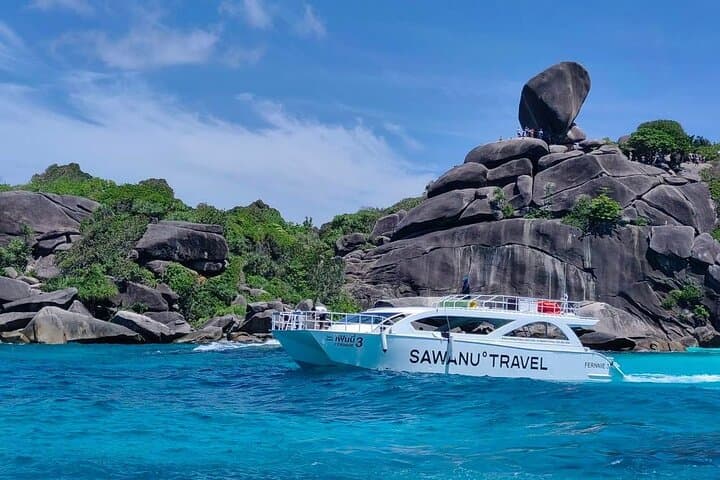
The catamaran slips off Khao Lak's pier like a long inhale, the engine's rhythm equal parts promise and punctuation. Salt and coconut oil ride the breeze; beyond the harbor, the Andaman Sea opens in a flat expanse of blue that dares you to look away. By midmorning the boat is a small white line against limestone silhouettes—granite boulders sunburned to warm gray—while swimmers and snorkelers drift like slow confetti over gardens of coral. This is a day in the Similan Islands: crystalline water, stacked rock formations that could be sculpture, and reefs that pulse with color if you lean over the rail and let the ocean show you.
The itinerary is simple and generous—about eight hours on the water, four or five islands depending on conditions. You climb the viewpoint at Donald Duck Bay for a panorama that untucks the map: islands spaced like punctuation marks across the sea. You swim the gardens off Ba Ngu (Island No. 9) and Pa Yu (No. 7), where visibility often surpasses 20 meters and schools of butterflyfish and parrotfish orbit coral bommies. Lunch on Miang (No. 4) arrives beachside—sticky rice, fresh seafood, and the kind of hush that only comes with heat and sand. The catamaran is more than transport; it’s the day’s social hub—a place to dry off, compare sightings, and plan the next plunge.
The Similans’ name is a clue: it comes from the Malay word sembilan, meaning nine—the core cluster is numbered and mapped by locals and guides. Geologically, the islands are rounded granite outcrops shaped by relentless wind and sea over millennia; their sculpted boulders are as much a signature as the coral gardens below. Culturally, the archipelago sits off Thailand’s Phang Nga coast but carries Malay linguistic echoes and a long history of maritime navigation. Today the islands are protected as a national park; the government manages access and enforces a seasonal closure so reefs and nesting turtles can recover during the monsoon months.
Why go? The Similans are a concentrated lesson in why well-managed marine parks matter. For snorkelers and casual divers, the reefs are accessible classrooms: anemones hosting clusters of clownfish, hawksbill turtles that move like slow punctuation through a paragraph of blue, and unexpected rays that flash past on occasion. For photographers, the islands offer two-stage drama—granite silhouettes at golden hour and a neon kaleidoscope under the surface during mid-morning. For families, the catamaran format balances comfort and accessibility; for independent travelers, it’s a compact way to reach world-class snorkeling without the logistics of liveaboard diving.
Practicalities cut through the romance. The tour runs about eight hours from hotel pickup to return; price listed from roughly $131 USD and usually includes lunch and round-trip transfers from Khao Lak hotels. The national park collects an entrance fee (boats typically coordinate this), and note that the Similan National Park is closed each year—usually mid-May through mid-October—when rough seas reclaim the islands and conservation programs take over. Depart early and aim for calm seas if you’re prone to seasickness; the catamaran is stable but not indifferent to a choppy Andaman.
Snorkeling conditions vary. Choose a morning swim: light angle and cleaner water make colors pop. Wear reef-safe sunscreen and a wetsuit top or rashguard—brilliant sun and long exposure can burn even experienced travelers. Bring your own mask and snorkel if you have good fit; rental gear is available but ill-fitting equipment turns a reef into a missed opportunity. Respect coral—no touching, no standing—and follow guide briefings about currents and entry points. For beginners, floating with a guide near Miang Island’s shallow gardens is the gentlest introduction; stronger swimmers can drift along channels where marine life concentrates.
Logistics and local context matter. Khao Lak is the practical hub—simpler and quieter than Phuket, with transfer times from Phuket International Airport (HKT) commonly around 1.5 to 2.5 hours depending on traffic. Cell service gets thin offshore—download maps and emergency numbers; carry cash for small purchases and tips. Expect operators to handle national park permits and safety briefings; ask about passenger limits and group size if you prefer a quieter experience.
Make the day better with small, pragmatic moves: drink water steadily, layer sun protection rather than slathering one thick coat of sunscreen, stash a ziplock with your phone and spare cash, and give yourself an hour in Khao Lak before or after the trip to sample fresh seafood and a cold beer. On return, walk the beach and watch the islands shrink into the distance; you’ll have the sensation that the ocean kept its best postcards for those who were willing to get wet.
Conservation threads through everything here. The park’s seasonal closure is a reminder that reef thickets need recovery time, and visitors who come outside the closure windows should be deliberate about minimizing impact: reef-safe products, no souvenirs taken from the water, and careful attention to boat and anchor zones.
For travelers who want a day that balances effortless scenery with tactile experience—the grit of a climb, the sudden quiet under waves—the Similan Islands by catamaran is a compact, fulfilling chapter in any Thailand itinerary. It’s not the only way to see the Andaman, but it is one of the clearest: a whole marine world revealed across an eight-hour arc, and a reminder that some of the best travel moments are measured not by distance but by depth.
Trail wisdom
Small choices, better day.
Bring reef-safe sunscreen
Protect your skin and the reef—use mineral-based sunscreen and reapply regularly after snorkeling.
Rent a mask only if necessary
Bring your personal mask and snorkel for the best fit; rentals are often low-quality and leak.
Mind the national park season
The Similan National Park typically closes mid-May through mid-October—book within the open season (Nov–Apr) to avoid disappointment.
Hydrate and pace your swims
Sip water throughout the day and alternate surface rests with snorkeling to avoid fatigue and cramps.
Local knowledge
Read the place, not just the route.
Watch for native species including Hawksbill and green sea turtles, Colorful reef fish—parrotfish, angelfish, and schools of fusiliers.
Keep an eye out for wildlife during the transition between areas and habitats. Respect distance guidelines.
The islands are protected as a national park with a seasonal closure; visitors should use reef-safe sunscreen, avoid touching marine life, and follow park rules to minimize impact.
Follow the guide's instructions on size limits, ethical handling, and leave-no-trace practices.
Early-morning visit to Donald Duck Bay to avoid crowds and catch the light. Shallow coral gardens on the leeward side of Miang for calm, family-friendly snorkeling
Locally recommended viewpoints and quiet spots known best to local operators.
The archipelago’s name derives from the Malay word sembilan (‘nine’), referencing the main group of islands that are numerically identified by locals and park charts.
Maritime roots and regional tradition shape the waterways and working coasts.
Seasonal guide
Four versions of the same landscape.
Spring
Best forCalm seas · Good visibility · Fewer crowds late spring
ChallengesOccasional winds · Cooler mornings
Late spring (March–April) offers warm water and excellent visibility; mornings can be calm, though winds pick up in the afternoon.
Summer
Best forLush island foliage on mainland · Off-season solitude if accessible
ChallengesPark closed mid-May–Oct · Rough seas and heavy rain
Summer coincides with the park’s seasonal closure—boats generally do not run and conditions are unsafe for reef visits.
Fall
Best forShoulder-season rates early fall · Bird migrations on mainland
ChallengesMonsoon storms returning · Limited boat schedules
Early fall can be transitional; by mid-season services wind down and the sea becomes unreliable for day trips.
Winter
Best forClear water visibility · Calm seas · Peak wildlife viewing
ChallengesHigher visitor numbers · Book early to secure spots
Winter (Nov–Apr) is prime season—stable weather, warm water, and the most reliable snorkeling conditions, but also the busiest period.
Operator details
What the booking data adds.
Included
- ✓Hotel transfer from Khao Lak
- ✓English speaking guide
- ✓Lunch
- ✓Travel accident insurance
- ✓Fresh fruits, snacks and drinks
- ✓Snorkeling equipment and life jacket
Not included
- —Alcoholic beverages
- —Tip & personal expenses
- —National Park fee is 400 THB per adult and 200 THB per child.
Good to know
- ✓Public transportation options are available nearby
- ✓Infants are required to sit on an adult’s lap
- ✓Not recommended for travelers with spinal injuries
- ✓Not recommended for pregnant travelers
- ✓Not recommended for travelers with poor cardiovascular health
- ✓Suitable for all physical fitness levels
- ✓Operation of Similan Trip period is during 15Oct to 15May only.
- ✓Child tickets are for ages 4-11 years.
- ✓Infants from 1 to 3 years old are free of charge.
- ✓Children under one year of age are not advised to participate.
- ✓Guests who are over 60 years old are not encouraged to join the tour.
- ✓A maximum of 66 guests can be accommodated on the boat.
- ✓No outside food or drink is allowed on board.
- ✓Alcoholic beverages are available for purchase on board.
- ✓Pets are not allowed.
- ✓Please request vegan food and allergy accommodations at least one day before your trip.
- ✓Travel insurance does not provide coverage for lost, stolen, or damaged belongings during trips.
- ✓The itinerary is subject to change. Times shown are approximate and may vary. Remaining time is allocated based on travel durations between pickup and drop-off points, as well as transit times between activities.
- ✓On the rare occasion that we should be required to cancel a tour, we will inform you in advance and offer a different tour date, an alternative tour or provide a full refund.
Pack with intention
What to bring.
Good to know
Common questions.
Yes—many operators cater to beginners with shallow snorkeling spots, guided swims, and basic safety briefings; let the crew know your experience level.
Plan the edges
The details that make the day easier.
The Similan Islands are closed to visitors each year during the monsoon (roughly mid-May to mid-October) to allow reef recovery and protect nesting sea turtles.
Back on the Khao Lak shoreline, head to a beachside restaurant for grilled seafood and a cold Singha; try tom yum soup or a simple plate of grilled snapper with lime and chili—local markets in the evening offer fresh fruit and regional snacks.
- Closest airport
- Phuket International Airport (HKT) ~1.5–2.5 hours drive to Khao Lak pier; Driving distance from Khao Lak hotels: typically under 30 minutes to pier transfers; Cell service offshore: limited—expect intermittent coverage; Permits
- passes
- National park fee required (operator usually handles collection).
The Similan Islands’ seasonal closure is a core conservation tool—come during open months, use reef-safe products, avoid touching corals or wildlife, and follow crew instructions to minimize impact.
Explore by topic
Follow the threads.
Keep exploring
Make the story part of the trip.
In four hours you can move from shaded canyon ferns to wind-scoured coastal ridgelines, guided by someone who knows where the light—and the hidden views—live. This private half-day hike on the Monterey Peninsula or Big Sur is compact, curated, and perfect for travelers who want depth without a multiday commitment.
 Related story
Beneath a sky of shifting light, Skaftafell’s ice reads like a map of time. This three-hour guided glacier hike mixes technical instruction with geology and culture: compact, safe, and unforgettable.
 Related story
Lose the city for a few hours without leaving it: this 5-mile, 900-foot-gain Forest Park loop threads old-growth pockets, city viewpoints, and cultural landmarks for a compact taste of Portland’s wild side. Expect moss, roots, and stories.