
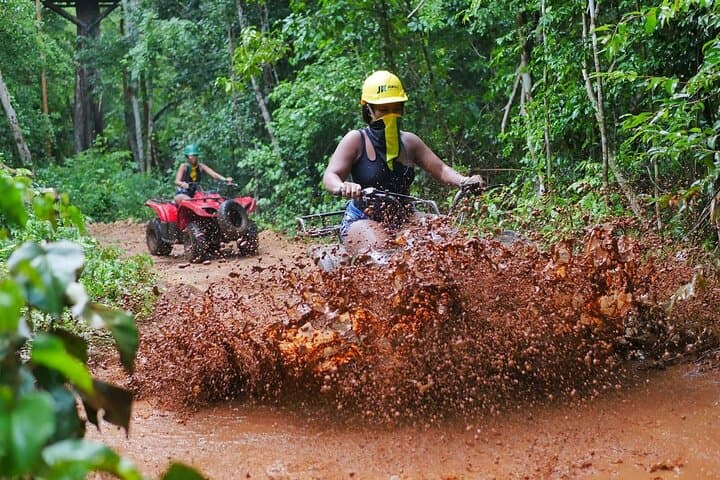
What the day feels like
You arrive before the midmorning sun has burned the last of the low mist from the mangrove fringe. The guide hands you a helmet with a grin that suggests today will rearrange your idea of ‘easy sightseeing’: a web of steel cables above you, a tangle of jungle trails under the ATVs, and a sinkhole of mirror-bright water that promises to wipe the grin across your face into a laugh. This is not a passive day beside the Caribbean; it’s a compressed taste of the Yucatán—fast, damp, and unapologetically physical.
The tour moves with cinematic variety. Ziplines slice through the canopy in quick, wind-deafening runs; hanging bridges make you negotiate a slight wobble while the jungle exhales green around you. Back on the ground, the ATVs bite into loose sand and clay, pitching you past scrub, through tire-churned ruts and occasional riverbeds. Then the relief: a cenote—cool, spring-fed, and luminous—where you can swim in subterranean water that has filtered through limestone for centuries. Lunch follows, a pragmatic feast of chicken fajitas and a short tequila tasting that ties the day to regional traditions.
That cenote has geological authority. The Yucatán Peninsula, built on porous limestone, has almost no surface rivers; instead, rainwater carves networks of caves and sinkholes called cenotes. The Maya called them sacred—portals to the underworld and a source of life. Today, they are ecological gems and fragile reservoirs; swimming in one is a reminder of how ancient processes and human culture meet in a single, crystalline bowl.
This day-tour is as much about motion as place. It’s easily framed for varying appetites: for a traveler hungry for adrenaline, the ziplines and full-throttle ATVs deliver; for someone savoring landscape, the cenote and a brief walk through secondary rainforest offer texture and shade. Guides often fold in local color—short histories of the region, references to Maya cosmology, and practical notes on why the groundwater here is both precious and vulnerable.
Practicalities are simple but important. The tour runs about five hours—long enough to feel earned but short enough to tuck into a Cancun itinerary between beach days. Most operators include hotel pickup in the Cancun Hotel Zone or downtown; the drive to the jungle compound can range from 30 to 60 minutes depending on traffic and the site. The ground is varied: expect compacted dirt trails, occasional muddy sections, and slick limestone near the cenote, so footwear makes a real difference. Bring a refillable water bottle, a swimsuit under quick-dry clothing, and a small daypack.
Safety is straightforward: guides brief you before ziplines and ATV runs, provide helmets and life vests, and often enforce weight and age restrictions for particular elements. For families, this makes the day accessible without being tame; for seasoned travelers, the run-intervals between ziplines and the tighter ATV stretches provide enough bite to feel like a mini- expedition.
Culturally, the day is a modern remix. Tequila tasting is an imported ritual here—it’s more emblematic of regional conviviality than archaeological authenticity—but the flamenco of spice in your fajitas, the banana-fiber pach and the low-key chatter of the guides connect you to the human landscape that coexists with the limestone geology. If you have time afterward, a short detour to downtown Cancun’s food stalls rewards with fresh ceviche or cochinita pibil.
A responsible traveler notes the fragility beneath the fun. Cenotes are living aquifers: avoid sunscreen that isn’t biodegradable, don’t touch delicate formations inside cave chambers, and heed guide instructions to minimize impact. Operators that include environmental briefings and use measures like restricted entry points are worth favoring.
Who should book this tour? It’s ideal for travelers with moderate fitness who want to compress a handful of quintessential Yucatán experiences into a single morning and afternoon. It’s social—group sizes mean shared laughter and a ready-made posse for post-cenote photos—but it’s not a passive bus tour. If you want a full day of cultural immersion and leisure, look for tours that add a museum or archaeological visit; if you want pure stoke, go for more intensive zipline circuits or independent ATV rentals in more remote areas.
Timing matters: go early to avoid the hottest hours and heavier midday tour traffic. Bring cash for tips and small purchases—guides and local vendors often operate well outside card acceptance. For photos, a waterproof action camera or a good phone in a buoyant case will capture the zipline blur and the cenote’s light without drama.
At the end of a day that alternates between dare and ease, you will feel the kind of uncomplicated fatigue that comes with moving outdoors: shoulders pleasantly slack, hair damp with cenote spray, and a memory of the jungle’s soundscape—an insect chorus, the distant thump of an ATV, and the wind passing through leaves. It’s a tidy package of the Yucatán: geology that sculpts everyday life, a living cultural thread, and enough adrenaline to keep the stories vivid on the plane ride home. If you’re in Cancun and you want a single, efficient, and sincere taste of the peninsula’s wild side, this tour is a strong, practical choice.
Trail wisdom
Small choices, better day.
Start Early
Morning departures avoid the heat and the largest crowds at the cenote; you’ll have calmer water and clearer photos.
Closed-Toe Shoes
ATV trails are dusty and can be rocky—sturdy closed-toe shoes protect your feet and make remounting easier.
Use Biodegradable Sunscreen
Apply reef- and cenote-friendly sunscreen after arrival or bring a towel to reapply to avoid contaminating the water.
Pack a Dry Bag
Keep your phone, wallet, and a spare set of clothes dry for the cenote and ATV splashes.
Local knowledge
Read the place, not just the route.
Watch for native species including Iguanas, Tropical birds (motmots, kingfishers).
Keep an eye out for wildlife during the transition between areas and habitats. Respect distance guidelines.
Cenotes and the Yucatán aquifer are fragile—avoid non-biodegradable sunscreens, follow guide instructions, and opt for operators that minimize shoreline disturbance.
Follow the guide's instructions on size limits, ethical handling, and leave-no-trace practices.
A quieter cenote chamber set away from the main platform where light shafts create ribboned reflections. A short viewpoint trail by the ATV loop that reveals a patchwork of coastal scrub and planted orchards used by local farmers
Locally recommended viewpoints and quiet spots known best to local operators.
Cenotes were sacred to the Maya; they provided water and were considered portals to the underworld, playing a central role in ritual and daily life.
Maritime roots and regional tradition shape the waterways and working coasts.
Seasonal guide
Four versions of the same landscape.
Spring
Best forPleasant temperatures · Lower humidity early in season
ChallengesOccasional showers late spring · Increased pollen
Spring offers comfortable temps for ziplines and ATVs; late spring can bring short, heavy showers so pack a light rain layer.
Summer
Best forLong daylight hours · Warm cenote swims
ChallengesHigh heat and humidity · Hurricane season from June onward
Summer is hot and humid—perfect for swimming but bring hydration and expect afternoon storms that may delay activities.
Fall
Best forFewer tourists after summer · Verdant jungle scenery
ChallengesHigher rain risk during hurricane season early fall · Warmer water temperatures
Fall can be lush and green, but timing around storm season matters—check weather and cancellation policies.
Winter
Best forDry weather and cooler mornings · Peak season clarity
ChallengesHigher visitor numbers · Slightly cooler water temperatures
Winter is the most reliable season for dry skies and clear visibility; book early to secure preferred times.
Pack with intention
What to bring.
Good to know
Common questions.
The tour is approximately five hours and typically includes hotel pickup, ziplines, hanging bridges, ATV use with a guide, access to the cenote with life vests, lunch (commonly chicken fajitas), and a brief tequila tasting.
Plan the edges
The details that make the day easier.
The Yucatán Peninsula has virtually no surface rivers; cenotes are openings into a vast underground freshwater system that ancient Maya communities relied upon.
After the tour, head to downtown Cancun for casual local flavors—fresh ceviche, grilled fish tacos, or cochinita pibil at a cenaduría—paired with a cold local beer; small family-run spots near Mercado 28 offer authentic plates and affordable prices.
- Closest airport
- Cancún International Airport (CUN). Typical drive: 30–60 minutes from the Hotel Zone. Cell service: spotty in the jungle
- cenote areas. Permits
- none typically required for commercial tours; operator handles site access.
Cenotes are part of a delicate aquifer system—use biodegradable sunscreen, avoid touching cave formations, and support operators that limit visitor numbers and practice waste management.
Explore by topic
Follow the threads.
Keep exploring
Make the story part of the trip.
 Related story
Less than two hours from Nairobi, Kereita Forest pairs hands-on canopy adventure with quiet montane trails and a sobering colonial history—perfect for families, teams, and curious travelers seeking a full-day pulse of nature.
Set out from Bass Harbor for a private, customizable day on Blue Hill Bay — lighthouses, puffins, seals, and the chance to feel Acadia from the water. Small groups, local captains, unforgettable views.
In four hours you can move from shaded canyon ferns to wind-scoured coastal ridgelines, guided by someone who knows where the light—and the hidden views—live. This private half-day hike on the Monterey Peninsula or Big Sur is compact, curated, and perfect for travelers who want depth without a multiday commitment.