
What the day feels like
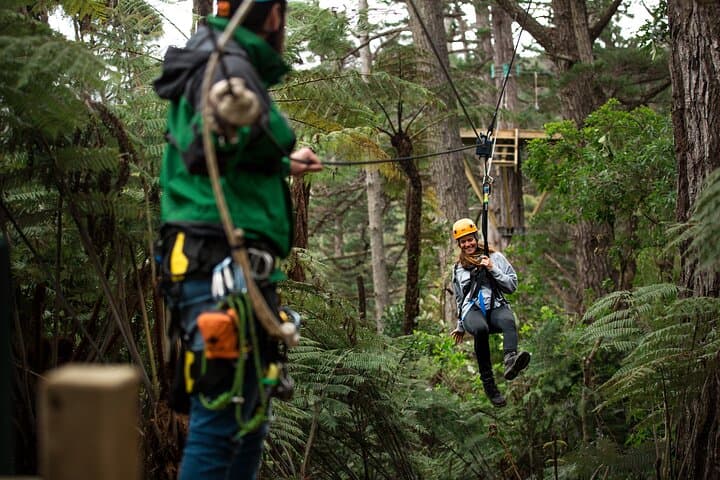
You clip in, shoulders shrugging under the harness, and the wind finds a channel between the pōhutukawa and stands of regenerating kauri. From the platform the valley below looks like a miniature map: ridgelines folding into the harbor, a patchwork of bush that, just a generation ago, was scarred by logging and mining. Now the cables hum with people eager to move through this healing forest, a human current summoned across the canopy.
The zipline tour on the Coromandel Peninsula is compact but rich: roughly 2.5 hours of canopy glides, short forest walks between platforms, and interpretive stops that explain what the volunteers and the tour’s charitable model are trying to restore. All profits from the operator go back into native forest regeneration and support local clay arts—so the thrill of the ride arrives hand-in-hand with a clear conservation purpose.
The Coromandel itself reads like a natural-history textbook. The peninsula’s rugged topography is the result of millions of years of volcanic and tectonic action: ridges carved by ancient eruptions and uplift that now host pockets of remnant native forest. In the 19th century, kauri logging and a gold rush dramatically remade the landscape and local economy—small towns grew up around mines and timber mills, leaving scars that conservation efforts are still working to heal. The region also remains culturally important to local Māori—Hauraki iwi have deep ties to the land, seafood, and lauded craft traditions that continue today.
What makes this zipline tour distinct is how the thrill is married to place. Platforms perch among canopy layers—finger-like roots of ferns and trunks of mānuka and kānuka pushing through the understory. Guides stop to point out regenerating seedlings and to tell stories of how trapping pests and planting native species can jump-start forest recovery. For travelers who want a jolt of adrenaline without sacrificing context, this is a model experience: you get the visceral whoosh of a zipline and, during the walk sections, the satisfaction of knowing each ticket helps fund the next tranche of plantings.
Practical matters are straightforward. The tour runs about 150 minutes, and operators provide safety briefings and the required harness and helmet. Expect a mix of zips and short walks; terrain is forested with some uneven tracks and short stair sections to platforms. Physically, you don’t need to be an athlete—participants should be comfortable climbing short flights of stairs and balancing on raised platforms—but check with the operator for any age or weight limits before booking. Weather can make the course more dramatic: rain puts a sheen on trunks and sharpens scents in the bush; wind can add speed to the longer zips.
Timing is everything. Morning slots have the clearest light for photos and typically gentler winds; later in the day you’ll catch golden light on the harbor ridges. Bring footwear with good traction—the small walking sections can be muddy after rain—and a light, waterproof layer. Guides usually allow small cameras and phones but secure them with a tether: nothing ruins a descent like losing a lens to gravity.
Beyond the tour, the Coromandel is a weekend-long reconsideration of pace. Stay in Whitianga or Coromandel Town and follow a pattern of beach mornings—Hot Water Beach is a short drive and famous for self-dug hot pools at low tide—and forested afternoons. Dinner in town leans toward seafood and local produce; look for small eateries that source snapper, pāua, and seasonal greens. If you plan to extend your stay, take a day to drive the coastal loop, dip in a tidal pool, or seek out one of the peninsula’s slower attractions: artists’ studios that keep the region’s clay traditions alive, and community-led restoration plantings that often welcome volunteers.
Booking is simple: the tour is an instant confirmation activity with a reasonable per-person rate. Because this operator channels profits into conservation, consider arriving with small donations or the readiness to buy local crafts—the multiplier effect benefits both environment and community. And when you go, treat the forest with the same respect the guides ask of you: stay on marked paths, follow direction, and take out any trash you bring in.
This zipline is not just about the drop; it’s about connecting—literally and figuratively—to a landscape in recovery. The cables let you move through the canopy at speeds that clarify how dense and alive this forest is. The volunteer and community work threaded into the tour means your ticket does more than provide a rush; it buys seedlings, traps pests, and funds cultural programs. For travelers who want to mix an accessible adventure with tangible conservation impact, this Coromandel zipline tour sits at a pragmatic sweet spot: fun, safe, and meaningfully local.
Trail wisdom
Small choices, better day.
Book Morning Slots
Mornings bring calmer winds and crisper light for photos—plus drier tracks after overnight drying.
Secure Your Camera
Use a wrist or chest tether for phones or small cameras—guides permit compact photography but won’t retrieve dropped gear.
Wear Grippy Footwear
Trail sections can be muddy; closed-toe shoes with good traction make platform climbs safer and more comfortable.
Support the Cause
Bring small cash or plan to buy local pottery or souvenirs—the tour donates profits to forest restoration and clay arts.
Local knowledge
Read the place, not just the route.
Watch for native species including Tūī (songbird) often heard in the canopy, New Zealand fantail (pīwakawaka) flitting through the understory.
Keep an eye out for wildlife during the transition between areas and habitats. Respect distance guidelines.
The tour donates profits to native forest restoration and supports pest-control and planting projects—visitors help by staying on tracks and removing rubbish.
Follow the guide's instructions on size limits, ethical handling, and leave-no-trace practices.
Walk the Whanganui A Hei (Cathedral Cove) track early to avoid crowds. Visit a local clay studio in Coromandel Town to see pottery that benefits from tour profits
Locally recommended viewpoints and quiet spots known best to local operators.
The Coromandel Peninsula saw a 19th-century gold rush and extensive kauri logging; both industries shaped towns and left legacies that conservationists now mitigate.
Maritime roots and regional tradition shape the waterways and working coasts.
Seasonal guide
Four versions of the same landscape.
Spring
Best forWildflower and seedling sightings · Calmer weather windows
ChallengesUnpredictable showers · Mud on approach trails
Spring brings fresh growth in the understory and a chorus of bird song; pack a light waterproof and expect muddy spots.
Summer
Best forClear photos and longer daylight · Warmer temperatures
ChallengesHigher visitor numbers · Stronger afternoon winds
Summer offers reliable daylight and warmer temperatures—book early in the day to avoid crowds and gusty afternoons.
Fall
Best forCrisp air and dramatic light · Fewer tourists
ChallengesCooler mornings · Possible wind events
Autumn’s clarity makes for great vistas; layers are useful as temperatures drop between morning and afternoon.
Winter
Best forStorm-season drama · Seedling protection efforts
ChallengesRainy, windy weather and muddy trails · Shorter daylight
Winter can be atmospheric but wetter—expect slick conditions and plan for warmer, waterproof layers.
Operator details
What the booking data adds.
Included
- ✓Wet weather clothing
- ✓Two Awesome Guides
- ✓Safety Equipment
- ✓Transport by Rail Car
- ✓Entry/Admission - Coromandel Zipline Tours
Good to know
- ✓Public transportation options are available nearby
- ✓Not recommended for pregnant travelers
- ✓Suitable for all physical fitness levels
Pack with intention
What to bring.
Good to know
Common questions.
The experience runs approximately 150 minutes (about 2.5 hours) including safety briefing and walking between platforms.
Plan the edges
The details that make the day easier.
The Coromandel Peninsula experienced a 19th-century gold rush that helped establish many of the towns and tracks still used today.
Post-zipline, head to Whitianga or Coromandel Town for fresh seafood—look for locally sourced snapper or pāua—and check out a community clay studio to see how tour profits are reinvested into local craft.
- Closest airport
- Auckland (approx. 2.5–3 hours drive); Nearest town: Whitianga (short drive to meeting point); Driving distance from nearest town: 15–40 minutes depending on meeting location; Cell service: patchy in forested gullies; Permits: none typically required, but check operator requirements
This operator directs tour profits to native forest restoration—visitors should stay on marked trails, avoid disturbing seedlings, and consider buying local crafts to support community conservation.
Explore by topic
Follow the threads.
Keep exploring
Make the story part of the trip.
Set out from Bass Harbor for a private, customizable day on Blue Hill Bay — lighthouses, puffins, seals, and the chance to feel Acadia from the water. Small groups, local captains, unforgettable views.
In four hours you can move from shaded canyon ferns to wind-scoured coastal ridgelines, guided by someone who knows where the light—and the hidden views—live. This private half-day hike on the Monterey Peninsula or Big Sur is compact, curated, and perfect for travelers who want depth without a multiday commitment.
 Related story
Beneath a sky of shifting light, Skaftafell’s ice reads like a map of time. This three-hour guided glacier hike mixes technical instruction with geology and culture: compact, safe, and unforgettable.