
What the day feels like
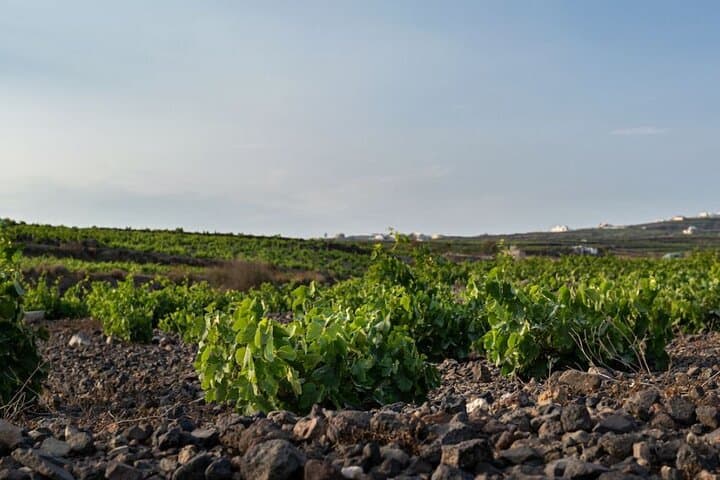
You step out of the van and the air feels like a held breath—warm, dry, brushed with salt from the caldera and dust from the volcanic soil underfoot. Low, gnarly vines fan out in round baskets called kouloura, hugging the ground like survivors. The sommelier—part teacher, part storyteller—gestures toward a skinny white cluster of grapes and says one word that explains why you’re here: Assyrtiko. For the next four and a half hours you move through a compact landscape of contrasts: stark black earth and immaculate white courtyards, centuries-old agricultural craft and sleek, modern barrel rooms, intimate family wineries and a museum that keeps the island’s vinous memory alive.
Santorini’s wines carry the island’s history in every sip. The 1707 and later caldera-building eruptions, the pumice and ash deposits, and a maritime microclimate have produced a grape-growing environment unlike nearly anywhere else. Assyrtiko—an acid-driven, mineral-tinged variety—thrives in pumice-rich soil and fierce Aegean winds. Locals have coaxed vines into basket shapes for generations so they can survive the wind and conserve soil moisture; some of those battered trunks are more than a century old. This private tour frames that backdrop with intimacy: a sommelier-led tasting in a hilltop courtyard, a guided walkthrough of a modern production facility where French oak meets Cycladic minimalism, and a visit to Santorini’s wine museum where the island preserves vines and artifacts that trace winemaking here back to 1660.
The geology reads like a novel on fast-forward. What was once a massive volcanic caldera collapsed into the sea millennia ago, leaving crescent cliffs that face into a blue bowl of ocean. That drama left a thin skin of fertile volcanic earth—porous, reflective, and quick-draining—that concentrates flavors in the grapes rather than diluting them. The microclimate, with cool nights and dry days, preserves natural acidity. Together, these factors make Santorini wines taut and bright; they’re built for food and for sunset.
Culturally, wine is more than a product here; it’s part of island identity. Families have tended terraces through Ottoman rule, Venetian traders, and modern tourism booms. A private tour lets you close the gap between visitor and host. You’ll hear about local techniques and the economics of island production—why some wineries remain cooperative and family-run while others invest in boutique modernization. The Wine Museum visit underlines that continuity: you stand beside vines that have endured phylloxera, market shifts, and boomtown tourism—resilient as the people who tend them.
Why pick a private tasting over a drop-in? Privacy buys context. You’re not just sampling; you’re guided through the story of each bottle—soil, vine training, fermentation choices, barrel aging in French oak—and how those decisions translate into acidity, texture, and minerality. The tour’s approximately 270 minutes (about 4.5 hours) gives enough time to drive into the island’s quieter interior, learn at a measured pace, and pause to breathe in a courtyard view long enough for the second glass to reveal itself.
Practicalities matter—this is a half-day commitment, usually offered with instant confirmation and optional hotel pickup. Prices start in the low hundreds (around USD 212.92), skewing toward travelers who prefer a curated experience over self-guided tastings. Dress for sun and dust—sunglasses, breathable layers, and flat shoes are better than heels. Expect short walks across gravel and stepping into cool, dark barrel rooms where even a whisper feels reverent. Bring a small bottle of water between tastings; palate reset matters.
If you’re a casual traveler, this is a chance to feel smart about what you drink: learn to pick out saline notes, volcanic minerality, and barrel influence without the intimidation. If you’re a seasoned oenophile, the island’s terroir is a study in how environment dictates style—here, acidity and structure trump ripeness, and winemaking choices can push a centuries-old identity in modern directions. Either way, plan your day so the tasting doesn’t end too early; the island’s sunsets are a compelling reason to linger in a nearby taverna afterward.
This isn’t a wilderness trek or an adrenaline tour; it’s an immersive cultural and sensory half-day that requires curiosity and a comfortable pair of shoes. It’s ideal for travelers who want a concentrated lesson in place-based wine, with the added perks of private attention and a sommelier’s narrative. The most distinct wineries of Santorini are distinct not because of flashy labels but because each bottle tastes like the island: lean, stony, sea-salted, and stubbornly authentic.
When you leave, you’ll have a new vocabulary—kouloura, Assyrtiko, caldera—and at least one favorite bottle to buy by the crate. But you’ll also carry a clearer sense of the economy and ecology behind that bottle. Santorini’s vineyards are tiny, their yields small, and their survival depends on thoughtful tourism. A private wine adventure like this isn’t only pleasurable; it’s a direct way to channel travel dollars into conservation of a landscape and continuity of a craft. And as you raise your glass in the courtyard, the island’s wind, earth, and history will all be conspiring to keep that flavor vivid.
Trail wisdom
Small choices, better day.
Hydrate Between Tastings
Bring a small water bottle to cleanse your palate and stay hydrated in Santorini’s dry climate during the 4.5-hour tour.
Wear Stable Footwear
Expect gravel courtyards and short, uneven walks—flat shoes with grip make winery visits comfortable.
Time for Sunset
Schedule tastings to end near sunset so you can enjoy the island’s famed evening light at a nearby viewpoint or taverna.
Ask About Transportation
Confirm hotel pickup or private transfer—parking by small wineries can be limited and roads are narrow.
Local knowledge
Read the place, not just the route.
Watch for native species including Mediterranean lizards, Kestrels and other small raptors.
Keep an eye out for wildlife during the transition between areas and habitats. Respect distance guidelines.
Small island vineyards are vulnerable to over-tourism and limited water resources—support family-run wineries, avoid single-use plastics, and follow marked paths to prevent erosion.
Follow the guide's instructions on size limits, ethical handling, and leave-no-trace practices.
Megalochori’s quiet courtyards and village tavernas. Pyrgos castle viewpoint for panoramic vineyard views
Locally recommended viewpoints and quiet spots known best to local operators.
Winemaking on Santorini has documented roots back centuries; local producers trace continuity to practices recorded since 1660, adapting techniques like basket-trained vines to the volcanic landscape.
Maritime roots and regional tradition shape the waterways and working coasts.
Seasonal guide
Four versions of the same landscape.
Spring
Best forFewer crowds · Blossoming landscapes · Mild temperatures
ChallengesOccasional windy days · Cooler evenings
Spring brings mild weather and green terraces; tastings are pleasant but dress in layers for breezy afternoons.
Summer
Best forSun-soaked courtyards · Late dinners and long days · Peak winery hours
ChallengesHigh tourist crowds · Hot midday sun
Summer is lively and warm—book early and request shaded courtyards for tastings to avoid the heat.
Fall
Best forHarvest activity · Balanced temperatures · Smaller crowds
ChallengesVariable harvest schedules · Limited availability at small wineries
Fall (especially September) is ideal: harvest energy in the vineyards and comfortable weather for evening vistas.
Winter
Best forQuiet, reflective visits · Lower prices · Uncrowded museums
ChallengesSome wineries closed · Cool, windy weather
Winter is quiet and intimate but check openings—many small producers reduce hours off-season.
Operator details
What the booking data adds.
Included
- ✓Free admission to all three (3) wineries
- ✓Experienced local driver/guide
- ✓Private transportation by air-conditioned & deluxe van
- ✓Maps & live commentary
- ✓Guiding services by wine experts in all three (3) wineries
- ✓Complimentary wine tasting of twelve (12) wine varieties accompanied with local assortments
Not included
- —Cable Car Tickets for Cruise Passengers (Optional)
Good to know
- ✓Wheelchair accessible
- ✓Infants and small children can ride in a pram or stroller
- ✓Service animals allowed
- ✓Public transportation options are available nearby
- ✓Specialized infant seats are available
- ✓Transportation options are wheelchair accessible
- ✓All areas and surfaces are wheelchair accessible
- ✓Not recommended for travelers with poor cardiovascular health
- ✓Suitable for all physical fitness levels
- ✓The travel time is already included in the tour duration.
Pack with intention
What to bring.
Good to know
Common questions.
The private wine adventure lasts approximately 270 minutes (about 4.5 hours), which includes travel between sites, guided tastings, and a museum visit.
Plan the edges
The details that make the day easier.
Santorini’s unique ‘kouloura’ (basket) vine training and volcanic pumice soils are key to preserving moisture and producing the island’s distinctive Assyrtiko wines—some vines on the island are over 150 years old.
After tastings, head to Megalochori or Pyrgos for authentic tavernas serving tomatokeftedes (tomato fritters) and fava, paired with a chilled Assyrtiko. Finish with sunset cocktails in Oia or a quiet beer in a Fira courtyard.
- Closest airport
- Santorini (Thira) National Airport (JTR). Typical driving time from Fira to winery areas: 10–25 minutes. Cell service: generally good but may drop in gullies. Permits: none required. Meeting point: usually hotel pickup or central location; confirm on booking.
Santorini’s vineyards are a fragile cultural landscape: pack out all trash, avoid trampling terraces, support small producers, and prefer wines from wineries practicing water conservation and organic methods.
Explore by topic
Follow the threads.
Keep exploring
Make the story part of the trip.
Set out from Bass Harbor for a private, customizable day on Blue Hill Bay — lighthouses, puffins, seals, and the chance to feel Acadia from the water. Small groups, local captains, unforgettable views.
In four hours you can move from shaded canyon ferns to wind-scoured coastal ridgelines, guided by someone who knows where the light—and the hidden views—live. This private half-day hike on the Monterey Peninsula or Big Sur is compact, curated, and perfect for travelers who want depth without a multiday commitment.
 Related story
Beneath a sky of shifting light, Skaftafell’s ice reads like a map of time. This three-hour guided glacier hike mixes technical instruction with geology and culture: compact, safe, and unforgettable.