
What the day feels like
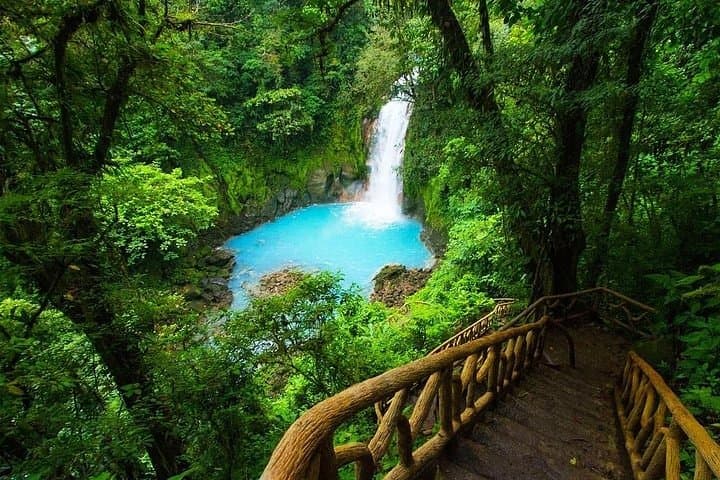
You step through a damp curtain of leaves and the forest exhales around you — a hollow breath of moss, wet earth and something mineral. The trail climbs and levels, rocks dressed in ferns, roots knuckling the path like old hands. Then, unexpectedly, the trees open and the river appears: not green, not simply clear, but a startling, impossible sky blue. It feels deliberate, as if the landscape has decided to put on its best coat for you. That is the first charm of this day: the color that arrests you. The second arrives later, slower — a tuft of brown fur still as a thought, curled in the fork of a tree. A sloth is watching the world go by in slow motion.
This is the rhythm of the <a href="https://app.advcollective.com/local-experts/rio-celeste-tenorio-volcano-sloth-watching-day-tour-from-guanacaste">Río Celeste–Tenorio Volcano and Sloth Watching Tour From Guanacaste</a>. In roughly four hours you’ll walk old volcanic slopes, watch a river perform a chemical trick at El Teñidero where two streams meet and turn blue, cross boardwalks skirting cloud forest, and sit quietly enough to let wildlife reveal itself. The tour pairs easy-to-moderate trails with high-payoff sights: Celeste’s waterfall, a mineral-laced canyon, and concentrated rainforest where sloths, toucans, and sometimes tapirs and coatis make cameo appearances.
Geology and ecology collide here. Tenorio Volcano’s legacy is visible in every layer: silica-rich rocks, sulfurous deposits, and the narrow gorge that channels the river. At a spot called El Teñidero two colorless creeks join and a chemical reaction causes microscopic particles to scatter blue light — the result is a river that looks as if someone painted the scene with tropical pigment. It’s not just spectacle; the area is a working watershed. The park protects cloud forests that feed rivers all the way to the Pacific lowlands below.
Culturally, the park sits in a patchwork of Guanacaste and Alajuela influences: cattle ranches and small agricultural towns give way to ecotourism lodges and family-run sodas (local cafés). Guides on this route aren’t just pathfinders; they’re local naturalists who point out the quieter stories — how land stewardship preserves tapir corridors, the seasonal pulses of fruiting trees that gather birds, and the way local communities balance tourism with tradition.
Why should you do it? For the immediacy. Río Celeste is a short, efficient pilgrimage: you don’t need to backpack for days to stand before a waterfall that feels remote. The route is friendly enough for casual hikers and rich enough for more experienced visitors who appreciate geology and animal behavior. The sloth watching adds a slow-motion counterpoint to the rush of waterfall spray, reminding you to look up as well as ahead.
Practical notes matter. The trail is roughly 4 kilometers round-trip through forested slopes with 150–300 m of elevation change depending on which loops you take. Expect a mix of shaded dirt paths, wooden boardwalks, and some uneven rock steps. The best light and the calmest wildlife viewing come early: arrive at first light when birds call and the trails are quiet. Bring waterproof layers — tropical downpours can appear on the schedule — and leave time to savor viewpoints rather than rush through them.
On a guided day tour from Guanacaste, expect a roughly 4-hour activity window within a longer door-to-door day that includes transport. Tours commonly depart from Playa Hermosa or Liberia and return the same afternoon. The price point sits in the mid-range for private guided day trips; the cost supports local guides, park fees, and conservation efforts.
A final practical beauty: this tour scales. Families with older kids, couples, and solo travelers all find room here. If you want to expand the experience, consider pairing the hike with a night in Bijagua to chase hot springs or add a morning of birding. Otherwise, come prepared to be patient. The river’s color is immediate; many of the best animal encounters arrive only if you slow down.
If you go, respect the park: stick to trails, keep voices low near wildlife, and leave no trace. It’s a small ecosystem with big personality — you can hear the volcano’s history underfoot and the animals’ current stories above you. Whether you come for the impossible blue or the languid gaze of a sloth, the Tenorio day tour gives you both in a compact, well-curated package.
Trail wisdom
Small choices, better day.
Start Early
Morning light is best for photography and wildlife is most active; arriving at opening reduces crowds at El Teñidero.
Bring a Rain Layer
Cloud forest showers can be sudden; a lightweight waterproof keeps you comfortable without bulk.
Use a Local Guide
Guides point out sloths and small cryptic wildlife and explain the geology at El Teñidero — their knowledge amplifies the experience.
Footwear Matters
Trails include slick boardwalks and rocky steps — trail shoes with good traction are worth it.
Local knowledge
Read the place, not just the route.
Watch for native species including Three-toed Sloth, Howler Monkey.
Keep an eye out for wildlife during the transition between areas and habitats. Respect distance guidelines.
The park is a critical watershed; stay on trails, avoid touching mineral deposits, and support local guides who follow sustainable practices.
Follow the guide's instructions on size limits, ethical handling, and leave-no-trace practices.
Mirador de la Catarata—less-frequented viewpoint for a quieter angle on Río Celeste. Bijagua hot springs — soak after your hike for a local unwind
Locally recommended viewpoints and quiet spots known best to local operators.
Tenorio Volcano National Park was established to protect the volcano’s slopes and cloud forest ecosystems; the protected area conserves watersheds that feed lowland communities.
Maritime roots and regional tradition shape the waterways and working coasts.
Seasonal guide
Four versions of the same landscape.
Spring
Best forBirdwatching · Moderate crowds
ChallengesIntermittent rain showers · Muddy sections
Late spring (March–May) bridges the dry and green seasons: vibrant forest, frequent birds, and an increasing chance of afternoon rain.
Summer
Best forLush rainforest scenes · Waterfall volume
ChallengesHeavier rains · Slippery trails
Summer (June–August) brings the fullest greenery and higher river flow; trails can be wet and visibility lower for distant views.
Fall
Best forLower crowds · Wildlife foraging
ChallengesVariable conditions · Some road washouts in heavy storms
Fall (September–November) is quieter; expect dramatic cloud cover and sporadic rain but excellent chances to see mammals near feeding trees.
Winter
Best forDry trails · Clear vistas
ChallengesStronger sun at lower elevations · Higher visitor numbers
Dry season (December–February) offers the most reliable hiking weather and clearer skies, making trail conditions easy and photography crisp.
Operator details
What the booking data adds.
Included
- ✓Hotel pickup and drop-off
- ✓Professional guide
- ✓National Park fees
- ✓Lunch
- ✓Air-conditioned vehicle
Not included
- —Alcoholic drinks (available to purchase)
- —Food and drinks, unless specified
Good to know
- ✓Infants are required to sit on an adult’s lap
- ✓Specialized infant seats are available
- ✓Not recommended for travelers with poor cardiovascular health
- ✓Suitable for all physical fitness levels
- ✓Children must be accompanied by an adult
Pack with intention
What to bring.
Good to know
Common questions.
The guided experience is about 4 hours on-site, with roughly 4 km of walking on mixed terrain; expect moderate uphill sections and some uneven surfaces.
Plan the edges
The details that make the day easier.
Río Celeste’s sky-blue color is caused by a chemical reaction at 'El Teñidero' where two streams meet and form colloidal particles that scatter blue light (Mie scattering).
After the hike, head to Bijagua for a local casado plate or fresh trout — many small restaurants serve coffee and hearty meals. If you’re back in Playa Hermosa, try a seafood dinner and a cold local beer to compare coastal flavors.
- Closest airport
- Liberia (Daniel Oduber) — ~1.5–2.5 hours drive to Tenorio depending on departure; Typical tour pick-up: Playa Hermosa
- Playa del Coco; Trailhead
- Tenorio Volcano National Park entrance; Cell service: Limited inside the park; Permits
- fees
- Park entrance fee applies, tours normally include it.
This area protects critical watershed and wildlife habitat—stay on trails, pack out trash, avoid touching mineral deposits, and hire certified local guides to support conservation.
Explore by topic
Follow the threads.
Keep exploring
Make the story part of the trip.
Set out from Bass Harbor for a private, customizable day on Blue Hill Bay — lighthouses, puffins, seals, and the chance to feel Acadia from the water. Small groups, local captains, unforgettable views.
In four hours you can move from shaded canyon ferns to wind-scoured coastal ridgelines, guided by someone who knows where the light—and the hidden views—live. This private half-day hike on the Monterey Peninsula or Big Sur is compact, curated, and perfect for travelers who want depth without a multiday commitment.
 Related story
Beneath a sky of shifting light, Skaftafell’s ice reads like a map of time. This three-hour guided glacier hike mixes technical instruction with geology and culture: compact, safe, and unforgettable.