
What the day feels like
Dawn slips into Black Canyon like a careful whisper. Below the concrete shoulders of the Hoover Dam, the Colorado River exhales a chill that curls through the gorge. Water the color of polished emerald pulls at the shoreline, asking questions, daring you to lean in. It’s here, at the restricted launch below the dam—secured by a coveted National Park Service permit—that your day begins. You shoulder a touring kayak, feel the grit of desert sand underfoot, and listen as the guide sketches the route: twelve miles downstream, a cathedral of volcanic walls, steam caves, side-canyon hot springs, and a lunch break in the shadow of river-carved history.
The first strokes are steady, guided by the current that pushes forward with quiet authority. Above, the Mike O’Callaghan–Pat Tillman Memorial Bridge arcs clean and improbable, a concrete rib capping the canyon. The river runs cold—released from deep in Lake Mead—so the morning air carries a bite that wakes the senses. This is the Black Canyon Water Trail, a designated National Water Trail since 2014, a rare desert corridor where heat meets cold water and geology writes in black basalt and sunlit tuff.
On the <a href="https://app.advcollective.com/local-experts/kayak-hoover-dam-hot-springs-hike-self-drive">Kayak Hoover Dam & Hot Springs Hike - Self Drive</a>, the drama is practical and close. Your paddle blade digs into glassy green; the rudder answers; the river approves. A short glide brings the day’s first stop: the Sauna Cave, a low tunnel carved during dam-era explorations. Step inside and the earth breathes warm vapor—mineral damp on the walls, a hush that feels like the canyon holding its breath. Back on the water, canyon wrens stitch the silence with bright, spiraling notes. Desert bighorn study your progress from unreachable ledges, eyes steady, sure-footed on slopes that tilt like bad intentions.
History shadows every bend. In the 1930s, work crews blasted a road into these cliffs to birth the Hoover Dam, and you can still trace their presence—gauging stations from 1921, rusted artifacts half-swallowed by rock, an old ring-bolt that once anchored steamboats to the current. The scale is both human and beyond it: a single paddle stroke, a river that built the West. Your guide’s stories turn the canyon into a living archive—of engineering audacity, of the Colorado’s reshaped destiny, of a landscape that keeps its own ledger.
What keeps the pace honest here is texture: a splash of wind riffles the surface, the river squeezes at tight corners, eddies form small, muscular twirls that slide your bow just off line and ask you to correct. You learn to read the surface, to let the current help you, to stay out of the river’s arguments and into its slipstream. By late morning, warmth rises off the walls, and a side canyon calls you in—Boy Scout Canyon or the famed Arizona Hot Springs, depending on the plan and flow. The hike is a brief scramble over sun-warmed rock, the kind of movement that wakes up your calves and turns the river’s hum into a background mantra. Pools wait in tiers: clear, mineral-rich, a temperature the desert seems to have negotiated for your bones. The canyon narrows, voices drop, and hot water unknots shoulders the paddle has tightened. Nature does a better job than any spa here.
Lunch comes simple and satisfying—sandwich, snacks, cold juice—because the setting does the heavy lifting. Towering black walls tell the story of ancient volcanic episodes; a falcon draws a clean line across blue sky. The river keeps time, always moving, nudging you downstream under sweeping basalt and bright desert brush. Bald eagles sometimes settle in riverside cottonwoods, winter and spring bringing the highest odds. Coyotes pace the gravel bars, curious, careful.
This is a beginner-friendly paddle for those who want to push a little, and a satisfying cruise for experienced kayakers. Twelve miles sounds heavier than it feels with the current, but it asks for steady work and smart pacing. The guides from Evolution Expeditions show the seams of the river: when to sneak inside a bend to avoid the rough water, how to punch through wind that often shows up in the afternoon, how to turn a challenging line into a smooth glide.
Along the way, you collect moments. A leap off the shoreline into bracing cold that slaps you awake and then forgives you. A shallow cove where sunlight drills into clear water, turning pebbles into coins. A deeper understanding of how the Hoover Dam’s controlled releases keep this corridor cold year-round—trout-habitable cold—even as July turns the canyon rim into a skillet.
By the time Willow Beach appears and the day stands tall behind you, the river has taught its quiet lesson: move with force when needed, rest in eddies, respect what’s bigger than you. The shuttle meets you here, kayaks stacked and strapped, and the canyon fades in the mirror—a strong, black seam stitched into the desert.
Planning the <a href="https://app.advcollective.com/local-experts/kayak-hoover-dam-hot-springs-hike-self-drive">Kayak Hoover Dam & Hot Springs Hike - Self Drive</a> experience isn’t complicated, but it is specific. Access below the dam is restricted; permits are limited to 45 paddlers per day and secured in advance by the outfitter. Bring a government-issued photo ID or security will turn you back at the gate. Wear water shoes—no flip-flops—and layer for a day that shifts between cool water and sunbaked rock. Hydration matters, even on a river day; desert air steals moisture without asking. And pace yourself: the river helps, but the miles add up.
Go for the shoulder seasons if you can. Spring and fall deliver manageable temperatures, quieter winds, and better odds for wildlife. Summer can be a furnace on the rocks, though the river does its level best to keep the experience crisp. Winter is calm and starkly beautiful, with steam lifting off hot springs into chilly air. In any season, Black Canyon has a personality—curious, strong, steady. It doesn’t perform for you; it invites you in. That’s more than enough.
Trail wisdom
Small choices, better day.
Bring a government-issued photo ID
Security controls access to the Hoover Dam launch; no ID means no entry.
Dress for cold water, not air temps
The Colorado runs cold year-round below the dam; wear synthetic layers and water shoes to stay comfortable.
Start early to beat wind
Afternoon gusts can build in Black Canyon—an early launch makes the paddle more efficient.
Mind the micro-currents
Eddies and boils near canyon walls can spin a kayak—keep a loose grip and use small, corrective strokes.
Local knowledge
Read the place, not just the route.
Watch for native species including Desert bighorn sheep, Bald eagles (winter through spring).
Keep an eye out for wildlife during the transition between areas and habitats. Respect distance guidelines.
This stretch lies within Lake Mead National Recreation Area; pack out all trash, avoid soaps or lotions in hot springs, and respect wildlife closures.
Follow the guide's instructions on size limits, ethical handling, and leave-no-trace practices.
Sauna Cave’s steamy tunnel near the top of the route. Quiet gravel bars just upstream of Willow Beach with striking reflections at dusk
Locally recommended viewpoints and quiet spots known best to local operators.
The Black Canyon corridor still shows remnants of early 20th-century engineering—1921 gauging stations and river hardware used during the Hoover Dam era.
Maritime roots and regional tradition shape the waterways and working coasts.
Seasonal guide
Four versions of the same landscape.
Spring
Best forMild temperatures · Active wildlife viewing · Balanced river conditions
ChallengesOccasional wind · Cool mornings
Arguably the sweet spot—comfortable air temps, steady flows, and clear light for photography.
Summer
Best forWarm air for swimming breaks · Long daylight · Family outings
ChallengesHigh heat on rocks · More boat traffic · Strong sun exposure
Expect desert heat; the river stays cold but shoreline hikes and hot springs scrambles can feel intense.
Fall
Best forStable weather · Lower crowds · Golden light
ChallengesShortening days · Variable wind
Cooler air returns and the canyon quiets—great time for seasoned paddlers and photographers.
Winter
Best forCalm water · Hot springs contrast · Bird watching
ChallengesCold starts · Limited daylight
A serene, starkly beautiful season with steam rising off pools and excellent chances for raptors.
Pack with intention
What to bring.
Good to know
Common questions.
Plan for roughly 7 hours on the water and shore stops, covering about 12 miles (19.2 km) downstream through Black Canyon.
Plan the edges
The details that make the day easier.
The Black Canyon Water Trail was designated a National Water Trail in 2014—the first officially recognized water trail running through a desert ecosystem.
Post-paddle, refuel in Boulder City at The Coffee Cup Cafe for hearty diner staples or grab a shaded pint and pub fare at Boulder Dam Brewing Co. If you’ve got time, stroll the historic district’s sculptures and vintage neon, then catch sunset from the Mike O’Callaghan–Pat Tillman Memorial Bridge walkway for a final look into Black Canyon.
- Closest airport
- Harry Reid International (LAS), ~35 miles. Launch: Restricted access below Hoover Dam; meet at 18000 US-93, Boulder City. Drive time from Las Vegas Strip: ~45–60 minutes (traffic varies). Cell service: Spotty to none inside Black Canyon—download maps. Permits: NPS participant permit required; secured by outfitter. ID: Government-issued photo ID mandatory for security.
This is a fragile desert-river corridor—pack out all trash, skip soaps in hot springs, use mineral-based sunscreen, and give wildlife ample space. Stick to established paths in side canyons to prevent erosion and protect delicate desert cryptobiotic soil.
Explore by topic
Follow the threads.
Keep exploring
Make the story part of the trip.
In four hours you can move from shaded canyon ferns to wind-scoured coastal ridgelines, guided by someone who knows where the light—and the hidden views—live. This private half-day hike on the Monterey Peninsula or Big Sur is compact, curated, and perfect for travelers who want depth without a multiday commitment.
 Related story
Beneath a sky of shifting light, Skaftafell’s ice reads like a map of time. This three-hour guided glacier hike mixes technical instruction with geology and culture: compact, safe, and unforgettable.
 Related story
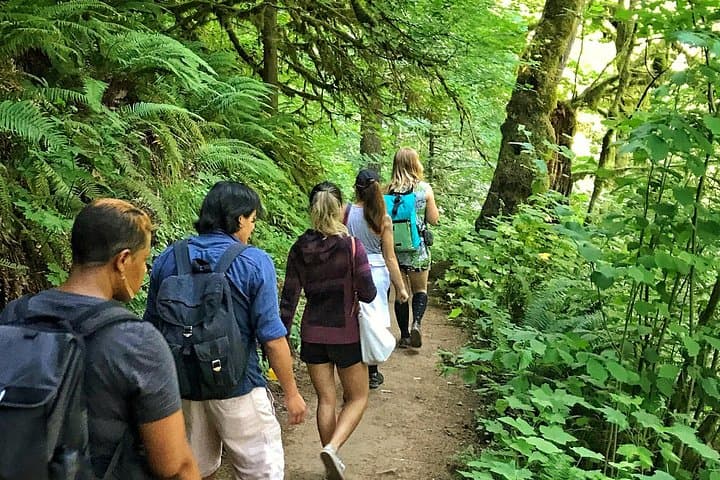
Lose the city for a few hours without leaving it: this 5-mile, 900-foot-gain Forest Park loop threads old-growth pockets, city viewpoints, and cultural landmarks for a compact taste of Portland’s wild side. Expect moss, roots, and stories.